

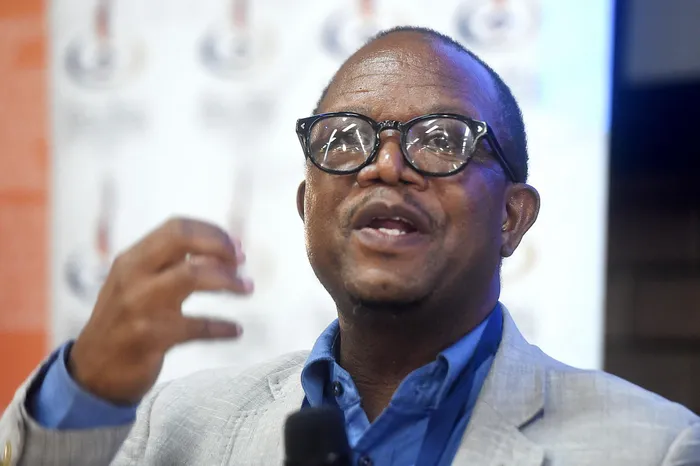
Professor Sekibakiba Lekgoathi has made a case study on the untold role of Zebediela and its youth in taking up the fight started by the Soweto youth on June 16, 1976.
Image: Itumeleng English/Independent Newspapers
In a detailed presentation at the University of Johannesburg (UJ) Soweto campus to commemorate the 50th anniversary of the Soweto riots, Professor Sekibakiba Lekgoathi, an associate professor of history at Wits University, discussed his case study on how rural and urban youth from Zebediela, played an understated yet significant role in the turbulent political landscape of the late 1970s.
Zebediela, under the Capricorn District Municipality, is a cluster of villages in Limpopo Province, renowned for its citrus production and historical citrus estate.
Lekgoathi’s study, titled Rural Youth and Changing Patterns of Political Mobilisation in the Northern Transvaal Village of Zebediela, 1976-1990, highlights Matladi Primary School, a boarding and day school, and the University of the North at Turfloop as focal points for the burgeoning resistance movement in Zebediela and the Northern Transvaal.
Lekgoathi notes that in the build-up to June 1976, a surge of young people migrating from urban centres such as Soweto and Pretoria townships influenced rural dynamics in Zebediela. As a result, this influx paved the way for heightened political awareness among the local youth, which would ultimately converge with the sweeping waves of the nationwide protest movement.
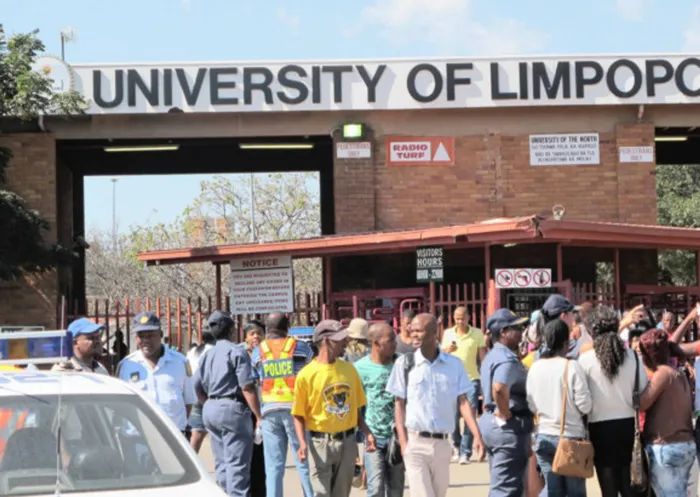
Professor Sekibakiba Lekgoathi has shed light on the often-overlooked contributions of rural youth in South Africa’s turbulent political narrative of the late 1970s.
Image: Archives
According to Lekgoathi, this critical movement and its grassroots organisation were vital to seeing rural youth participating in the collective resistance against the oppressive Apartheid regime.
While discussing the initial reactions at the University of the North at Turfloop and other educational institutions, Lekgoathi explained that early responses to the Soweto uprising were pivotal in shaping students' political consciousness.
He noted a distinct demographic shift during the late 1960s, where urban students outnumbered their rural counterparts at Turfloop, marking a political and cultural transformation. It was here that the South African Students Organisation (SASO) was established under the iconic leadership of Steve Biko, who championed the Black Consciousness Movement (BCM) that profoundly influenced student activism across the country.
"However, the BCM, which played such a pivotal role in politicising students in teacher training colleges and universities in the Bantustan areas in the 1970s, failed to see rural youth as a potential constituency and thus missed the opportunity to capitalise on the political rumblings in some rural secondary schools in the region," he told the audience.
Focusing on Matladi Primary School, Lekgoathi illustrated how the school acted as a conduit for news and political ideas despite being over 300 kilometres away from the heart of the riots. Lekgoathi, who used a logbook kept by the school, stated that while this important resource provides sketchy records of interruptions at the school, interviews with community members confirm a range of issues that affected both urban and rural youth at the school.
According to Lekgoathi, some of these interruptions to learning involve tensions between rural and urban students, as mistrust between students, predominantly boarders with ties to urban areas, became instrumental in translating the energy from the protests back to the rural school, in an attempt to galvanise their rural classmates into action.
However, the connection between urban activism and rural participation was not straightforward. Lekgoathi observed that many local students were not willing to embrace the idea of a class boycott—a strategic approach adopted by their urban counterparts.
This hesitation stemmed from a reluctance to disrupt traditional structures and cultural practices that governed their lives. Yet, the inkling of political sentiment grew among the youth, fuelled by the returns of urban students who had witnessed firsthand the tumultuous atmosphere in the cities.
"As with other educational institutions in the region with boarding facilities, the most pivotal role in the upheavals at Matladi in 1976 and 1977 was played by urban students – mostly boarders, particularly those from the townships around Pretoria, more than 200km to the south. Mostly in their mid-teens, these students were at the core of student action at the school, and it was largely through them that news of the revolt in Soweto became known at Matladi and other burgeoning junior secondary schools in the area," Lekgoathi told the audience gathered at the UJ Soweto campus.
South Africa celebrates 50th anniversary of the June 16, 1976, Soweto Uprisings.
Image: Rowan Abrahams/ACMstudio
This, he said, is because these urban youth were the students who were the best informed about the situation, given their links to family and friends back home. However, the connection between urban activism and rural participation was not straightforward, with Lekgoathi observing that many local students were hesitant to embrace the idea of a class boycott—a strategic approach adopted by their urban counterparts. This hesitation stemmed from a reluctance to disrupt traditional structures and cultural practices that governed their lives.
Yet, the inkling of political sentiment grew among the youth, fuelled by the returns of urban students who had witnessed firsthand the tumultuous atmosphere in the cities. Even though for the better part of 1976, most of the protests at Matladi were between day and boarder scholars, for the first time, in 1977, the two groups rekindled their relationship as they protested against Bantu education.
"Despite the deep-rooted ill feelings between boarders and day students, there were no major incidents at the school for more than 12 months. However, in October 1977, another class boycott was called by the students, "in protest against Bantu Education".
Surprisingly, both day scholars and boarders responded to the call, which perhaps suggests a steadily growing political consciousness among rural secondary school students in the aftermath of the Soweto students’ uprising," he writes in his article.