

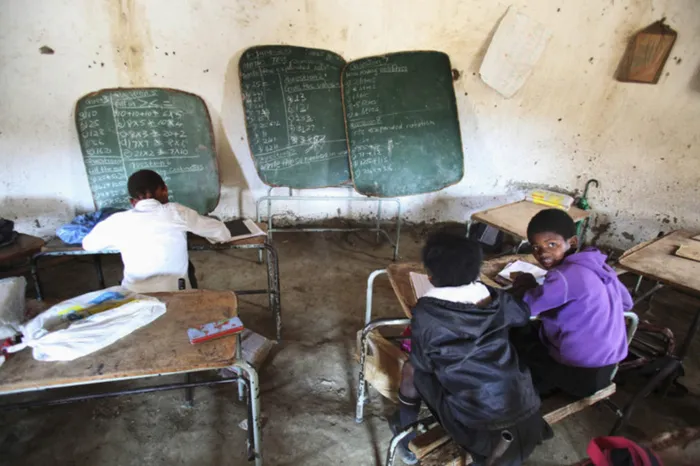
Anti-apartheid activists say the public schooling system remains severely broken, unequal, and in a state of chronic crisis decades after the historic 1976 Soweto uprising.
Image: Picture: Ryan Gray / Reuters
Fifty years after the 1976 Soweto uprising, South Africa’s public schooling system remains deeply divided, leaving millions of poor black learners trapped in under-resourced institutions.
This is according to anti-apartheid activists Sibongile “Bongi” Mkhabela and Fikile Ngcobo.
Mkhabela was one of the student leaders in what became known as the ‘Soweto 11’ trial, following her leading role in the Soweto student uprising of June 16,1976.
She was also a student leader and executive member of the Soweto Students' Representative Council, as well as the general secretary of the South African Students Movement – driving forces behind the student uprising.
Ngcobo was at Naledi High School during the 1970s.
This year, South Africa is marking the 50th anniversary of the Soweto uprising, where students protested against the use of Afrikaans and English as equal mediums of instruction in secondary schools.
The students were also protesting against the Bantu Education Act, which was characterised by separate schools and universities, poor facilities, overcrowded classrooms, and inadequately trained teachers.
The education system in South Africa continues to face intersecting crises of overcrowded classrooms and under-resourced facilities, 50 years later, following the historic 1976 Soweto uprising.
Image: Rowan Abrahams/ACMstudio
Today, South Africa’s public education system continues to face intersecting crises of overcrowded classrooms, under-resourced facilities, persistent delays in textbook deliveries, and severe infrastructure backlogs.
This also includes pit toilets, severe teacher shortages, and inadequate learning material issues that disproportionately affect poorer, rural communities.
According to Mkhabela, these are nothing new.
“We bought our own textbooks because there was no supply of textbooks. Some would depend on their siblings and community to help, and we had to share,” she said, adding that most of her textbooks came from other kids, at home, and churches.
The 69-year-old said her maths teacher was not a trained mathematician.
“Even my husband did maths without a mathematics teacher. Students taught each other,” she said.
Mkhabela, who is also an author, added that although many schools lack proper infrastructure, what makes today’s situation worse is that no community structure guides children on educational values.
She said children are being sent to schools without purpose and values.
South Africa requires 43,677 new classrooms nationally to resolve severe school overcrowding and stabilise class sizes at the recommended maximum ratio. This massive infrastructure shortfall is primarily driven by rapid urbanisation, high provincial learner migration, and historical backlogs.
In provinces like Gauteng, many township and inner-city schools suffer from severe overcrowding, with class sizes reaching 60 to 70 learners per teacher.
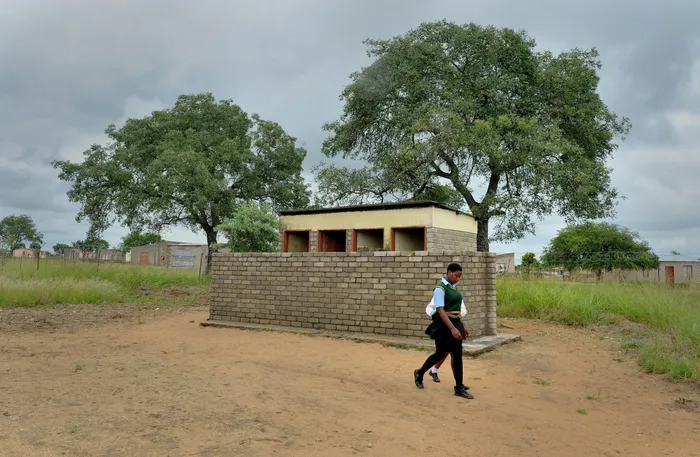
Some schools in the country still have pit toilets.
Image: Dumisani Dube / Independent Newspapers Archives
On the other hand, the pit toilet crisis remains a deeply critical human rights and safety issue in schools.
Despite claims from Basic Education Minister Siviwe Gwarube that over 93% of the structures identified under the Sanitation Appropriate for Education (SAFE) initiative have been replaced, civil society organisations warned that hundreds of schools, particularly in provinces like Limpopo and the Eastern Cape, still rely on hazardous pit toilets.
The Department of Basic Education has repeatedly missed its deadlines to eradicate these structures, leaving students at ongoing risk.
Ngcobo also said the challenges had always been present, adding that during her time as a teacher, she would accommodate more than 90 learners in her class.
“I remember there were 98 students in my first class,” she said, adding that parents were forced to buy textbooks for students.
Ngcobo added that it was disappointing that many schools are still plagued with poor infrastructure and overcrowded classrooms, with the worst-performing schools remaining heavily concentrated in historically disadvantaged townships and rural provinces.
“We must have poor schools, and these schools should be much better than schools before 1976. The 1976 class corrected the wrongs of the past. But now many schools are not performing according to the standard, while learners lack morals and values,” she said, adding that this has also led to many taking their children to Model-C schools.
“What is sad about this situation is that the poor are most affected, and it seems like the Education departments have no plans to improve the situation,” Ngcobo said.
Retired Brigadier General Jackie Khanye, who is also a former student at Naledi High School, said that despite the historic sacrifice of the 1976 Soweto uprising, a lot still needs to be done, citing a lack of resources.
“There are no places where kids can enjoy their studies, such as libraries. We used to have these libraries back then, but it seems like the government has abandoned these resources for technology,” he said.