

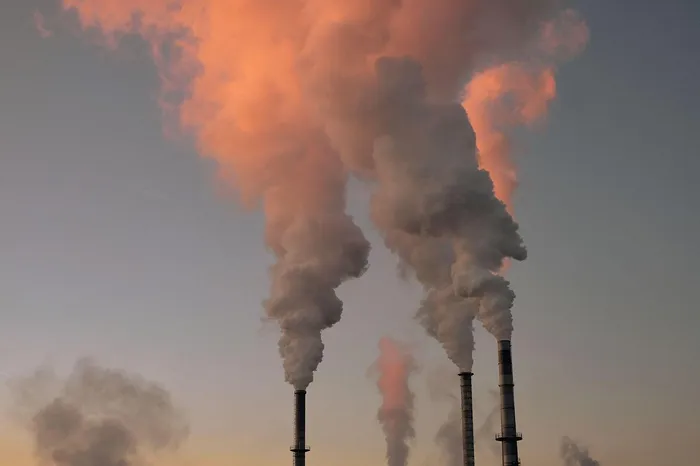
Poorer communities bear the brunt of the air pollution and environmental crisis.
Image: File
Severe weather, El Niño events and climate change are dominating the headlines but while climate change affects everyone, South Africans do not experience its impacts equally.
Research indicates that environmental hazards such as air pollution, flooding, drought and extreme weather disproportionately affect poorer communities, which often have fewer resources to adapt and recover.
This World Environment Day, we put a spotlight on the country's inequality. Not inequality of resources or financial - the inequality of environmental issues.
According to the World Bank, South Africa remains one of the world's most unequal societies despite progress in reducing poverty, with high levels of unemployment and persistent infrastructure and service delivery gaps continuing to affect millions of people.
Environmental researchers increasingly use the term "environmental justice" to describe situations where vulnerable populations are exposed to greater environmental risks while having fewer resources to protect themselves.
According to a recent study by researchers at the University of Cape Town (UCT), many residents are facing an air pollution crisis. UCT produced the first high-resolution map of air pollution risk across the Cape Town metro.
The study found that approximately 1.9 million people, which is 40.3% of Cape Town's population, live in areas classified as having high or very high air pollution risk. Researchers found that these hotspots are concentrated in informal settlements and historically disadvantaged communities where residents already face challenges such as inadequate housing, poorer access to healthcare and proximity to pollution sources.
Dr Meryl Jagarnath of UCT's Division of Environmental Health said conventional air quality assessments often focus only on pollution levels while overlooking the social conditions that influence health outcomes.
The research found that environmental and social vulnerabilities frequently overlap, creating areas where communities face multiple risks simultaneously.
However, the problem goes beyond air pollution.
Southern Africa has experienced increasingly destructive floods, droughts and severe weather events in recent years.
Researchers from World Weather Attribution found that climate change contributed to an increase in the intensity of extreme rainfall events that caused deadly flooding across parts of southern Africa during the 2025/26 summer season.
Their analysis found that extreme rainfall events are now around 40% more intense than they would have been in a pre-industrial climate.
When disasters strike, poorer communities often suffer the greatest losses because homes are more likely to be located in flood-prone areas, on unstable slopes or in informal settlements where infrastructure is limited. This is especially alarming as South Africa's unemployment rate averaged 32.4% in 2025, limiting many households' ability to adapt to environmental shocks.
At the same time, climate-related droughts continue to threaten livelihoods and food security. Earlier this year, parts of the Western Cape experienced one of the worst droughts, showing just how climate extremes are becoming more frequent and less predictable.
Environmental inequality is also evident in South Africa's long-standing air pollution crisis.
The South African Medical Research Council (SAMRC) warned in February that communities living in the Highveld, Vaal Triangle and Waterberg-Bojanala Priority Areas continue to experience air pollution levels that exceed national standards.
Research cited by the SAMRC found strong links between air pollution exposure and increased illness and deaths, particularly from respiratory diseases, tuberculosis and pneumonia.
These areas are home to many lower-income households that have historically borne the health costs associated with industrial development.
If we bear all of the above in mind, we can see that environmental policy cannot be separated from social policy.
The UCT study concluded that reducing environmental risks requires more than lowering pollution levels. It also requires improvements in housing, healthcare access, infrastructure and urban planning in vulnerable communities.
As South Africa marks World Environment Day, the studies suggest that climate change, pollution and environmental degradation are not only ecological issues. They are also inequality issues.
And unless environmental risks are addressed alongside poverty and social vulnerability, the communities with the fewest resources will continue to bear the heaviest burden.
IOL