

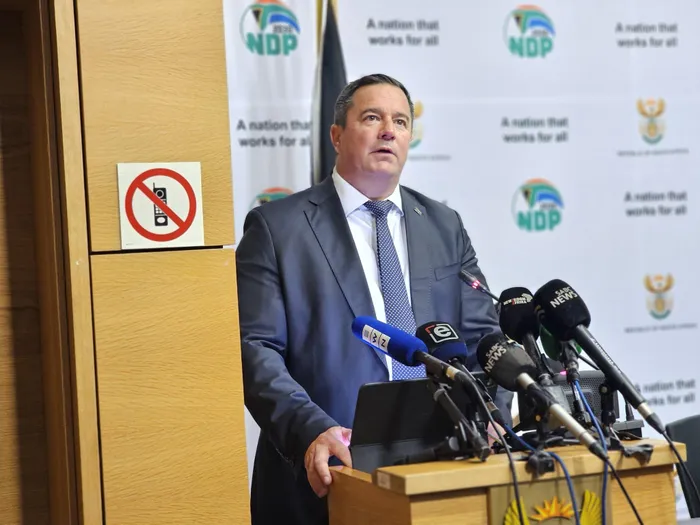
Agriculture Minister John Steenhuisen says 4.4 million animals have been vaccinated against Foot-and-Mouth Disease as South Africa intensifies efforts to contain the outbreak and regain access to key export markets.
Image: Supplied
South Africa has vaccinated approximately 4.4 million animals against Foot-and-Mouth Disease (FMD) as government ramps up efforts to contain the outbreak and restore the country's livestock export potential.
Agriculture Minister John Steenhuisen said government has secured sufficient vaccine supplies and remains on track to vaccinate the country's entire cattle population twice by the end of the year.
Steenhuisen said the focus has now shifted from vaccine procurement to accelerating vaccinations on the ground.
"We have secured the supply now. We will be able to vaccinate every single of the cattle population twice by the end of this year. I'm convinced, and we have got the vaccine to now do it. Now it turns to pace."
The minister revealed that South Africa has procured 13.5 million vaccine doses to date, describing the achievement as a significant milestone in the country's battle against the highly contagious livestock disease.
"This department has procured every available international vaccine matched to our strains here. There's not a single vaccine out there that we're not interested in procuring. We have gone out actively and procured every available matched vaccine that we can get our hands on."
Steenhuisen acknowledged concerns raised by lawmakers and industry stakeholders about the pace of vaccinations, saying he would only be satisfied once every susceptible animal has been inoculated.
"I will never be happy with the pace unless it's immediate and real time. Our challenge now is to get as many vaccines into as many animals as quickly as possible."
The minister said additional animal health technicians had been recruited, while industry bodies including the Red Meat Industry Services (RMIS), the Red Meat Producers Organisation (RPO) and other livestock organisations had been brought in to assist with the mass vaccination drive.
He pointed to KwaZulu-Natal as an example of progress, where the appointment of more than 20 animal health technicians had significantly increased vaccination rates.
Steenhuisen also addressed reports that some animals were being vaccinated without proper identification tags, warning that such practices undermine disease surveillance and future vaccination efforts.
"No animal is to be vaccinated without being properly marked."
He said tagging is critical to ensuring animals receive their second vaccination within the required timeframe and to strengthening South Africa's traceability systems.
The minister clarified that most of the 4.4 million vaccinated animals have not yet received booster shots, noting that the oil-based vaccines currently being used provide protection for up to six months before revaccination is required.
"The goal is not to wait for the full six-month period. The goal is to vaccinate as quickly as possible and try and narrow the timeframe between vaccination one and the second vaccination."
Steenhuisen said defeating the outbreak remains a national priority, not only to protect livestock but also to reopen lucrative international markets currently restricted due to South Africa's FMD status.
"Getting this particular outbreak under control, compartmentalising the country, regaining the status of FMD-free and getting it with vaccination will allow us to access many of those markets that have been closed."
He added that South Africa's red meat industry is well-positioned to compete globally once disease control measures are fully implemented.
"We produce some of the best red meat in the world. Undisputable. Once we get this disease under control and we get that status change, we are really going to start to see the red meat sector in South Africa reaping the benefits."
IOL News