

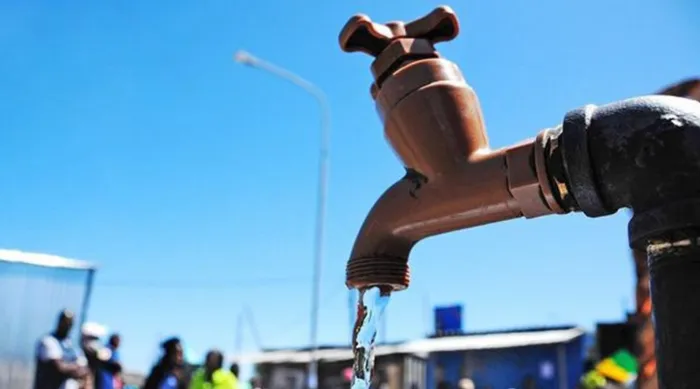
Recent heavy rainfall has raised Cape Town's dam levels significantly, but officials warn that the water crisis is not over and conservation efforts must continue.
Image: File
Cape Town’s water storage system has surged from roughly 59% a year ago to just above 70%, following an extraordinary rainfall event that lifted dam levels by nearly 20% in a single week. However, this sharp rebound has reignited debate over whether the city’s long-standing water crisis is easing or merely experiencing temporary relief.
According to the City of Cape Town’s Water and Sanitation Directorate, dam levels reached 70.8% as of 18 May 2026, up from 59.2% at the same time last year, with officials describing the recent rainfall as an extreme and rare meteorological event.
The City reported that Cape Town dam levels increased by around 20% in one week due to the recent, uncommon rainfall event, adding that “extreme rainfall of this kind is likely only to happen every 20 to 200 years in several of the affected catchments.”
While the surge has allowed the metro to move out of its “early drought caution” stage, authorities have moved quickly to temper expectations of long-term recovery.
“Even though this extraordinary rainfall event has been key to filling our dams by almost 20% in a week, we still need to be water-wise,” said Mayoral Committee Member for Water and Sanitation, Councillor Zahid Badroodien.
“We don’t know when we will get rain again, and if it comes, how much we will get and if it is going to fall in the right place. We cannot depend on unpredictable rainfall to fill our dams.”
City officials noted that current consumption has already risen to 871 million litres a day, exceeding the winter target of 860 million litres, signalling that demand pressure is returning even as storage improves.
At a provincial level, the Department of Water and Sanitation (DWS) confirmed that the Western Cape Water Supply System has also risen to around 70%, up from about 54.6% last year, driven primarily by recent cut-off low-pressure systems and widespread rainfall across key catchments.
“This upward movement is good news, especially when we are only at the beginning of winter. We are also very pleased by the Cape Town Water Supply System, which is at 70.1 percent at this stage compared to 58.4 last year,” Western Cape Head of DWS, Ntombizanele Bila-Mupariwa said.
However, she cautioned that the improvement should not be interpreted as full recovery, with continued appeals for conservation remaining in place across the province.
The Department’s communications further stressed that despite the sharp increase in dam levels, long-term risks remain embedded in the system.
“The Western Cape’s water security remains vulnerable to variable rainfall patterns and changing climate conditions,” said DWS Head of Communications Mandla Mathebula.
“The system is still regarded as sensitive despite current improvements.”
Officials also highlighted structural risks such as ageing infrastructure, uneven catchment recovery, and the growing volatility of weather patterns linked to climate change.
While some dams, including Misverstand, have exceeded 100% capacity and are spilling, authorities say this reflects overflow management rather than surplus security.
“Dam levels exceeding 100% indicate that a reservoir has reached its designed storage capacity and is receiving inflows beyond what it can retain,” Mathebula explained.
“In these cases, excess water is usually released through controlled spillways or overflow structures to maintain dam safety and system stability.”
Despite the dramatic recovery, both city and national officials have stopped short of declaring an end to water scarcity concerns. Instead, they frame the current situation as a seasonal uplift within a longer-term fragile system dependent on unpredictable rainfall patterns.
“The water we currently have in our dams will need to last us until next year, without depending on unpredictable rainfall this year,” Badroodien warned.
“We cannot allow this to give us a false sense of water security.”
With winter rainfall still underway and forecasts remaining uncertain, authorities say the coming months will determine whether the system stabilises above the 80% threshold typically required to avoid future restrictions, or whether Cape Town’s latest “recovery” proves to be another temporary reprieve in a recurring cycle of drought and deluge.
IOL News