

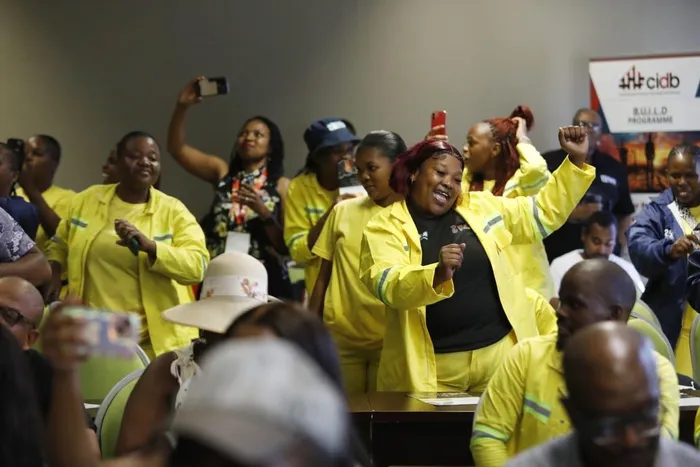
Participants in the Working On Infrastructure pilot project will receive training and mentorship, paving the way for meaningful employment in the public sector.
Image: Doctor Ngcobo/Independent Newspapers
Department of Public Works and Infrastructure (DPWI) Minister Dean Macpherson launched the first pilot project of the Working On Infrastructure plan in Durban on Monday, vowing to eradicate corruption within the Expanded Public Works Programme (EPWP) and create genuine pathways to permanent employment.
Joining him were KZN DPWI MEC Martin Meyer and Free State DPWI MEC Dibolelo Mance, the chief executive officers of Harambee Youth Employment Accelerator, the National Business Initiative, and the Construction Industry Development Board.
Macpherson said the pilot project is a response to the EPWP Listening Tours, where they heard many stories, including those of hope and despair.
He said the pilot project is the government’s response to widespread complaints of abuse, including allegations of opportunities being reserved for political allies, demands for bribes or sex for jobs, and ghost beneficiaries.
Macpherson said the pilot project addresses South Africa’s unemployment crisis and infrastructure maintenance needs by connecting young job seekers with the installation, repair, and maintenance of public assets like schools, clinics, and government offices.
He said the pilot project addresses South Africa’s unemployment crisis and infrastructure maintenance needs. It connects unemployed youth with work installing, repairing, and maintaining public assets like schools, clinics, and government facilities.
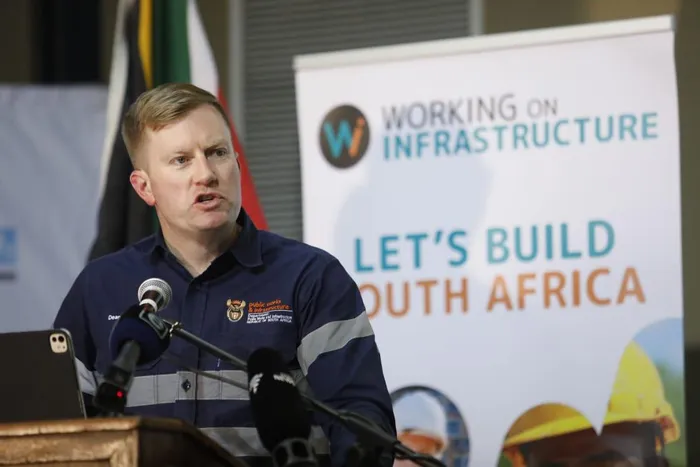
Minister Dean Macpherson discusses the innovative recruitment process designed to eliminate corruption and ensure fair access to job opportunities for all South Africans.
Image: Doctor Ngcobo/Independent Newspapers
He also said the project combines public employment with useful work. This initiative moves beyond temporary relief to focus on maintaining public assets, building relevant skills, preparing people for the workplace, and creating a traceable talent pipeline, transitioning the EPWP from short-term survival to long-term opportunity, making public employment a hand up for economic absorption.
“One of the most important reforms in this pilot is how people will be recruited. For too long, one of the biggest weaknesses in EPWP has been the human hand in the wrong place. When lists are controlled by individuals, the door opens to manipulation. When access depends on who you know, the door opens to patronage. When recruitment is informal, the door opens to abuse. When opportunities are distributed through political gatekeepers, the door closes on ordinary South Africans. That must end,” Macpherson said.
He explained that the pilot programme, supported by Harambee and digitised through the SAYouth platform, aims to reform recruitment. Young people can register, create a profile, add skills/qualifications, apply for opportunities, and be matched more fairly. This system allows for verification, tracking of participation, placement details, training received, and post-programme outcomes. Critically, it prevents opportunities from being reserved for friends/family, eliminates the need to beg a councillor, require a party card, pay a bribe, or face demands for sex in exchange for a job.
“This pilot is also different because it is not built around a one-month opportunity that ends before a participant has even found their feet. The Working on Infrastructure model is designed to provide a longer, more structured opportunity of between eight and ten months,” Macpherson said.
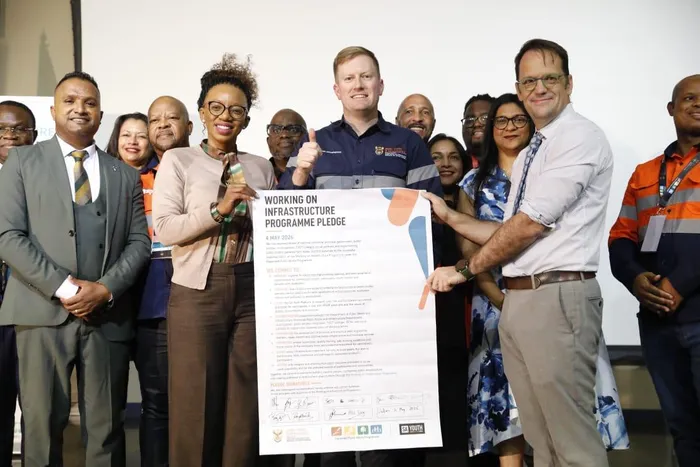
The Working on Infrastructure programme pledge was signed by multiple stakeholders.
Image: Doctor Ngcobo/Independent Newspapers
He said the pilot brings together recruitment, training, work readiness, workplace learning, mentorship and transition support.
Macpherson said KZN and Limpopo will help the department test the model, identify what works, correct what does not, and build the lessons needed for national rollout.
Meyer said that united, they can overcome the unemployment challenge and that the government, civil society, the private sector, faith-based organisations, NPOs, NGOs, and communities must stand together to defeat this scourge.
“Only when you take our hands can we make EPWP truly work. Only together can we begin to win the war against unemployment. Our plans will fail if beneficiaries leave EPWP without meaningful, measurable skills. Our plans will fail if the private sector does not see EPWP as a tool of empowerment but rather as a burden,” Meyer said.
“And importantly, this collaboration will help depoliticise the programme. Ensuring that access is fair, transparent, and based on need, not on connections, membership cards, or affiliations.”
Meyer said they support these reforms and they will work with municipalities to ensure their success.