

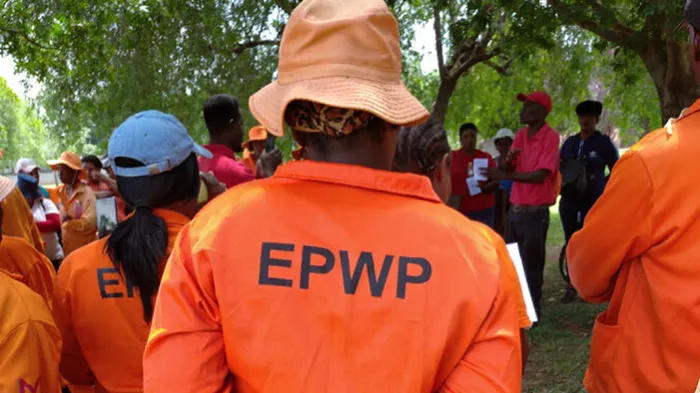
Public Works Minister Dean Macpherson has given eThekwini 30 days to act after suspending EPWP funding over irregular payments, including ghost beneficiaries flagged by the Auditor-General.
Image: File
Minister of Public Works and Infrastructure Dean Macpherson has given the eThekwini Metropolitan Municipality 30 days to adopt a council resolution instituting an investigation and corrective measures, after ordering that Expanded Public Works Programme (EPWP) funding be withheld for the 2026/27 financial year.
Speaking at a media briefing on Tuesday, Macpherson said the decision followed a material irregularity identified by the Auditor-General of South Africa, involving payments made for services not rendered.
“We are here today because the matter before us is serious,” he said.
“It is serious not only because it concerns public money. It is serious because it concerns money that was meant to support poor and unemployed South Africans through work opportunities created across government programmes, including through the Expanded Public Works Programme.”
Macpherson emphasised the importance of the Expanded Public Works Programme as a poverty alleviation initiative.
“It is meant to be a poverty alleviation programme. It is meant to give hope to people in communities where opportunities are scarce,” he said, adding that “for many people, EPWP is the difference between food and no food” and “the difference between a household making it through the month or not.”
The Auditor-General’s findings, he said, showed that the municipality made payments without verifiable records such as attendance registers, and that its database included “ghost beneficiaries, deceased beneficiaries, beneficiaries employed elsewhere in government, and beneficiaries with no valid identity numbers.”
“It means a programme intended to support vulnerable people appears to have been used to channel public money to people who should never have been paid in the first place,” Macpherson said.
“Because when EPWP is abused, it is not only taxpayers who are being robbed. It is the poorest South Africans who are being robbed.”
He noted that the irregularity was first identified during the 2021/22 audit cycle and that the municipality had been notified and given an opportunity to act. “This situation was entirely avoidable,” he said.
“This is not a case where the municipality was unaware. This is not a case where the problem appeared yesterday. This is a case where serious concerns were raised, but not properly dealt with over a prolonged period of time.”
Macpherson said the municipality had failed to comply with section 65(2)(a) of the Municipal Finance Management Act, which requires proper expenditure controls and supporting documentation.
He also highlighted institutional responsibilities, stating that while the national department coordinates the programme, “it does not implement projects, appoint beneficiaries, or make payments.”
Those responsibilities, he said, rest with implementing bodies such as municipalities, and “responsibility for the accuracy, completeness and verification of beneficiary data rests with the implementing public body.”
The minister further pointed to deteriorating communication between his department and the municipality over the past three years, which he said had made it “increasingly difficult to resolve issues proactively and ensure proper oversight.”
Announcing the suspension of funding, Macpherson said: “We do not have the luxury of looking away. We do not have the option of doing nothing. And we certainly should not continue transferring funds as though nothing is wrong.”
“This decision was not taken lightly. But it is a necessary decision,” he added. “When we say we are suspending transfers, we are not acting outside the law. We are acting because the law, the evidence, and our duty to the public leave us with no other responsible choice.”
He said the municipality must pass a council resolution within 30 days because the matter “cannot be handled as an informal administrative exercise” and “cannot be reduced to promises made in meetings, or vague assurances from officials.”
The resolution, he said, must endorse a full investigation, a detailed remedial action plan with clear timeframes and responsibilities, and the institution of disciplinary and criminal proceedings where appropriate.
“The municipality must quantify the loss. It must determine who benefited improperly. It must take all reasonable steps to recover funds improperly paid,” Macpherson said, adding that “anything less would amount to tolerating the abuse of one of South Africa’s most important poverty alleviation programmes.”
He said the case underscored the need for broader reforms to the EPWP, including stronger digital systems and improved verification processes.
“The EPWP must work for the unemployed person standing in line for an honest opportunity. It must not work for the politically connected. It must not work for ghost names on a spreadsheet,” he said.
Macpherson warned that similar action would be taken against any public body found to be misusing EPWP funds.
''The EPWP is too important to be captured by corruption. It is too important to be weakened by poor controls. And it is too important to fail the people who depend on it,” he said.
IOL News