

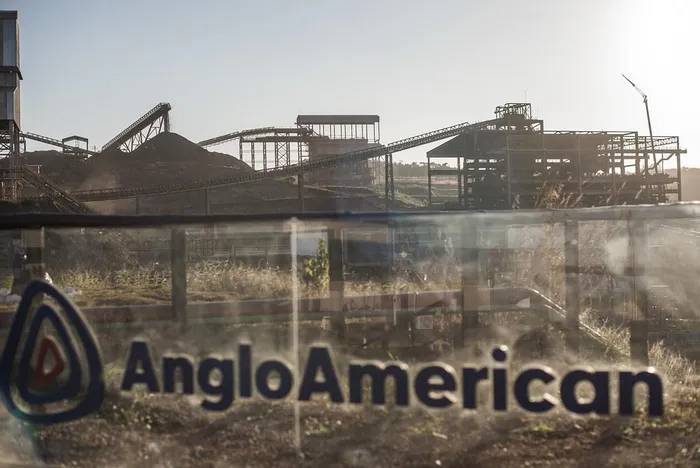
The Mining-Affected Communities in Action (MACUA) has requested the government to ensure that Anglo American fulfills its environmental and social liabilities before allegedly leaving South Africa.
Image: Supplied
Social movement Mining-Affected Communities in Action (MACUA) has accused Anglo American of leaving South Africa without fulfilling its environmental and social liabilities, adding that the government should enforce compliance and ensure that these liabilities are settled before the company exits the country.
These, according to MACUA, include unfinished Social and Labour Plan (SLP) commitments, and what communities describe as a “substantial historical social debt remains outstanding”.
This is after Anglo American, which was founded in 1917 in South Africa, agreed to merge Canadian miner Teck Resources to form Anglo Teck in September 2025. This will result in the relocation of the company’s global headquarters to Vancouver, Canada, further distancing the company from its South African origins.
MACUA said the failure to act against Anglo American cannot be attributed to a lack of legal framework, adding that this reflects a deeper political condition in which the state has become increasingly reluctant to assert its authority against powerful, mobile capital, even when that capital was built on South Africa’s land, labour, and lives.
However, Anglo American said it is not exiting South Africa, adding that it has communicated repeatedly that the claims put forward by MACUA that the company is exiting South Africa are false, irresponsible, and risk misleading the public.
“The merger with Teck Resources is about building a stronger global critical minerals company that is even better positioned to invest and grow, including in South Africa. Anglo Teck (the new merged company) will continue Anglo American’s listing on the Johannesburg Stock Exchange as a much larger global company, providing direct investment access for its substantial shareholder base in South Africa. What will change is that our London headquarters will move to Vancouver,” said the company.
The company added that no South African assets, licences or companies move anywhere as a result of the merger, adding that they remain fully enforceable in the country regardless of where the group's head office is based or what the top listed entity is called.
“This includes the MPRDA, environmental legislation, SLP requirements and all worker-related obligations. The merger does not, and cannot, extinguish those obligations.”
MACUA, which has been accusing Anglo American of engineering a "slow-motion exit" from South Africa, said Anglo’s operations have left behind extensive environmental damage, including land sterilisation, water contamination, and acid mine drainage.
The organisation added that based on publicly available regulatory data and conservative attribution to Anglo’s historic footprint, unfunded environmental and closure liabilities linked to Anglo’s operations amount to at least R40–55 billion.
“This cannot become a case of profits leaving and damage remaining. Any exit must be subject to strict public-interest conditions and full accountability,” said MACUA national coordinator Sabelo Mnguni.
The organisation said Anglo American benefited from a system of racial repression that paid Black mineworkers far below the value of their productivity during the twentieth century.
“Conservative estimates indicate that at least 30% of Anglo’s historic profits were generated through this artificially suppressed wage structure. Over more than a century, this amounts to an estimated US$60 billion in value transferred from Black workers and their families to Anglo American, through racialised surplus extraction,” MACUA said, adding that an exit under these conditions would not be a neutral corporate decision, but would be an act of debt evasion.
During its protest outside the Anglo American offices, where a memorandum of demands was handed to the company’s officials, MACUA said Anglo American must submit to a public, independently verified Exit Impact Assessment, covering outstanding environmental liabilities, unpaid or incomplete SLP obligations, long-term socio-economic impacts on host communities, and post-closure sustainability and livelihood plans.
The organisation also wants Anglo to enter a binding settlement process with affected communities to address decades of unfulfilled development commitments, structural damage to local economies, loss of land, livelihoods, and health, as well as the unpaid labour of women that subsidised Anglo’s workforce.
Meanwhile, the Department of Mineral and Petroleum Resources has called on MACUA to report the matter, saying it would welcome specifics on the allegations being referred to it.
“The Mineral and Petroleum Resources Development Act (MPRDA), together with other laws such as the National Environmental Management Act (NEMA), spell out obligations for mining rights and permit holders. These laws also spell out processes to be followed or invoked to ensure compliance. The Department would welcome specifics on the allegations being referred to, which will enable application and enforcement of prevailing laws,” said the department.
Since 2018, Anglo American has been engaged in a major, multi-phase restructuring in South Africa.
The company first exited South African thermal coal through the sale of its Eskom-tied operations to Seriti Resources in 2018, followed by the demerger of its remaining thermal coal export business, forming a new independent company, Thungela Resources Limited, in 2021.
The company also completed a demerger of its approximately 79% stake in Amplats in May 2025. The platinum business was renamed Valterra Platinum Limited and now operates as an independent entity with listings in Johannesburg and London.
Anglo American is reportedly in advanced negotiations to sell its 85% stake in De Beers, a deal which is expected to be finalised in 2026.