

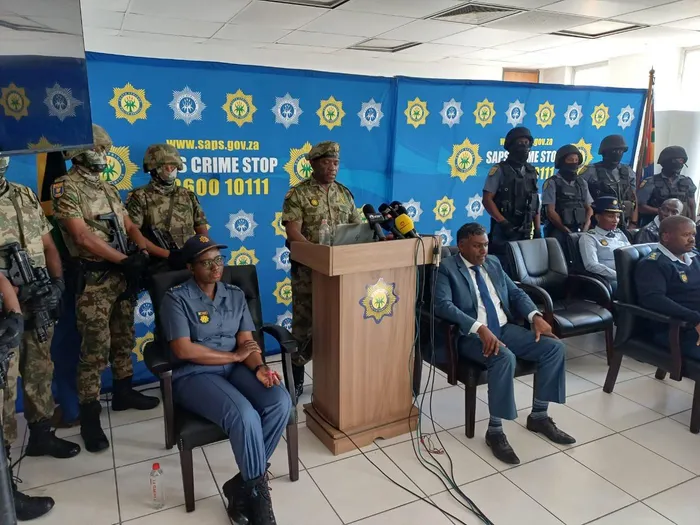
KZN Police Commissioner Lieutenant General Nhlanhla Mkhwanazi addressing a media briefing on Sunday at the SAPS KZN Headquarters. A large body of research material confirms that the Political Killings Task Team makes malicious arrests, covering for politically connected hitmen and tenderpreneurs, says the writer.
Image: SAPS
For generations, the South African Police Service badge has represented protection, justice and the promise that the law stands above criminals.
One year later, that promise lies under its darkest cloud.
When KwaZulu-Natal Police Commissioner Lt-Gen Nhlanhla Mkhwanazi stepped before the cameras on July 6 last year, he did not merely expose alleged corruption. He detonated one of the biggest crises of confidence in the democratic era, accusing senior police leaders of corruption, political interference and allowing organised crime to penetrate the country's top law enforcement structures.
His allegations forced South Africans to confront an alarming question. What happens when those entrusted with fighting organised crime are themselves accused of helping to protect it?
The claims sent shockwaves through the country, fuelling fears that criminal syndicates had allegedly infiltrated parts of SAPS, manipulated investigations and compromised the pursuit of justice.
At the centre of the allegations was a claim that then Police Minister Senzo Mchunu issued a late night instruction to immediately disband the Political Killings Task Team and seize more than 120 active case dockets, bypassing National Police Commissioner General Fannie Masemola.
His allegations of corruption, political interference and compromised investigations sent shockwaves through the country.
Claims that criminal syndicates had allegedly infiltrated parts of SAPS and manipulated investigations shattered public confidence and intensified fears that justice itself had been compromised.
Among the claims were Police Minister Senzo Mchunu issued a sudden, late-night instruction to immediately disband the PKTT and seize over 120 active case dockets, bypassing Masemola.
At the centre of those allegations was alleged underworld figure Vusimuzi "Cat" Matlala, who was accused of cultivating relationships with police officials and allegedly using members of SAPS to serve criminal interests instead of the public.
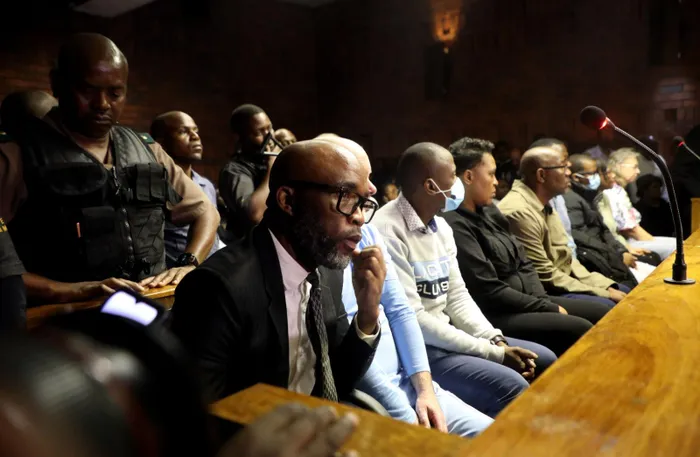
The Medicare 24 net widens. The SAPS has suspended five additional senior officers over the irregular and dubious R360 million police health services tender awarded to controversial businessman Vusimusi "Cat" Matlala.
Image: Oupa Mokoena / Independent Newspapers
The allegations remain before investigative and judicial processes, but they have become one of the defining symbols of the crisis engulfing the police service.
The consequences have been swift and unprecedented.
As the scandal deepened, President Cyril Ramaphosa established the Madlanga Commission to uncover the truth behind allegations of corruption, criminal infiltration, procurement irregularities and political interference within SAPS.
Over the past year, a succession of senior police leaders have been suspended, dismissed, arrested or resigned as corruption investigations widened.
The country also knew about the Big 5 cartel, which had infiltrated the SAPS and running the show.
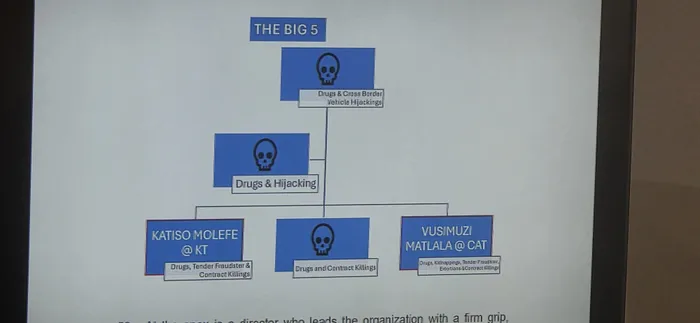
Here is a graphic that Lt-Gen. Dumisani Khumalo used to illustrate the three members of the cartel, whom he said he will not reveal at this stage due to ongoing investigations. Katiso Molefe and Vusimuzi Matlala are part of the Big Five cartel.
Image: Kamogelo Moichela/IOL News
National Police Commissioner Gen. Fannie Masemola was suspended over allegations relating to an irregular R228 million health tender.
Suspended Deputy National Commissioner Lt-Gen Shadrack Sibiya has been suspended and faced investigations over allegations that include collusion with tender beneficiaries and interference in politically motivated murder investigations.
Former Head of Organised Crime Maj-Gen Richard Shibiri was dismissed after disciplinary proceedings, while Brig. Rachel Matjeng also lost her position over her alleged role in the controversial procurement process.
Sgt Fannie Nkosi remained behind bars after bail was refused.
Investigations have also drawn in Deputy Crime Intelligence head Feroz Khan and several other senior officers, including Maj-Gen Busisiwe Precious Temba, Lesetja Senona, Ebrahim Kadwa and Thokozani Mathonsi.
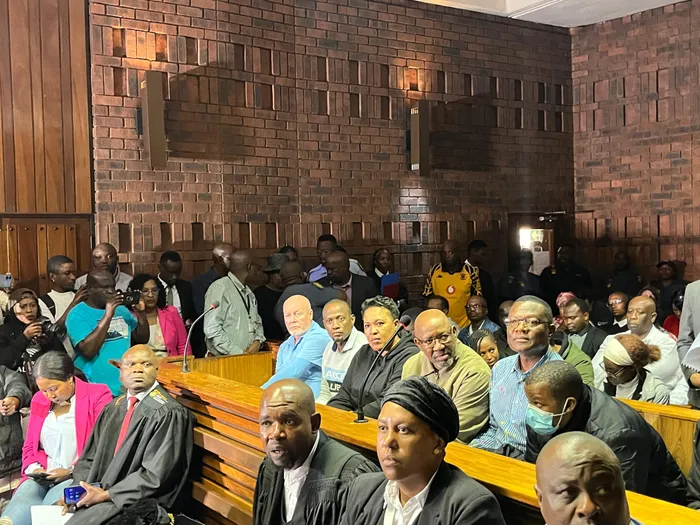
Twelve senior police officers were arrested on Tuesday in connection with the awarding of the R360m Medicare 24 Tshwane District contract.
Image: Kamogelo Moichela
Lt-Gens, Dr Molefe Fani, Lineo Nkhuoa and Nonkululeko Edith Mavundla, together with several brigadiers, colonels and captains, have also faced disciplinary or investigative action as authorities sought to dismantle alleged networks of corruption.
The spotlight has also fallen on the R360-million SAPS Health Risk Management contract.
Twelve police officers accused of corruption linked to the contract have appeared before the court and were granted bail ranging from R40,000 to R80,000.
Their criminal cases remain before the courts, where every accused person is presumed innocent unless proven guilty.
One year after Mkhwanazi's explosive briefing, South Africa is still waiting for answers. The courts will decide the criminal cases. The Madlanga Commission will determine what happened inside SAPS.
The commission is expected to deliver its last report on August 31.
IOL Politics