

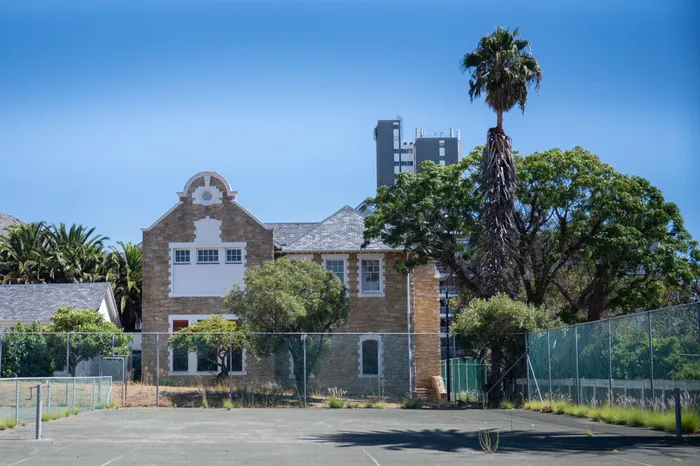
The Tafelberg site in Sea Point under contention.
Image: Armand Hough/Independent Newspapers
The Constitutional Court has ruled that the Western Cape provincial government acted unlawfully in its handling of the sale of the state-owned Tafelberg property in Sea Point, Cape Town, in a landmark judgment that has been welcomed by both the national government and other political voices as a major victory for spatial justice.
In its ruling, the apex court found that the province failed to meet its obligations under the principles of co-operative governance by not consulting or informing the Minister of Human Settlements before deciding to dispose of the strategically located property. The Court also declared the sale unlawful, finding that the province had incorrectly classified the land as surplus to its requirements.
Minister of Human Settlements Thembi Simelane welcomed the judgment, describing it as “an important affirmation of government’s constitutional obligations in advancing spatial justice and equitable access to well-located land.”
The ministry said the ruling reinforces government’s duty to engage meaningfully with affected communities and take their views into account before selling public land with significant social value.
Simelane said dismantling the spatial inequalities created during apartheid remains a central government priority, adding that the strategic release and effective use of well-located public land is critical to accelerating affordable housing delivery and building inclusive, integrated human settlements.
“This judgment serves as an important reminder of our collective responsibility to ensure that public assets are managed in a manner that advances the public interest and gives effect to the constitutional right of access to adequate housing,” Simelane said.
She added that government must continue prioritising the use of well-located land to redress historical spatial injustices and expand access to affordable housing opportunities.
According to Simelane, the judgment will help ensure that more South Africans can access decent, affordable housing closer to employment opportunities, schools, transport networks and other essential services. She also acknowledged the role played by civil society organisations and communities in advancing social justice through constitutional processes.
The ministry noted that during the 2025/26 financial year, the Housing Development Agency, an entity of the Department of Human Settlements, acquired more than 2,447 hectares of well-located land to support the development of sustainable and integrated human settlements across South Africa.
The judgment also prompted a strong response from ActionSA, with the party’s Cape Town mayoral candidate, Dereleen James MP, describing it as a damning indictment of both the Western Cape Provincial Government and the City of Cape Town.
James argued that the ruling exposed the Democratic Alliance’s failure to dismantle apartheid-era spatial planning and deliver affordable housing on well-located land.
She said the judgment confirmed what “thousands of Capetonians already know” by demonstrating that the DA had failed to provide affordable housing where it is needed most.
“Capetonians deserve a city that takes action to undo the injustices of the past and build a future where people can live closer to jobs, opportunity and essential services,” James said.
Sandra Dickson from the GOOD Party said the judgment "reaffirmed that meaningful public participation is not a box-ticking exercise when decisions are made about public land. Residents must have a real opportunity to be heard before decisions are effectively finalised".
Dickson said a case in point is Erf 9702 in Brackenfell where residents have opposed the disposal of this land since 2021 and have repeatedly asked that the site be used in a way that adds value to the environment and benefits the wider Brackenfell community.
"Instead, the land has been placed out to tender by the City, despite ongoing community objections. Efforts by residents and ratepayer representatives to obtain information, raise concerns and secure meaningful engagement have been blocked, declined or deferred through official City processes.
"This is not an isolated concern. In other areas, residents are also raising objections where blocks of affordable flats are being planned for unsuitable sites, without proper engagement on location, infrastructure, traffic, safety, environmental impact and long-term community fit."
Dickson said public land must be used in the public interest.
"Communities are not opposed to housing. They are opposed to being ignored."