

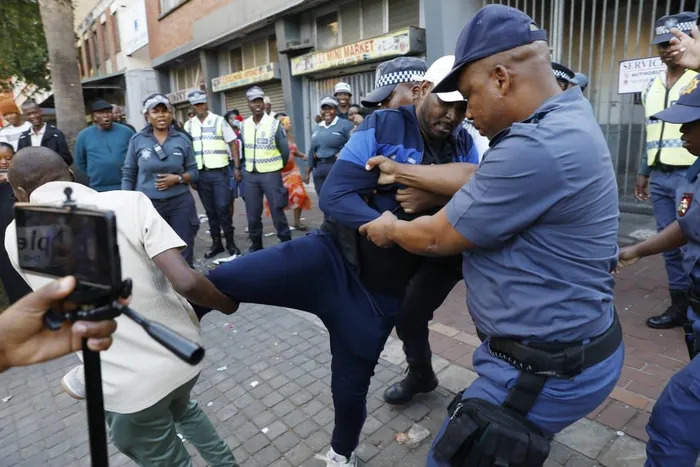
President Cyril Ramaphosa says the government will strengthen border controls, crack down on corruption and introduce new legislation as part of efforts to manage illegal immigration.
Image: DOCTOR NGCOBO Independent Newspapers
President Cyril Ramaphosa has said that while some people associate illegal immigration with crime, the vast majority of foreign nationals in South Africa are not involved in criminal activity.
In his weekly newsletter on Monday, following a national address on Sunday outlining government plans to address illegal immigration, Ramaphosa acknowledged growing public concern about border security and enforcement.
“In recent months, many South Africans have raised concern about illegal immigration, asking whether our borders are secure and our laws are being enforced,” he said.
He added that the government was responding to those concerns through a “comprehensive approach for migration management” adopted by the Cabinet, which includes tighter enforcement and legal reforms.
Ramaphosa said organised criminal syndicates were exploiting weaknesses in the immigration system to commit offences such as drug trafficking, illegal mining and extortion, but stressed that most foreign nationals were not involved in crime.
“Some people associate illegal immigration with crime. While there are organised syndicates that exploit weaknesses in our immigration system to commit crimes like drug trafficking, illegal mining and extortion, he said the overwhelming majority of foreign nationals in South Africa have no involvement in crime.”
He also acknowledged public concerns about the impact of illegal immigration on jobs, small businesses and public services, including clinics, hospitals and schools.
However, he said official statistics show foreign nationals account for a small proportion of public service users.
Tensions over immigration have increased in parts of the Western Cape, KwaZulu-Natal and Gauteng, with protests targeting undocumented migrants.
Some undocumented foreign nationals have reportedly begun leaving the country amid the unrest.
An anti-immigrant group, March and March, has called for undocumented migrants to leave South Africa by June 30.
It is also demanding stricter visa rules, a review of asylum policies, action against businesses employing undocumented workers, accountability for corrupt police officers, and restrictions on public services for undocumented migrants.
Ramaphosa said the government would intensify enforcement, deploy more resources and technology at the borders, and improve the efficiency of the immigration system.
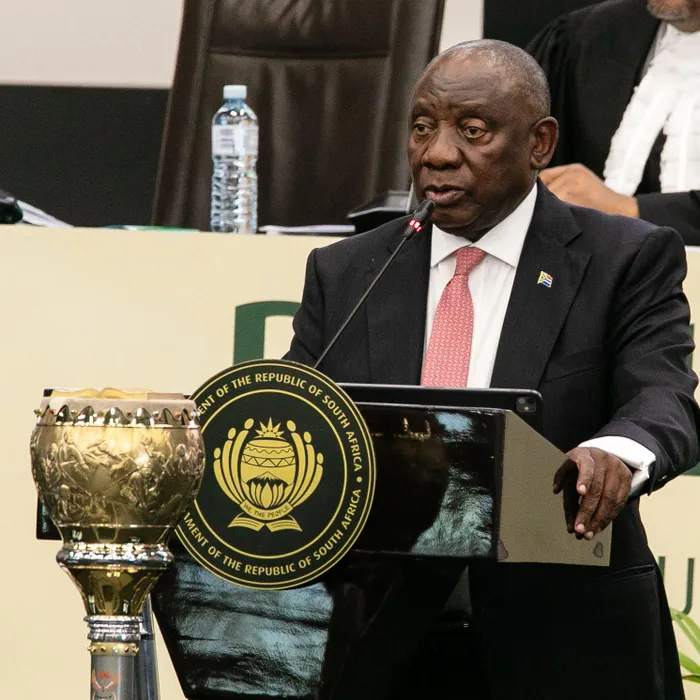
President Cyril Ramaphosa has urged South Africans to uphold the Constitution, reject violence and avoid allowing concerns over illegal immigration to fuel xenophobia or social division.
Image: Zwelethemba Kostile / Parliament of RSA
He also said corruption within the system would be tackled.
“We are cracking down on violations of our immigration, labour and other laws. We are deploying more resources and technology to secure our borders.”
The government also plans to introduce legislation to regulate foreign worker quotas in different sectors and ensure informal businesses are properly registered.
Ramaphosa said South Africa would work with regional and continental partners to address the economic hardship and instability that drive migration.
He urged South Africans not to take the law into their own hands and called for calm amid rising tensions.
“The task of managing migration belongs to all of us,” he said.
“That does not mean that communities should take the law into their own hands – only authorised officials of the state may enforce our immigration laws – but there is a role for all South Africans in upholding our laws and building social cohesion.”
He also warned against violence, misinformation and xenophobia, urging communities to support social cohesion.
“We must actively work against efforts to divide us. We must confront racism, sexism, xenophobia and Afrophobia. Our goal must be to build united and cohesive communities where all laws are respected and upheld.”
Opposition parties responded with mixed reactions.
ActionSA leader Herman Mashaba criticised the address, saying it repeated “failed and tired talking points” and called for stronger enforcement and deportations.
Democratic Alliance (DA) leader Geordin Hill-Lewis welcomed the tone of the address, saying South Africans must reject xenophobia and that law enforcement should remain the responsibility of the state rather than vigilante groups.
IOL Politics