

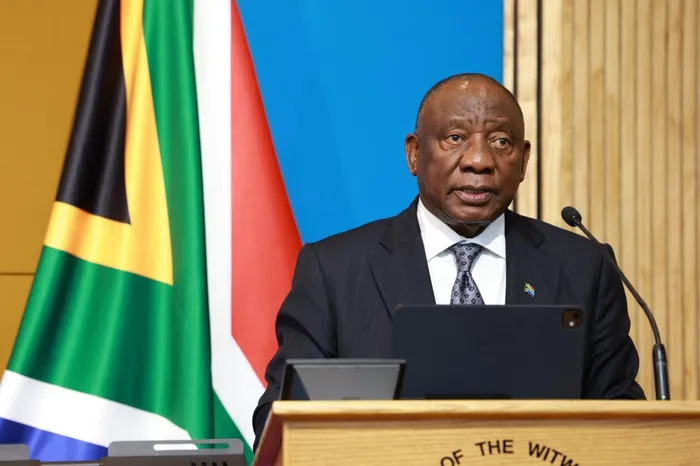
President Cyril Ramaphosa will address South Africans about the government's latest plans to manage the migration crisis.
Image: GCIS
President Cyril Ramaphosa is expected to address the nation at 6pm on Sunday, June 7, to outline the government's new plan for managing the migration crisis, the Presidency has confirmed.
"Cyril Ramaphosa will this evening address the nation on the government's management approach to illegal migration and the recent surge in protests against foreign nationals," the Presidency said in a statement issued on Sunday morning. The address will take place at the Union Buildings in Pretoria.
Meanwhile, Minister in the Presidency Khumbudzo Ntshavheni indicated on Friday that there will be no "shutdown" as anti-illegal immigration protests continue ahead of the June 30 deadline for undocumented foreign nationals to leave the country.
"Cabinet received and approved a comprehensive approach to managing migration in South Africa, developed by the IMC Inter-Ministerial Committee on Migration, and approved the National Action Plan (NAP), a country report on migration in South Africa," she said during a post-Cabinet briefing on Friday.
“The president will address the nation on this matter, and the details will be provided by the president."
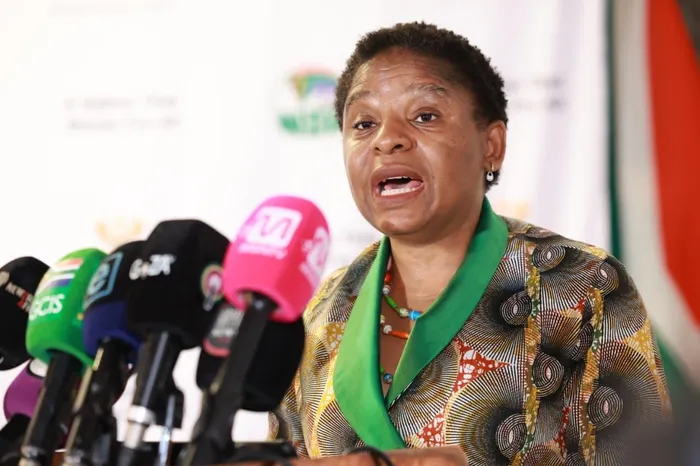
Minister in the Presidency Khumbudzo Ntshavheni has warned anti-illegal immigration protesters against taking the law into their own hands.
Image: Supplied/GCIS
Her comments come amid ongoing protests targeting undocumented migrants.
Anti-immigrant tensions have been reported in parts of South Africa, including the Western Cape, KwaZulu-Natal and Gauteng.
Some demonstrations are led by the controversial anti-migrant group March and March.
The group has called on undocumented migrants to leave the country by June 30, despite government appeals for calm.
Some foreign nationals have already left South Africa because of growing fears of violence and a planned shutdown at the end of June.
However, Ntshavheni insisted that no shutdown would be allowed.
"South Africans have the right to protest and to march, as provided for in the Constitution," she said.
"But South Africans have no right to take the law into their own hands. As we have indicated before, nobody is going to shut down this country. We must be very clear about that."
She said disclosing details about those behind the marches could compromise ongoing law enforcement operations.
"What we are communicating, and what the president will detail, is that work is being coordinated, as we have indicated in previous briefings, parliamentary debates and statements issued by colleagues within the criminal justice cluster," she said.
According to Ntshavheni, the government has been working on migration issues for an extended period.
"We have been consolidating that work, but we will leave the details of this comprehensive approach to be explained and outlined by the president. Historically, even the Department of Employment and Labour has been involved in these efforts. Let us allow the president to address the nation."
She added that the justice cluster and relevant structures would be available to answer media questions following the president's address.
Meanwhile, Acting National Police Commissioner Lieutenant General Puleng Dimpane and the National Joint Operational and Intelligence Structure (Natjoints) on Wednesday issued a strong warning against lawlessness linked to protests targeting undocumented migrants.
Dimpane stressed that only authorised state institutions may enforce immigration laws and that no individual or group is permitted to take the law into its own hands.
The warning follows deadly unrest linked to anti-immigrant tensions.
Last month, Ghana launched a voluntary repatriation programme.
About 295 nationals returned home amid growing concerns about safety and rising anti-immigration sentiment in South Africa.
IOL Politics