

The state will spend R1 trillion on roads, dams, schools, hospitals, clinics and key energy and transport projects over the next three years, President Cyril Ramaphosa announced during the Presidency's Budget Vote in Parliament on Tuesday.
Image: Ron Lach/Pexels
President Cyril Ramaphosa announced on Tuesday that the government will invest R1 trillion over the next three years in building and refurbishing roads, dams, schools, hospitals and clinics among others, to drive economic growth and create jobs opportunities.
He made the remarks during the Presidency's Budget Vote debate in Parliament.
Ramaphosa said the Budget Vote was the first to be considered since the National Assembly's Committee on the Presidency was established in December 2025.
He welcomed the establishment of the committee, saying members of the House could be assured of the Presidency's full support.
Ramaphosa said the Presidency does not build roads, deliver water or supply medicines to clinics, nor is it simply a coordinating institution.
He said the Presidency's key role is to drive inclusive growth and job creation, reduce poverty and tackle the high cost of living, and build a capable, ethical and developmental state.
"The Presidency ensures that the efforts of departments, provinces, municipalities and social partners are coordinated, focused and directed towards the achievement of our developmental objectives."
Ramaphosa said the Presidency would focus its work during the current financial year on the priorities outlined in the State of the Nation Address (SONA) earlier this year.
The first priority, he said, was to grow the economy and create jobs.
"Following years of challenges, our economy is on the mend. The macroeconomic environment has improved, tax collection revenues remain strong, public finances are in better shape and national debt has stabilised."
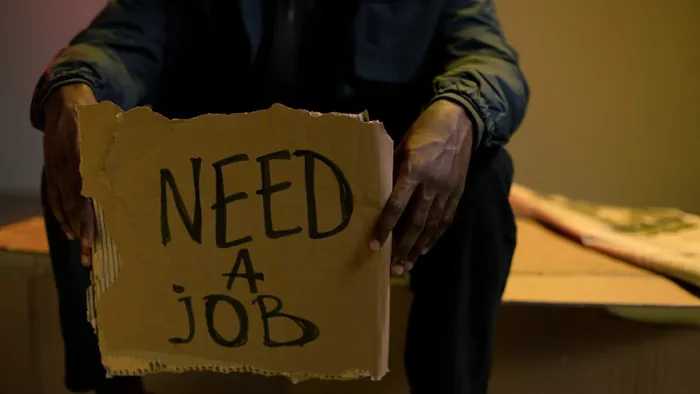
South Africa’s unemployment rate rose to 32.7% in the first quarter of 2026, up from 31.4% in the previous quarter.
Ramaphosa said that ratings agency Moody's last week upgraded South Africa's outlook from stable to positive.
“This comes six months after S&P lifted South Africa’s credit rating for the first time in two decades. With dedicated investment expertise, the Presidency continues to coordinate the national investment drive."
He said the sixth South Africa Investment Conference, held in March, secured investment pledges exceeding R890 billion across various sectors of the economy.
"In March we held a successful 6th South Africa Investment Conference, where we secured pledges in excess of R890 billion in industries across the economy."
"Significantly, a substantial portion of investment commitments were from domestic investors. When local investors show confidence in the prospects of the economy, international investors follow suit."
Ramaphosa said economic growth was not an end in itself.
“Its purpose is to create work, restore hope and expand opportunity. Every investment secured, every infrastructure project completed and every reform implemented must ultimately improve the lives of ordinary South Africans."
According to the president, the Presidency is also working with relevant departments to protect jobs in the automotive, cement, steel and other distressed sectors.
"We have embarked on the largest infrastructure build in South Africa’s history."
"Over the next three years, the state will be investing R1 trillion in building and refurbishing roads, dams, schools, hospitals and clinics, as well as energy, logistics and transportation infrastructure."
Ramaphosa said the Presidency was coordinating efforts to expand markets for South African goods.
"We are strengthening our trade relations with our main trading partners, including a number of countries on the African continent, the European Union, the United States and China, while expanding the diversity and volume of our exports to other parts of the world."
Turning to electricity supply, Ramaphosa said load shedding had been one of the greatest constraints on economic growth and social development for nearly two decades.
However, he said the country had now gone more than a year without load shedding, thanks to the work of the National Energy Crisis Committee, Eskom, government departments and social partners.
"Through the National Energy Crisis Committee – and thanks to the efforts of Eskom, government departments and social partners – the country has recorded more than a year without load shedding."
"Eskom has returned to financial and operational viability. New capacity continues to be added to the national grid including from renewables."
"We are now working to bring load reduction experienced by communities in many municipalities to an end."
Ramaphosa also highlighted improvements in logistics and freight movement.
"Through the focused work of Transnet, supported by the National Logistics Crisis Committee, the performance of our railways and ports is improving."
He said these improvements were helping to ease longstanding bottlenecks in key sectors such as mining, agriculture and manufacturing.
The president said progress was also evident in other sectors of the economy.
"For example, between January and March this year, agriculture recorded an 11 percent increase in export earnings compared to the same period last year. South Africa is now the world’s largest exporter of citrus by volume."
He said access to productive land remained critical to expanding agricultural output, creating jobs and reducing poverty.
"Access to productive land is essential to further grow our agricultural output, create jobs and lift people out of poverty."
Ramaphosa said the government had acquired about 2.5 million hectares of land through the Proactive Land Acquisition Strategy programme.
"Over time, government has acquired around 2.5 million hectares of land under the Proactive Land Acquisition Strategy programme."
"This land has generally been leased to beneficiaries on a short-term basis, which limits their ability to borrow money, invest in the land, grow agricultural production and contribute to the rural economy."
"As part of our efforts to revitalise rural economies, to strengthen land rights and support the inclusion of black farmers in commercial agriculture, we have embarked on a concerted programme to release this land with title deeds to deserving beneficiaries."
He said the minister of land reform and rural development Mzwanele Nyhontso would provide details of the programme to convert agricultural leases into title deeds.
Ramaphosa also pointed to strong growth in tourism.
"South Africa recorded 10.5 million international tourist arrivals last year, which is the highest number of visitors on record."
"And in the first quarter of this year, tourist arrivals were up by more than 12 percent compared to the same period last year."
He said these were among the indicators of progress towards inclusive growth and job creation.
"They are the building blocks upon which investments are being secured and opportunities are being created for the people of South Africa."
"Even while there is clear progress, events far from our shores are threatening to slow our emerging economic recovery."
IOL Politics