

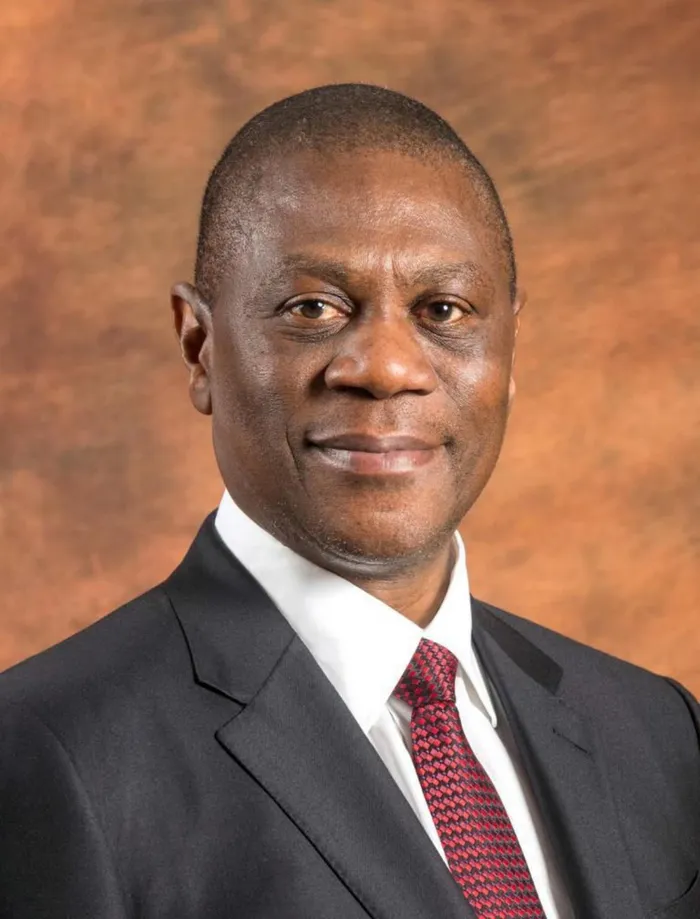
Deputy President Paul Mashatile said comprehensive agricultural support to subsidise fertilizer, seeds and production inputs were being provided to smallholder farmers.
Image: Supplied
Deputy President Paul Mashatile on Thursday said the government will continue to look at other mechanisms of support for small-scale farmers when the temporary fuel levy relief comes to an end in June.
Responding during the question-and-answer session in the National Assembly, Mashatile said Mineral and Petroleum Minister Gwede Mantashe will continue to look at the issue of the fuel levy.
“We will look at other mechanisms of support, should that not be continued. So we will not abandon the farmers,” he said.
Mashatile also said comprehensive agricultural support to subsidise fertilizer, seeds and production inputs were being provided to smallholder farmers.
“This is complemented by infrastructure support, such as fencing, irrigation, irrigation systems, boreholes, and mechanisation, ensuring that farmers can sustain productivity even under rising input costs, in partnership with the Land and Agricultural Development Bank, known as the Land Bank, and other development finance institutions.
“Blended finance instruments are also being expanded to cushion farmers against market volatility and to strengthen their access to affordable credit.”
He stated that the Department of Agriculture, in collaboration with the Perishable Products Export Control Board, continued to assist emerging and smallholder farmers with support towards meeting the food safety and health requirements required by retail markets.
Mashatile said support was also sourced from statutory levies authorised by the Minister of Agriculture, with a commitment that at least 20% would come from the levies dedicated to fostering transformation.
“This initiative aims to integrate more smallholder farmers into various agricultural value chains. The government is also accelerating the localisation of fertilizer production and promoting climate smart farming to reduce dependency on imported inputs,” he said.
“Extension and advisory services play a key role here, transferring knowledge on sustainable soil management, water efficient irrigation, and low input farming practices.”
According to the Deputy President, the smallholder empowerment program implemented in partnership with the Japan International Cooperation Agency, was guiding farmers towards market-led production and helping them meet food safety and health requirements for retail markets, while integrating them into the agricultural value chain.
Mashatile added that the government’s efforts were focusing on protecting and enhancing the sustainability and profitability of small-scale farmers by providing access to markets, finance, resources, and technology.
“As a government, we remain steadfast in our commitment to protecting their viability and resilience, recognising that small scale farmers are indeed the foundation of food security in our nation.”
Asked the extent the government was supporting investments in alternative energy solutions, such as bio-fuel production, for rural small-scale farmers, Mashatile said an increase in fuel prices hit hard on small-scale farmers.
“I agree with you that the reduction on the fuel levy that the Minister of Finance introduced went some way to cushion them, but as I said in my main answer, we are looking at other methods of ensuring that they are sustainable,” he said.
Mashatile further said there were different funds available to the Department of Agriculture to support small-scale farmers.
“It is a combination of a number of initiatives that are being made available by the government to ensure that they can survive, because, as I said earlier, food security is very important for the nation, and therefore our farmers need support, in particular the small scale farmers.
“We will continue to support them through many of these initiatives that I've indicated in my reply earlier.”
Mashatile told the MPs that the Land Bank has committed R10 billion to bolster small-scale farmers.
“This support will not stop. It will come, as we say, in various forms. We will subsidise issues of seeds, fencing, and a whole lot of costs that they incur in order to be productive.”