

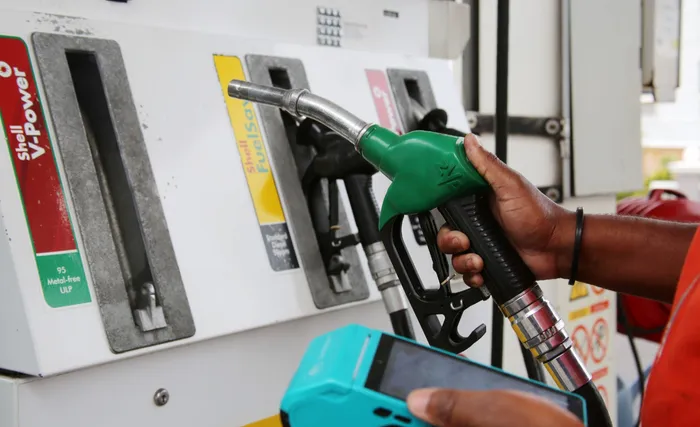
Minister in the Presidency Khumbudzo Ntshavheni has stated that the country has an adequate fuel supply for the immediate future.
Image: Tumi Pakkies / Independent Newspapers
Despite reports of fuel shortages at some petrol stations in parts of South Africa, the government has reassured motorists that there is no national supply crisis, attributing the disruptions to panic buying and logistical constraints.
Minister in the Presidency Khumbudzo Ntshavheni said fuel supplies remain stable, despite growing concern fuelled by social media posts showing long queues and empty pumps.
“South Africans are discouraged from panic buying and fuel hoarding,” Ntshavheni said on Thursday while briefing the media on the outcomes of the latest Cabinet meeting.
She explained that dry fuel stations were largely the result of increased demand and distribution pressure rather than a collapse in supply.
“Depending on how South Africans behave, that will determine the extent to which we've got the supply,” she said.
The shortages come in the wake of a sharp fuel price increase that took effect this week, with petrol rising by R5.26 per litre, diesel by R9.49 per litre, and illuminating paraffin by R10.80 per litre, driven by global oil market pressures linked to the ongoing US-Iran conflict.
In response, Finance Minister Enoch Godongwana and Mineral and Petroleum Minister Gwede Mantashe announced a temporary R3 reduction in the general fuel levy from April 1 to May 5 to cushion consumers.
Despite this intervention, concerns over supply intensified, even as the government reiterated that South Africa holds about eight million barrels in strategic fuel reserves and does not rely primarily on crude oil imports from the Middle East.
Industry bodies have echoed the government’s stance, pointing to demand spikes rather than supply failures.
The Fuels Industry Association of South Africa said above-normal demand at service stations, coupled with limited road tanker availability, had contributed to delivery delays and intermittent stock-outs in several regions.
Similarly, the Fuel Retailers Association (FRA) linked the shortages to panic buying ahead of the price hike, with reports of motorists filling containers to stockpile fuel.
FRA CEO Reggie Sibiya said the country remained stable in terms of supply.
“What really has been causing the shortages in some of the filling stations has been panic buying, mainly pushed by social media, and that was not factual at all,” he said.
He noted that about 140 petrol stations had run out of fuel ahead of the increase, down from 226 the previous week, although some reports suggested more stations were still affected.
Industry expert Jonathan McDonald from the South African Fuel and Logistics Association said the situation reflected a temporary imbalance between demand and distribution capacity, rather than a supply collapse.
“There has clearly been panic buying and pre-price stockpiling. That has distorted normal replenishment patterns, created localised dry sites and longer queues, and put extra pressure on downstream distribution, especially for diesel,” he said.
“My reading of the situation is that South Africa is not facing an immediate national fuel shortage. The more accurate description is localised tightness caused by panic buying, hoarding, and logistical constraints.”
McDonald added that the pressure is being felt throughout the entire fuel and logistics chain.
“It impacts working capital, distribution costs, and margins. Diesel-intensive operations face sharp cost escalation that cannot always be recovered immediately. So, this becomes a liquidity issue first, and an inflation issue soon after,” he said.
He stressed that suppliers are working to stabilise deliveries by prioritising affected stations and coordinating distribution more tightly.
“Even an otherwise adequate system can look short at the forecourt if demand surges suddenly,” he said.
Meanwhile, authorities have raised concerns about possible price gouging during the period of volatility.
Ntshavheni urged the public to report any fuel stations charging above the regulated price.
“We request proof they were charging outside the regulated price set by the government,” she said.
The Competition Commission has also warned that businesses increasing prices unfairly risk prosecution.
“Given the heightened risk of price gouging during this period of oil price volatility, the commission calls on the public and businesses to report instances where they believe price gouging is occurring so that the commission can investigate,” it said.
The public and businesses can lodge a complaint via email to [email protected] or via WhatsApp at 084 743 0000.