

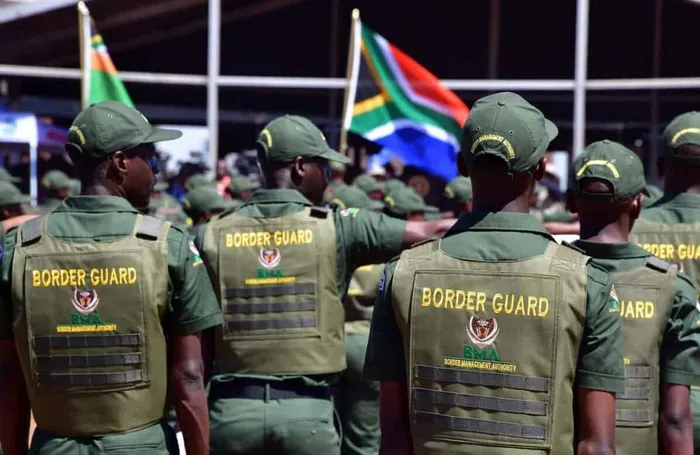
Border Management Authority's assistant commissioner Balene Mkhabela said the planning phase started on February 5 with a focus on inter-agency coordination, risk assessment, intelligence analysis, resource mobilisation and finalisation of readiness plans.
Image: Government pushes anti-corruption campaign at Maseru Bridge to restore integrity at borders
The Border Management Authority (BMA) on Tuesday said it has intensified border line management and is implementing its anti-fraud and corruption campaign during this Easter weekend.
Briefing the Home Affairs Portfolio Committee on planned operations to be conducted during the weekend, BMA’s assistant commissioner Belene Mkhabela said the planning phase started on February 5. He stated that the focus is on inter-agency coordination, risk assessment, intelligence analysis, resource mobilisation, and finalisation of readiness plans.
He said they were now at the execution phase, which started on Monday and will run until April 9.
“During this phase, resources will be enhanced, personnel redeployed, and post-operation assessments initiated to capture lessons learnt and operational insights,” he said.
Mkhabela noted that the Easter operation was marked by increased movements of goods and persons, mainly for religious pilgrimages, holidays, and family visits.
He told the MPs that their operations were designed to manage traveller movement, mitigate congestion, and enhance border security.
“Intelligence indicates with high confidence that the border management law enforcement agencies are prepared for a further escalation in overall volume for the 2026 Easter period. This surge will be characterised by predictable peaks in flow direction and volume,” he highlighted.
Mkhabela also said they have identified 12 critical ports of entry of focus, followed by 11 vulnerable segments of the border line and the top three busiest ports of entry.
Beitbridge, Maseru Bridge, and Lebombo border posts are expected to have extreme congestion and traffic levels on Thursday.
High volumes, especially on Friday morning, are expected at Beitbridge and Grobler’s Bridge, as well as extreme congestion when travellers return on Monday.
“What we have done is that we have requested the minister to extend operational hours,” Mkhabela said.
He added that corruption and collusion, critical Information Communication Technology (ICT), power infrastructure collapse, systematic exploitation of the porous borderline, severe traffic congestion, smuggling of high-risk goods, and organised crimes top the list of intelligence threats and risk assessment.
However, Mkhabela said there was daily planning of operations and exchange of information between agencies in the border environment.
“We have got well in advance in planning, and there is an effective risk analysis and management plan by the National Target Border Centre. From today (Tuesday), we have our first report for the day,” he said.
Mkhabela further said there is intensified borderline deployment by the BMA, SANDF, and SAPS.
There is also the deployment of the Department of Social Development to attend to cases and incidents involving minors. The corridor management and traffic management were supported by the national traffic police, provincial and municipal authorities, he said.
“Anti-fraud and corruption measures are conducted at identified ports of entry as a proactive measure for deterrence,” he stated.
According to Mkhabela, as part of the preparations, extensive consultations were conducted with key stakeholders, including port management structures, border control entities, and representatives from neighbouring countries that share borders with South Africa.
“These engagements resulted in consensus regarding the specific dates and modalities for implementing the extended operational hours. Approval has been granted for the extension of operational hours at designated ports of entry for the 2026 Easter period,” he said.
Mkhabela stated that system downtime and technical glitches have been identified as some of the significant risks to the effective and efficient facilitation of the movement of persons and goods.
“The BMA will have full-time deployment of ICT technicians at the 12 prioritised ports of entry to provide direct support. Remote ICT support will also be provided by SARS and the Department of Home Affairs.”
He added that drones and body-worn cameras will be deployed to enhance the level of border security at vulnerable segments of the borderline.
The BMA has five drones, including one donated by the KwaZulu-Natal government to assist with challenges in the northern part of the province.
There is also a demonstration by a private company that will be put to use.
Mkhabela said the Department of Public Works and Infrastructure is assisting with the supply of additional resources, such as water tankers, gazebos, mobile ablution facilities, and barricades.
“They have started moving all the additional resources we requested from them to support our preparations,” he said.
Responding to questions, BMA commissioner Mike Masiapato said they will make sure that for every risk, there are measures in place to mitigate the threats.
“If everything fails when it comes to ICT, we default to manual processes, as we don’t want to stop people from getting recorded when they exit or enter. Manual processes mean that we have to record all people in terms of biographical data and passports and do bulk capturing of their movement,” he said.
Masiapato added that they would ensure that uninterrupted power supplies kick in when there are outages.
He assured the MPs that the planning they presented to the committee was not only just talking to the BMA, but also to other departments and entities involved in border management.