

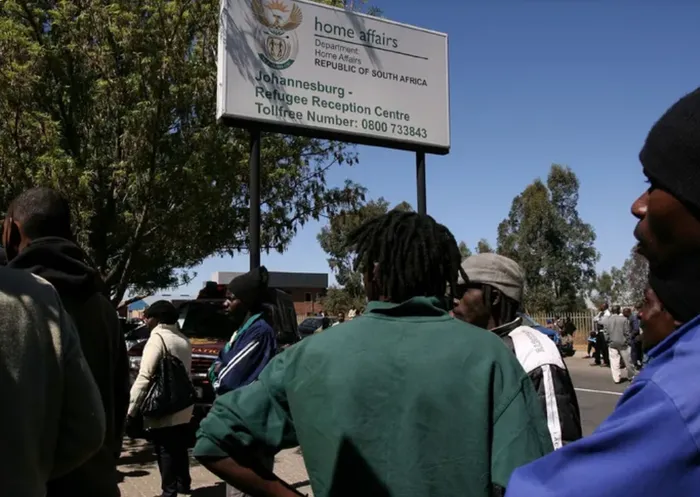
South Africa does not have an asylum crisis. It has an accountability crisis, it is one dressed up in the language of migration management for so long that few people bother to question the framing anymore.
Image: Internal
South Africa does not have an asylum crisis. It has an accountability crisis, it is one dressed up in the language of migration management for so long that few people bother to question the framing anymore.
The numbers from the Department of Home Affairs this week are staggering: 55,190 recognised refugees, 82,348 active asylum seeker cases, and a Refugee Appeals Authority sitting on a backlog of nearly 71,000 active appeals. However, the figure that should stop every South African cold is buried in parliamentary testimony from last month: over 90,000 asylum appellants simply cannot be found. "We don't know the whereabouts of them," RAA chairperson Zilpha Raphesu told Parliament. Not lost in the system, lost entirely.
This is not a system under pressure. This is a system that has collapsed and chosen to call it complexity.
The Department of Home Affairs has spent years constructing a narrative in which the asylum system is overwhelmed by bad-faith applicants. Spokesperson Thulani Mavuso repeated it again this week: the Refugee Act "is abused by economic migrants who lodge unfounded asylum claims." It is a convenient argument. It is also a dishonest one.
In 2019, Amnesty International found South Africa's asylum rejection rate at 96%, which reveals far more about the department's disposition toward applicants than about claim legitimacy. A system that rejects virtually everyone is not conducting rigorous assessment; it is performing refusal. By May 2026, the ISS confirmed 161,000 asylum seekers were actively appealing rejections, many in limbo not because they are gaming the system, but because the state has structurally denied them a way out.
Germany processed over 350,000 asylum applications in 2023 with a functioning digital case management system and first-instance decisions capped within months. South Africa's Refugee Act of 1998 was once considered among the most progressive on the continent. Three decades of implementation have been a betrayal of that promise.
Honest analysis demands this be said: South Africans are not simply xenophobic. They are exhausted. With broad unemployment above 43%, a collapsing public healthcare system, and municipalities unable to deliver basic services, the concentration of undocumented people in urban centres creates real pressure , particularly in low-income communities. The Musina refugee reception centre processed only 2% of new 2025 applicants, with most asylum seekers bypassing official entry points for Durban, Johannesburg, and Cape Town.
The fury that manifests as xenophobia is displaced political grievance. The ISS has documented that anti-migrant sentiment is fuelled by perceptions that foreigners strain housing, healthcare, and employment, perceptions rooted in real lived experience in communities where the state has abdicated basic responsibilities. What the government has done with increasing sophistication is redirect that grievance outward. Scapegoating migrants is politically efficient. It is also morally corrosive, and it absolves the state of thirty years of governance failure.
The cruelest irony is that the department's own dysfunction produces the population it then describes as a threat. When refugee reception offices are closed, unlawfully, for years, prompting scathing judicial rebukes,asylum seekers cannot regularise their status. When permit renewals take years, people fall into undocumented limbo through no fault of their own. The failure, when 90,000 appellants vanish from a tracking system, is not theirs. It is the state's.
The proposed Citizenship, Immigration and Refugee Protection Bill promises a "balanced and constitutionally sound" overhaul. The language is reassuring. The track record demands scepticism. Legislation cannot work if the institutional culture of Home Affairs — defined by corruption, maladministration, and systemic bad faith, remains intact. Courts have said exactly this, repeatedly.
South Africa cannot serve as the asylum safety net for a continent experiencing record displacement while simultaneously failing its own citizens. That is a genuine tension , one that demands genuine policy thinking, not the theatre of parliamentary briefings where MPs ask where 90,000 people have gone and receive no meaningful answer.
The UNHCR is right that South Africa's legal framework is progressive. What it carefully does not say is that a framework without implementation is fiction. The question South Africans must ask is not why so many people are arriving, displacement across Eastern and Southern Africa is driven by conflict, climate, and state collapse, and it will not stop. The question is why, after thirty years of democracy, this country still cannot process a claim with dignity, speed, or fairness.
The answer is not lack of capacity. It is lack of political will, and that is a choice the government, and its citizens, will eventually have to own.
Written by:
*Sesona Mdlokovana
Associate at BRICS+ Consulting Group
Africa Specialist
**The Views expressed do not necessarily reflect the views of Independent Media or IOL.
** MORE ARTICLES ON OUR WEBSITE https://bricscg.com/
** Follow @brics_daily on Twitter for daily BRICS+ updates and instagram @brics_daily