


The function of universities is expanding, and the cultivation of entrepreneurship is gaining increased significance
Image: Henk Kruger/Independent Newspapers
The function of universities is expanding, and the cultivation of entrepreneurship is gaining increased significance. Given the availability of labour and human capital, the most effective approach to advance Africa should prioritise the creation of employers.
Otherwise, universities may produce graduates who face challenges in securing employment. To facilitate such contributions, it is essential to prepare young individuals for a change in mindset. Both South Africa and the broader African continent require more employers and a greater focus on African-made products.
South Africa is a nation filled with potential, a country in Africa. We are blessed with one of the youngest populations on the African continent, abundant natural resources, vibrant cultures, and an entrepreneurial spirit that has survived centuries of adversity. Yet despite these strengths, we continue to grapple with stubbornly high unemployment, deep inequality, and persistent poverty.
As we commemorated Youth Month during a recent roundtable discussion hosted by the DUT Business School, one question emerged repeatedly: What kind of entrepreneurs are we developing for Africa's future?
The answer to that question may determine whether Africa merely participates in the global economy or helps shape it.
For too long, entrepreneurship has been presented primarily as a pathway to personal wealth. The images often associated with success are luxury vehicles, expensive lifestyles, and social media recognition.
Yet this understanding is incomplete and, in many instances, harmful. Entrepreneurship was never meant to be solely about individual accumulation. At its core, entrepreneurship is about solving problems, creating value, building communities, and leaving a legacy.
Professor Mashau and Mr. Sidzamba argue that Africa needs a mindset shift.
Many young people enter higher education hoping to secure employment after graduation. While there is nothing wrong with seeking employment, we must begin encouraging a different way of thinking. Students should not only ask, "Who will hire me?" but also, "What problem can I solve?" and "How many jobs can I create?"
South Africa's youth unemployment rate remains among the highest in the world. The reality is that the economy cannot absorb every graduate entering the labour market. This challenge requires a different response. We need graduates who are creators, innovators, and builders of enterprises rather than passive participants waiting for opportunities.
One of the most insightful questions raised during our discussion was how African entrepreneurs can build globally competitive businesses without losing their African identity and values.
For decades, many Africans have been conditioned to believe that success resembles something external to themselves. We have often looked to Europe, America, or Asia for business models while overlooking the immense value contained within our own cultures, traditions, and indigenous knowledge systems.
Yet our identity is not a weakness. It is our competitive advantage.
African communities possess rich traditions of collaboration, resilience, innovation, and collective responsibility. The philosophy of Ubuntu teaches us that individual success is inseparable from community wellbeing. These values should not be abandoned in pursuit of profit. They should become the foundation upon which African enterprises are built.
The future belongs to entrepreneurs who can package African solutions for global markets while remaining authentically African.
One of the most powerful observations shared during the roundtable was that having a dream is one thing; executing it is another.
Far too many ideas remain trapped in notebooks, classrooms, boardrooms, and conversations. Success belongs not to those with the most ideas but to those who act on them. A Chinese proverb reminds us that the best time to plant a tree was twenty years ago, and the second-best time is today.
Africa does not need more spectators. It needs builders.
The challenges facing our continent are well known. We know about unemployment, inequality, poverty, energy insecurity, and limited access to quality education. What is needed now are entrepreneurs willing to transform these challenges into opportunities.
Every challenge represents a market opportunity waiting for a solution
One of the greatest weaknesses within many entrepreneurial ecosystems is isolation. Entrepreneurs often operate alone, compete unnecessarily, and guard information that could benefit others.
Yet sustainable success is rarely achieved in isolation.
The generation of 1976 demonstrated the power of collective action. Although they came from different communities and backgrounds, they were united by a common purpose. Today's entrepreneurs must rediscover that spirit of collaboration.
Strong businesses are built within strong communities. Networks matter. Partnerships matter. Trust matters.
Entrepreneurship is not simply about selling products or services. It is about building relationships.
Customers support businesses they trust. Investors support entrepreneurs they trust. Communities support enterprises that demonstrate integrity and accountability.
This is why values matter.
An important question raised during the discussion was whether businesses should prioritise profit or community impact.
The answer is neither.
The most successful enterprises understand that profit and impact are interconnected. Businesses generate sustainable profits when they solve meaningful problems and improve people's lives. Profitability and social impact are not opposing forces; they are complementary outcomes of value creation.
Likewise, legacy should not be measured solely by financial success. Some individuals accumulate significant wealth but leave little behind that benefits society. True legacy is measured by the institutions we build, the opportunities we create, and the lives we transform.
A business that collapses when its founder leaves has not achieved legacy.
A business that continues creating opportunities for future generations has.
Too often we wait for government, corporations, universities, or international investors to solve our problems. While these stakeholders play important roles, Africa's future cannot be outsourced.
No one is coming to rescue us.
The responsibility for building thriving communities, sustainable businesses, and prosperous economies rests with us.
Every generation has a defining mission. The youth of 1976 confronted injustice and demanded change. Today's generation faces a different challenge: building an inclusive economy capable of creating opportunities for millions.
Africa needs its own cars, phones, and watches, among other things, to stop money from leaving African economies. Young people should learn about putting money back into the economy, and that means making an effort to buy African products first, and only buying from outside when they have to. Africa shouldn't borrow money to buy foreign stuff. Once that changes, African businesses will have a market. Plus, Africa needs its own products and services.
The task before us is clear.
We must stop underestimating ourselves.
We must stop apologising for our identity.
We must stop waiting for permission.
We must start where we are, use what we have, and solve the problems closest to us.
There is nothing inferior about being African. There is nothing small about solving a local problem. Some of the world's greatest enterprises began by addressing a challenge in a single community.
The future of African entrepreneurship will not be determined by how closely we imitate others. It will be determined by how confidently we embrace who we are.
Entrepreneurs are more than business owners. They are problem-solvers, community builders, job creators, and nation builders.
That is why entrepreneurship rooted in African identity is not merely a business strategy.
It is a mindset shift.
***Professor Pfano Mashau is the Director of the DUT Business School. Sethu Sidzamba is an entrepreneur, leadership advocate and champion of youth development and enterprise growth.
*** The views expressed here do not necessarily represent those of IOL.
IOL Opinion
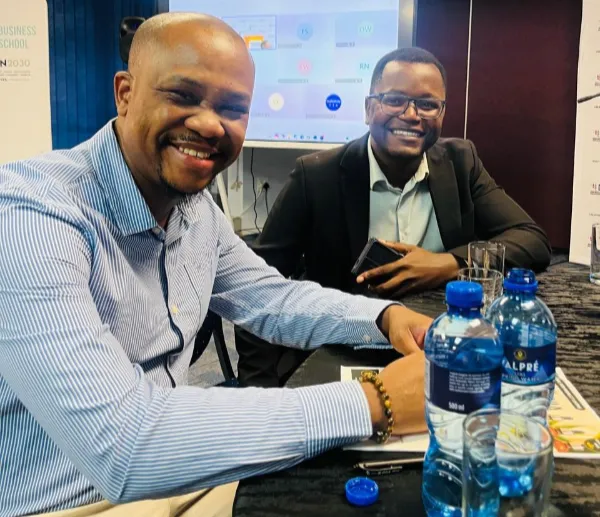
Prof. Pfano Mashau and Prof. Pfano Mashau
Image: Supplied