

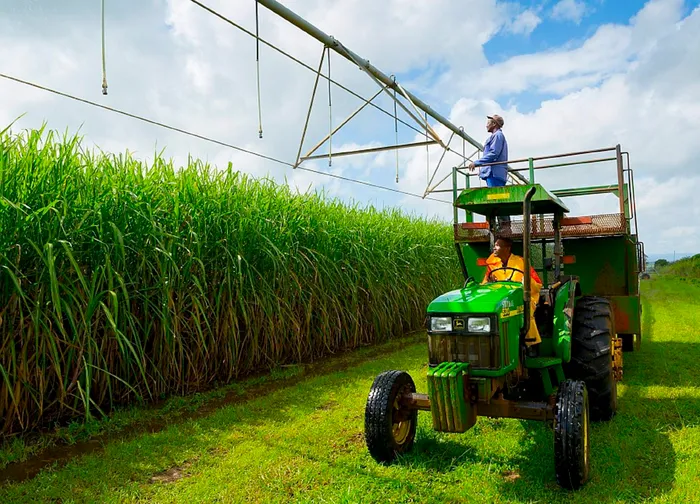
Tongaat Hulett is a cornerstone of our rural economy. Its potential collapse would be catastrophic, threatening 250,000 livelihoods tied to the cane-growing sector
Image: Simphiwe Mbokazi / Independent Newspapers
As we stand on the precipice of a massive demographic shift, the global economic trajectory is increasingly being defined by the African continent.
By 2030, half of all new entrants into the global labour force will hail from sub-Saharan Africa. To simply keep pace with this explosive growth, our continent must create up to 15 million new jobs annually. This is not a challenge that will be solved by hesitant foreign-direct investment or the cold, detached calculations of offshore private equity. It requires the rise of the African Industrialist, men and women for whom the continent is not just a frontier for extraction, but a home to be built.
For too long, we have outsourced our solutions to those who do not share our scars. But the tide is turning. We are seeing a new breed of titan, like Aliko Dangote in the north and Robert Matana Gumede in the south, who understand that African problems require African solutions.
To these industrialists, it is not merely about the bottom line; it is about making their home continent economically competitive and ensuring the philosophy of Ubuntu, "I am because you are", is baked into our industrial DNA.
Take the unfolding drama of the Tongaat Hulett (THL) rescue. At the centre of this storm is Gumede and the Vision Sugar Group. While some commentators have attempted to paint Vision as a cold commercial actor, the facts tell a different story.
Vision, led by Gumede and Rute Moyo, is the largest secured creditor with R11.7 billion at stake. More importantly, these businessmen have committed R4 billion of Vision’s own capital into the rescue, where others have offered only conditions.
Gumede’s journey is the quintessential story of African resilience. This is a man who worked as a golf caddie and petrol attendant in Nelspruit to support his family. He built an empire from the ground up, starting with Gijima in the IT sector and expanding into a global conglomerate employing over 51,000 people across 32 African countries. His interest in Tongaat Hulett is not a "quick buck" venture; it is an act of industrial preservation.
THL is a cornerstone of our rural economy. Its potential collapse would be catastrophic, threatening 250,000 livelihoods tied to the cane-growing sector and over 15,000 small-scale growers who would lose their primary route to market.
While the Business Rescue Practitioners (BRPs) and the Industrial Development Corporation (IDC) have engaged in what appears to be a cycle of silence and blame-assignment, Vision has remained at the table with creative solutions, including a 40% equity stake offer to the IDC to settle the Post Commencement Finance (PCF) facility.
Gumede’s vision for THL is what we should expect from a home-grown industrialist. He does not just want to refine sugar; he wants to transform THL into a diversified agri-energy giant. His roadmap includes converting export sugar into ethanol and generating renewable electricity from bagasse (sugarcane residue) to power the national grid. This is visionary thinking that aligns with global green energy trends while providing a stable economic base for the growers who are the backbone of the industry.
This brand of industrialism is exactly what our policy environment should be birthing. We need policies like Broad-Based Black Economic Empowerment (B-BBEE) that are not just boxes to be ticked or just window dressing, but are implementable, rigorously monitored, and supported by great governance. We need a state that acts as a catalyst for its own industrialism rather than an obstacle so that it births more industrialists, not just more tenderpreneurs. We need our state entities, like the IDC, to move from "moral support" to active, constructive engagement.
Agriculture is projected to remain an African powerhouse, with revenues potentially exceeding $800 billion (R13 trillion) by 2030. In South Africa, a well-implemented agricultural strategy could add 1 million jobs in rural areas in the next four years.
The United Nations projects overall African growth to reach 4.0% in 2026 and 4.1% in 2027. However, this growth will remain a headline statistic and nothing more, unless it is anchored by local ownership. We need more industrialists who, like Gumede, engage with traditional leadership like the Zulu Royal Council to ensure that industrialisation is in lockstep with the communities that host these assets.
Gumede is proving that with enough resilience, even the most distressed assets can be transformed into beacons of industrial excellence. He is a man who cares about the social fabric of our country. But he, and others like him, cannot do it alone. It is time for our government to provide the strategic support required to protect our domestic industries from cheap imports and structural decay.
The era of the passive state must end. We must back the African Industrialists. We must back those who are here for the long haul. If we are to solve African problems, we must empower the Africans who have already shown they have the skin in the game to build the future we all deserve. The question is: will the government pull up a chair?
*Tabane is Editor of Leadership Magazine and Adjunct Professor of Media Studies at the University of Botswana.
** The views expressed do not necessarily reflect the views of IOL or Independent Media.
IOL News