

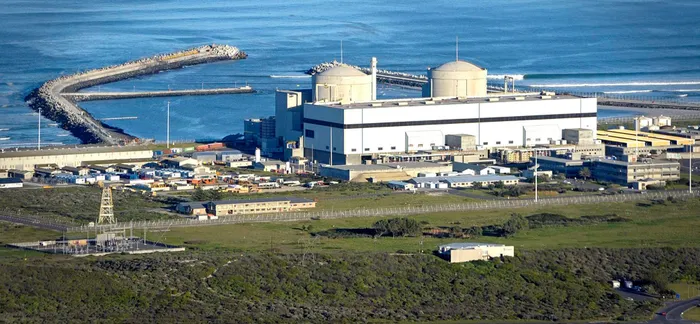
Koeberg Nuclear Power Station outside Cape Town, Western Cape. South Africa's endorsement of the global declaration to triple nuclear energy capacity by 2050 marks a pivotal step towards a sustainable energy future, balancing economic growth and climate responsibility.
Image: Supplied
South Africa’s decision to endorse the global declaration to triple nuclear energy capacity by 2050 marks an important milestone for both our national energy strategy and the global transition to clean, reliable power. At a time when countries are searching for credible pathways to balance energy security, economic growth, and climate responsibility, nuclear energy is once again emerging as a critical part of the solution.
Our endorsement sends a clear signal: South Africa is committed to building a resilient and diversified energy mix that supports industrialisation, reduces greenhouse-gas emissions, and ensures stable electricity supply for future generations. More than 30 countries across Europe, Asia, the Americas, the Middle East and Africa have already joined this declaration, reflecting growing global consensus that nuclear energy will play a central role in meeting climate commitments while maintaining reliable baseload power.
For South Africa, nuclear energy is not a new concept. The country has decades of experience in the field, anchored by the Koeberg Nuclear Power Station, which currently produces about 1 800 MW of electricity. Recent licence extensions allow both units at Koeberg to operate into the mid-2040s, ensuring that nuclear power remains a dependable component of the national grid for many years to come.
However, the country’s ambitions extend far beyond maintaining existing capacity. South Africa’s latest energy planning framework envisions a significant expansion of nuclear power as part of a balanced energy mix. The Integrated Resource Plan allocates 5,200 MW of new nuclear capacity by 2039, while policy direction calls for the development of a comprehensive Nuclear Industrialisation Plan that could ultimately justify up to 10,000 MW of nuclear capacity.
Such a programme is not only about generating electricity. It is about revitalising an entire nuclear value chain, from engineering and manufacturing to research, skills development and high-technology innovation. A scaled nuclear programme has the potential to strengthen local supply chains, create skilled jobs and position South Africa as a leader in advanced energy technologies on the African continent and globally.
Importantly, nuclear power also supports the country’s broader climate commitments. The Nuclear Energy Policy of 2008 prescribes that: Nuclear Energy shall form part of South Africa’s strategy to mitigate climate change. As South Africa works to decarbonise its economy while ensuring a just energy transition, nuclear energy provides large-scale, low-carbon electricity that complements renewable sources such as wind and solar. Together, these technologies can form a stable and sustainable energy system capable of supporting economic growth.
Our participation in the global declaration also reflects South Africa’s commitment to the highest standards of safety, sustainability and non-proliferation. Nuclear energy development must always be underpinned by robust regulatory frameworks, responsible waste management and transparent governance. These principles remain central to the country’s nuclear policy and regulatory environment.
Looking ahead, the global nuclear landscape is evolving rapidly. Emerging technologies such as small modular reactors and advanced reactor designs offer new possibilities for flexible, scalable and cost-effective nuclear deployment. These innovations could also unlock additional applications, including industrial heat, hydrogen production and synthetic fuels — areas that are increasingly important for deep decarbonisation.
By joining the international effort to triple nuclear capacity, South Africa positions itself as a constructive partner in shaping this future. The decision reinforces our commitment to collaborative innovation, responsible energy development and long-term climate action.
Ultimately, the challenge before us is not simply to generate more electricity, but to build an energy system that is secure, sustainable and capable of powering inclusive economic development. Nuclear energy, alongside other clean energy technologies, will play a crucial role in achieving that vision.
* Zizamele Mbambo, DDG: Nuclear Energy Regulation & Management, Department of Electricity and Energy.
** The views expressed do not necessarily reflect the views of IOL or Independent Media.