

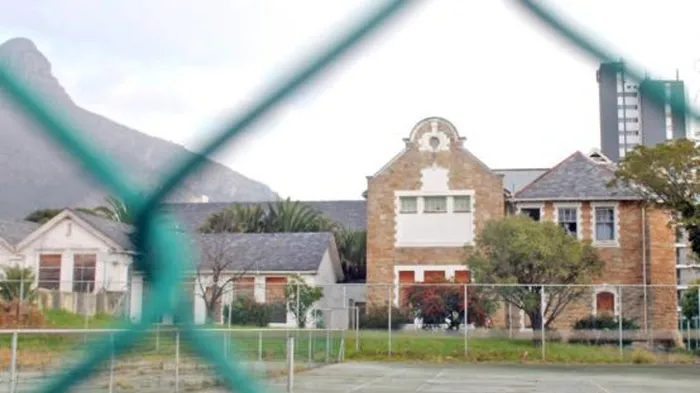
The historic Tafelberg School site in Cape Town, a focal point for housing rights activism and the fight for social housing.
Image: file
After nearly a decade of litigation, the Constitutional Court has delivered a landmark ruling in one of South Africa’s most significant land justice cases, finding that both the Western Cape provincial government and the City of Cape Town failed in their constitutional duty to address apartheid’s spatial legacy by providing affordable housing in well-located parts of the city.
In a unanimous judgment handed down on Thursday, the apex court declared the 2015 sale of the Tafelberg property in Sea Point unlawful, overturned the Supreme Court of Appeal’s 2024 ruling in favour of the province and the City, and ordered both spheres of government to report back to the High Court on concrete measures they will take to deliver affordable housing in Cape Town’s central business district and Sea Point.
The judgment, written by Justice Nonkosi Mhlantla, with Acting Deputy Chief Justice Madlanga and Justices Goosen, Kollapen, Majiedt, Opperman, Rogers, Theron and Tshiqi concurring, resolves two consolidated matters. The first was brought by Thozama Adonisi, the late Phumza Ntutela, Sharone Daniels, Selina La Hane, Reclaim the City and the Trustees of the Ndifuna Ukwazi Trust. The second was brought separately by the National Minister of Human Settlements. The Socio-Economic Rights Institute of South Africa (SERI) was admitted as amicus curiae in the first application.
The case centres on two adjoining erven in Sea Point owned by the Western Cape government. The Constitutional Court described the site as being located in “a well-located seaside suburb in Cape Town, close to education and health facilities, transport nodes and social amenities.”
The property previously accommodated a remedial school and rental housing units before the final tenant was evicted in May 2014. It has remained vacant ever since.
Following the transfer of custodianship to the Provincial Department of Transport and Public Works under the Government Immovable Asset Management Act (GIAMA), both the Departments of Education and Human Settlements expressed interest in using the land. Despite proposals that it be developed for social housing, the property was ultimately declared surplus to government requirements.
The Provincial Cabinet subsequently approved its sale to the Phyllis Jowell Jewish Day School for R135 million. The proceeds were intended to help fund a separate Department of Education office park development. The decision drew strong opposition from the Ndifuna Ukwazi Trust and the Social Justice Coalition, both of which argued that the land should instead be used for affordable housing.
The sale sparked years of litigation.
In 2016, the Ndifuna Ukwazi Trust successfully challenged the transaction on procedural grounds relating to public notice requirements. The province responded by restarting the consultation process, which attracted nearly 5,000 public submissions, many calling for affordable housing to be built on the site.
A financial assessment commissioned by the province concluded that social housing would be significantly more expensive than alternative developments. Relying on that report, the Provincial Cabinet resolved in March 2017 to proceed with the sale.
The decision prompted fresh legal action.
In May 2017, the Trust challenged the property’s classification as surplus, the legality of the public participation process under the Western Cape Land Administration Act (WCLAA), and argued that both the province and the City had breached their constitutional obligations to undo apartheid’s spatial inequalities in central Cape Town.
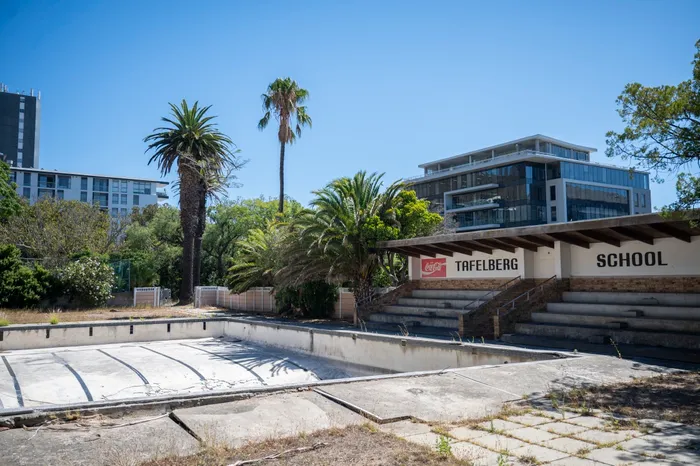
The Constitutional Court has dealt a blow to the City of Cape Town and the government on the 2015 sale of a Tafelberg site in Sea Point.
Image: Armand Hough / Independent Newspapers
Separately, the National Minister of Human Settlements argued that the province had unlawfully failed to consult the national government before disposing of the land, as required by the Intergovernmental Relations Framework Act (IGRFA).
The High Court ruled in favour of the applicants in 2020, setting aside the sale and directing the province and the City to submit a joint compliance report. However, the Supreme Court of Appeal overturned that decision in April 2024, finding that neither the Constitution nor housing legislation obliged government to provide social housing at any specific location.
The Constitutional Court has now rejected that reasoning.
At the heart of its judgment is the finding that where affordable housing is built is as important as whether it is built at all.
The Court held that the state’s obligations under sections 25(5) and 26 of the Constitution require government to treat location as an essential component of adequate housing and equitable access to land, particularly in light of South Africa’s constitutional commitment to reverse apartheid’s spatial inequalities.
It found that government cannot satisfy its constitutional obligations simply by building housing on cheaper land situated far from jobs, transport and essential public services.
Instead, the Court held that adequate housing “necessarily includes security of tenure, affordability, habitability, accessibility, and crucially, location.”
The judgment places the dispute firmly within South Africa’s broader project of spatial transformation.
It notes that apartheid planning deliberately forced black communities to the urban periphery, far from employment opportunities, schools, healthcare, transport and other public amenities. The constitutional duty to provide access to housing, the Court held, must therefore be understood as a duty to dismantle those patterns of exclusion.
Drawing on the concept of the “right to the city”, previously recognised in Thubakgale v Ekurhuleni Metropolitan Municipality and Commando v City of Cape Town, the Court said cities are not simply places where people live but centres of economic opportunity, political participation, social belonging and access to essential services.
The Court found that neither the province nor the City had completed a single social or affordable housing project in or near central Cape Town by the time the matter reached the Constitutional Court, with completed developments concentrated largely on the city’s outskirts.
It also dismissed arguments that land scarcity and high property prices justified the government’s approach.
According to the Court, the state “could not invoke land scarcity or high market value to evade its constitutional duties, because those very conditions are legacies of apartheid spatial planning.”
The judges were equally critical of the City’s reliance on future housing projects, finding there was “no satisfactory evidence that the purported pipeline projects would materialise in the near future.”
Several proposed developments had, according to the judgment, been recalled, abandoned or stalled for more than a decade.
The Court concluded that “paper plans and incomplete undertakings do not amount to constitutional compliance.”
Although the sale ultimately collapsed after the Jewish Day School withdrew from the transaction, the Constitutional Court found it remained necessary to determine whether it had been lawful because similar disputes over public land were likely to arise again.
The Court ruled that the province incorrectly classified the property as surplus while it was still under consideration for social housing, contrary to the planning requirements contained in GIAMA.
It also declared key provisions of the WCLAA regulations unconstitutional, finding that they allowed public participation only after a sale agreement had already been concluded.
The Court described that consultation process as little more than “a ticking box exercise” that demonstrated little genuine willingness to consider public input.
In the National Minister’s application, the Court further found that the province had breached the principles of cooperative governance by failing to consult national government before deciding to dispose of the property, contrary to the IGRFA.
The Constitutional Court granted leave to appeal in both matters and set aside the Supreme Court of Appeal’s judgment in its entirety.
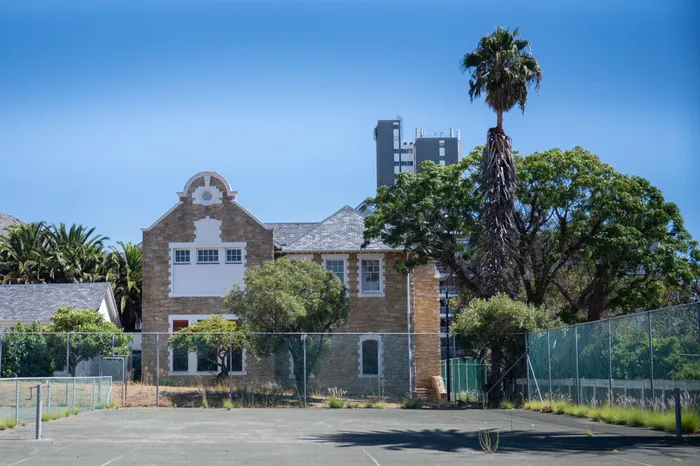
Tafelberg site in Sea Point under contention.
Image: Armand Hough/Independent Newspapers
It ordered both the Western Cape government and the City of Cape Town to submit detailed reports to the High Court outlining their affordable housing programmes for the Cape Town CBD and Sea Point.
Those reports must include projects completed, under construction or under consideration since 2017, budgets allocated and spent, coordination with other spheres of government, and implementation timelines.
The Court also suspended its declaration of invalidity relating to the WCLAA regulations for 12 months to allow the provincial government to amend the legislation.
The Western Cape government was ordered to pay the applicants’ costs in the main application, while each organ of state will bear its own costs in the National Minister’s case.
While the judgment finally resolves the long-running dispute over the Tafelberg property, its significance extends well beyond Sea Point.
By holding that location forms an essential component of the constitutional right to adequate housing, the Constitutional Court has established an important precedent for governments across South Africa.
The ruling makes clear that provincial and municipal authorities cannot fulfil their constitutional housing obligations simply by developing the cheapest available land on the urban fringe. Instead, when disposing of valuable public land, they must actively consider how that land can be used to undo apartheid’s enduring geography and expand access to well-located housing for lower-income South Africans.
IOL News