

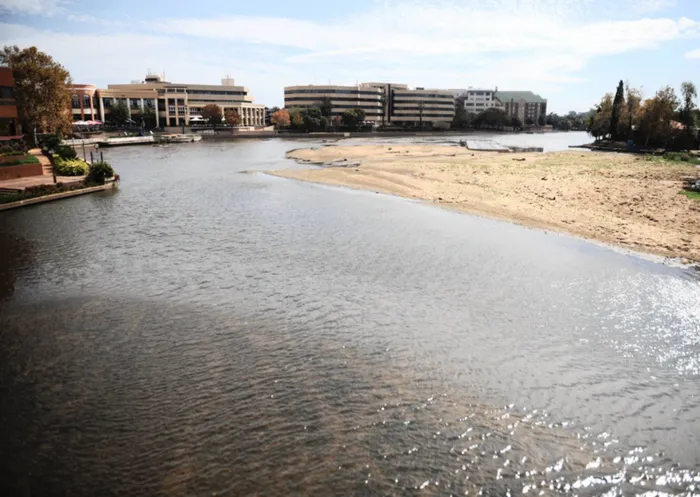
Centurion Lake pollution remains a problem, with the court ordering that an intergovernmental task force must tackle the issue.
Image: File
The ongoing saga over the smelly Centurion Lake once again came under the legal spotlight, with an intergovernmental task established to address the problem, while the court and the business owners of the Centurion Mall will be provided with quarterly progress reports.
Redefine Retail Ltd, owners of the mall, have turned to the Gauteng High Court, Pretoria, seeking supervisory orders compelling the metropolitan municipalities of Tshwane, Johannesburg and Ekurhuleni, and various state departments, to develop and implement an action plan to address the causes of pollution and rehabilitate impacted areas. The mall is situated adjacent to Centurion Lake.
The Hennops River was diverted from its natural course to develop the lake in the 1980s. The lake has become hazardous due to long-term and persistent pollution, with a pungent smell emanating from it. With this extraordinary pollution, the lake is unusable and life-threatening, with soil erosion and excessive silting occurring upstream in the Hennops River to the lake.
The impacted area is not only the lake but two tributaries, the Sesmylspruit and the Kaalspruit and Olifantspruit, that join to form the Hennops River. The Sesmylspruit is also impacted by discharges from the Hartbeesfontein Wastewater Treatment Works.
The severe pollution of the Kaalspruit River is through contamination by industrial waste, residential effluent from informal settlements, and sand from illegal mining that is destroying the Kaalspruit wetlands.
After a case management meeting, an inspection in loco was held and parties agreed to set up a task team to address the problem. They did, however, object to the admission of Redefine’s expert report, and to progress reports being submitted to both the court and the company.
Judge Sulet Potterill issued a judgment last month allowing the report to be considered, although she did not instruct the task team to adopt or implement it. She noted that all three municipalities complained bitterly about funding to address the pollution and said if the report can be used as a starting point, it may curtail some expenses.
She also commented that structural interdicts create space for dialogue between the court, government, and civil society actors and do not violate the doctrine of the separation of powers.
Judge Potterill described the river pollution observed during the court and parties’ inspection in loco as appalling and harrowing. “The institutional neglect was apparent,” she said.
The judge added that the court noted the City of Tshwane was putting measures in place to address the pollution. “I also accept that unlawful informal settlements play a role. But these serious issues should have been addressed and must now urgently be addressed,” she said in allowing the structural order.
Judge Potterill commented that the draft order issued establishes a comprehensive framework to develop and implement a rehabilitation plan for the Kaalspruit Catchment and all the impacted areas, including the lake.
Tshwane argued in court that the source of the lake’s pollution is upstream and that it can only address the effects, which it has already done.
Judge Potterill also noted the Johannesburg municipality’s argument that it is only responsible for a small portion of the problem - part of Tembisa and Ivory Park - but she said this small portion contributes significantly to the pollution problem.