

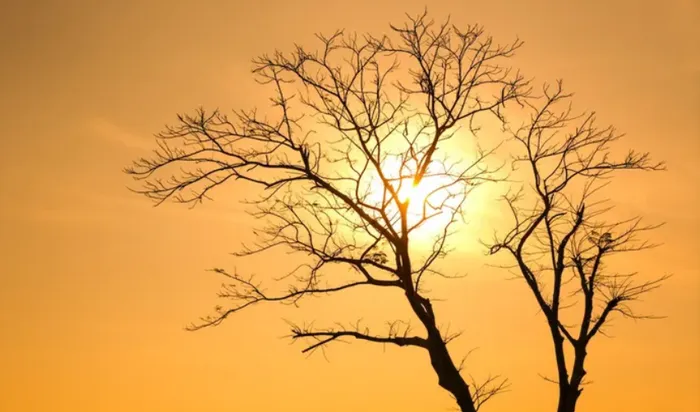
A powerful El Niño climate pattern is rapidly developing in the Pacific Ocean and is expected to influence South Africa's weather over the coming months. The World Meteorological Organization says there is more than a 90% chance the event will persist until at least November, increasing the risk of extreme heat, drought and veld fires across the country's summer rainfall regions.
Image: IOL
El Niño is a naturally occurring climate phenomenon caused by warmer-than-average sea surface temperatures in the Pacific Ocean. Although it begins thousands of kilometres away from Africa, it disrupts weather patterns across the globe.
For Africa, the impacts are rarely uniform. Southern Africa often experiences severe droughts that damage crops and reduce water supplies, while parts of East Africa face destructive flooding that destroys homes, roads and farmland. The result is the same: weakened economies and growing pressure on governments.
The 2015-2016 El Niño, one of the strongest on record, left more than 60 million people across Southern and Eastern Africa in need of humanitarian assistance. Countries such as Zimbabwe, Ethiopia and Malawi suffered crop failures, livestock losses and rising food prices that took years to recover from.
Scientists cannot attribute every El Niño event directly to climate change, but they agree that rising global temperatures are making extreme weather more intense. This means droughts are becoming drier, floods are becoming more destructive and recovery is taking longer.
For Africa, this is particularly concerning because agriculture remains a major employer and economic driver. Around 60 percent of the continent's workforce depends directly or indirectly on agriculture, much of it rain-fed. When rainfall patterns shift unexpectedly, millions of livelihoods are affected almost immediately.
The consequences extend beyond farms. Lower agricultural output pushes up food prices, increases inflation and slows economic growth. Hydropower generation can also decline during droughts, leading to electricity shortages that disrupt businesses and manufacturing.
The AfDB's estimate of up to $20 billion in damages highlights a broader issue. Climate change is no longer only an environmental concern. It has become an economic challenge.
African governments are already balancing debt, unemployment and infrastructure needs. Repeated climate disasters force countries to divert resources from development projects towards emergency relief and reconstruction.
This creates a cycle that is difficult to break. Instead of investing in schools, hospitals or industrial growth, governments spend billions responding to crises that are becoming more frequent.
The situation also threatens Africa's food security ambitions. Through initiatives such as the African Continental Free Trade Area (AfCFTA), countries are working towards stronger regional trade, including agricultural trade. However, repeated climate shocks reduce production and make food imports more expensive, limiting progress towards greater self-sufficiency.
The warning from the African Development Bank should be viewed as an opportunity to strengthen resilience before the worst impacts are felt.
Investment in climate-smart agriculture, improved irrigation systems, early warning technology and more resilient infrastructure can significantly reduce economic losses. Countries that invest in disaster preparedness typically recover faster and at a lower cost than those relying solely on emergency responses.
Regional cooperation will also be essential. Weather systems do not recognise national borders, and neither should disaster planning. Sharing climate data, strengthening regional food reserves and coordinating emergency responses will become increasingly important as extreme weather events become more common.
Africa contributes only a small share of global greenhouse gas emissions, yet it remains among the regions most vulnerable to climate change. The continent therefore faces a dual challenge: adapting to a changing climate while continuing to pursue economic growth.
The AfDB's warning is a reminder that climate resilience is no longer optional. It is becoming a prerequisite for sustainable development. How Africa prepares for the next El Niño may determine not only how quickly it recovers from the coming weather shocks, but also how resilient its economies become in the decades ahead.
Written by:
*Dr Iqbal Survé
Past chairman of the BRICS Business Council and co-chairman of the BRICS Media Forum and the BRNN
*Sesona Mdlokovana
Associate at BRICS+ Consulting Group
Africa Specialist
**The Views expressed do not necessarily reflect the views of Independent Media or IOL.
** MORE ARTICLES ON OUR WEBSITE https://bricscg.com/
** Follow @brics_daily on Twitter for daily BRICS+ updates and instagram @brics_daily