

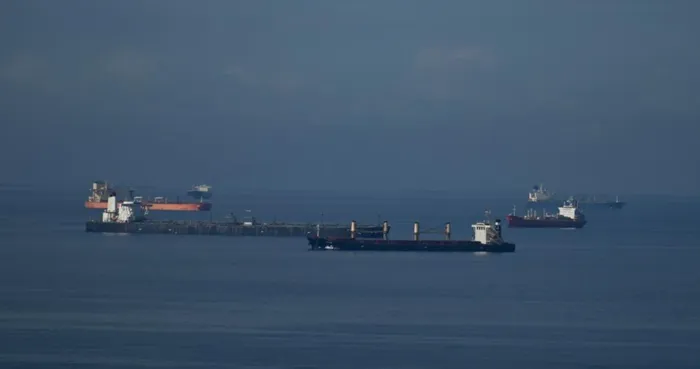
If you wanted a single week to illustrate how disconnected headline geopolitics has become from the oil market's underlying direction, this was it. On Tuesday, tankers came under attack in the Strait of Hormuz.
Image: XINHUA
If you wanted a single week to illustrate how disconnected headline geopolitics has become from the oil market's underlying direction, this was it. On Tuesday, tankers came under attack in the Strait of Hormuz. By Wednesday, the US had struck multiple Iranian targets and revoked its earlier authorization of Iranian crude sales, and reports emerged of the White House threatening to reimpose a full naval blockade. Oil prices jumped on the news. And yet, step back a week, and the story running underneath all of it is one of falling prices, swelling supply, and an industry adjusting to a market that increasingly doesn't need the Middle East as much as it used to.
The whiplash is real. Rystad's head of geopolitical analysis noted this week that tanker traffic through Hormuz had essentially stopped again, barely two weeks after the strait had reopened following a US-Iran memorandum of understanding signed on June 18. That MOU had briefly normalized flows enough that Iran was reportedly moving 40 million barrels of oil in two weeks at a 20% premium, and OPEC+ had begun unwinding the production cuts triggered by the conflict, approving a further 188,000 barrel-per-day increase for August. The fact that a handful of tanker strikes could unravel weeks of diplomatic progress in a matter of days says something important: the underlying peace is thin, and traders know it.
But look at where prices actually sit relative to where they were. Brent crude, which spiked above $120 during the worst of the February-to-June conflict, had fallen to around $72 a barrel by early July, and the US Energy Information Administration's latest outlook, released July 7, projects Brent averaging just $74 in the third quarter and drifting down to $65 by 2027 as production returns to pre-conflict levels and inventories rebuild. Goldman Sachs is now forecasting a global surplus of roughly 3 million barrels a day next year. That is not the forecast of an industry expecting sustained scarcity, it's the forecast of one expecting oversupply, punctuated by occasional violent spikes when the news cycle turns.
Domestic activity is quietly confirming that read. Baker Hughes reported the US rig count rose for a third straight week, up seven to 580 for the week ending July 2, 7.6% above year-ago levels, with oil rigs at their highest mark since May 2025. Producers aren't behaving like people preparing for a supply crunch; they're behaving like people preparing to compete in a well-supplied market, betting that efficiency and scale will matter more than scarcity premiums.
Perhaps the more durable story is the one getting less attention amid the tanker headlines: natural gas's steady rise relative to oil. XRG, the international investment arm of Abu Dhabi's national oil company, just expanded its stake in Trains 4 and 5 of the Rio Grande LNG project in Texas, doubling down on US gas export infrastructure that's expected online later this year. The EIA projects natural gas-fired electricity generation hitting record levels through 2027, driven in part by AI data center demand, and industry watchers increasingly describe a coming crossover point where gas overtakes oil as America's dominant energy export for the first time in 75 years.
For an industry that spent the first half of 2026 absorbing shock after shock from the Middle East, the lesson of this particular week may be less about Hormuz itself and more about resilience: prices can spike on a Tuesday and the fundamentals barely move by Friday. Investors chasing the geopolitical headline risk missing the more consequential trend sitting quietly underneath it, a market rebalancing toward abundance, with gas, not oil, increasingly the asset to watch.
*Chloe Maluleke
Associate at BRICS+ Consulting Group
Russia & Middle East Specialist
**The Views expressed do not necessarily reflect the views of Independent Media or IOL.
** MORE ARTICLES ON OUR WEBSITE https://bricscg.com/
** Follow @brics_daily on Twitter for daily BRICS+ updates and instagram @brics_daily