

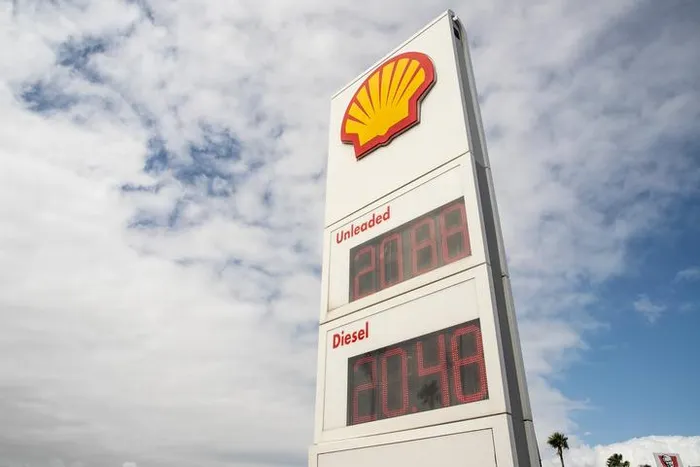
South Africa's fuel retail landscape is on the verge of another significant transformation. Reports that the retail arm of Abu Dhabi National Oil Company (ADNOC) is preparing to acquire Shell's network.
Image: XINHUA
South Africa's fuel retail landscape is on the verge of another significant transformation. Reports that the retail arm of Abu Dhabi National Oil Company (ADNOC) is preparing to acquire Shell's network of approximately 600 fuel stations for around US$1 billion are about more than a corporate transaction. If finalised, the deal would hand ADNOC control of roughly 10% of South Africa's fuel retail market while signalling a broader shift in who is shaping strategic energy assets across the Global South. For BRICS observers, the implications stretch well beyond petrol stations.
The proposed acquisition sits at the intersection of Gulf capital, South Africa's evolving energy landscape and the deepening economic relationships between BRICS members and the Middle East. It also reflects how state-backed energy companies are repositioning themselves for a future in which influence is increasingly built through downstream infrastructure, logistics and market access rather than oil production alone.
Over the past several years, ADNOC has undergone a remarkable transformation. Once viewed primarily as the United Arab Emirates' national oil producer, the company has emerged as one of the world's most active international energy investors.
Its strategy has been deliberate. Rather than concentrating solely on upstream oil production, ADNOC has expanded into refining, petrochemicals, natural gas, logistics and fuel retail while pursuing acquisitions across Africa, Europe and the Americas. The company's investment vehicle, XRG, has simultaneously accelerated its international portfolio through investments in natural gas and other strategic energy assets. The South African acquisition would fit neatly into this broader strategy.
Fuel retail networks provide more than forecourt sales. They offer established logistics systems, customer relationships, valuable real estate and long-term market presence. In an era where energy companies are preparing for changing fuel demand and future mobility solutions, controlling downstream distribution has become an increasingly attractive strategic asset.
For Shell, the transaction reflects a different corporate priority. The company has been steadily divesting non-core downstream operations globally as it reallocates capital towards higher-return upstream assets and integrated energy projects. Its South African retail network is therefore less a distressed sale than part of a wider portfolio optimisation strategy.
The proposed ADNOC transaction continues a pattern that has quietly reshaped South Africa's downstream fuel sector over the past decade.
Global commodity traders and international energy firms have steadily expanded their presence. Glencore acquired Chevron's Caltex-branded network, while Vivo Energy—backed by Vitol—purchased Engen, the country's largest fuel retailer. Shell's exit would further reduce the presence of traditional Western oil majors while reinforcing the growing influence of globally diversified energy investors.
This evolution reflects a changing competitive environment rather than a contraction of the sector.
South Africa remains one of Africa's largest and most sophisticated fuel markets, supported by extensive transport networks, industrial activity and regional trade connections. For international investors, acquiring established retail infrastructure provides immediate access to both domestic consumers and broader Southern African value chains.
The result is a fuel retail sector that is becoming increasingly integrated into global investment networks, with ownership structures reflecting the wider redistribution of economic influence taking place across emerging markets.
Although the United Arab Emirates is not a BRICS founding member, its accession to the grouping has accelerated commercial engagement between Gulf sovereign investors and BRICS economies. Energy has naturally emerged as one of the most active areas of cooperation.
For South Africa, Gulf investment offers access to significant pools of long-term capital at a time when infrastructure financing and industrial investment remain national priorities. For the UAE, South Africa represents both a gateway into Sub-Saharan Africa and a stable platform for expanding commercial operations across the continent.
The proposed ADNOC acquisition therefore reflects a broader trend: economic relationships within the Global South are becoming increasingly multidirectional. Capital is no longer flowing predominantly from traditional Western financial centres. Instead, emerging economies are investing in one another, building new commercial partnerships and reshaping patterns of global investment.
Whether the Shell transaction proceeds exactly as reported remains to be seen. However, its strategic significance is already evident. South Africa's fuel stations may soon carry a different owner, but the larger story is about the continued rise of Gulf investment, the evolution of BRICS-linked economic cooperation and the growing importance of South Africa as a destination for long-term strategic capital in an increasingly multipolar global economy.
Written by:
*Chloe Maluleke
Associate at BRICS+ Consulting Group
Russia & Middle East Specialist
**The Views expressed do not necessarily reflect the views of Independent Media or IOL.
** MORE ARTICLES ON OUR WEBSITE https://bricscg.com/
** Follow @brics_daily on Twitter for daily BRICS+ updates and instagram @brics_daily