

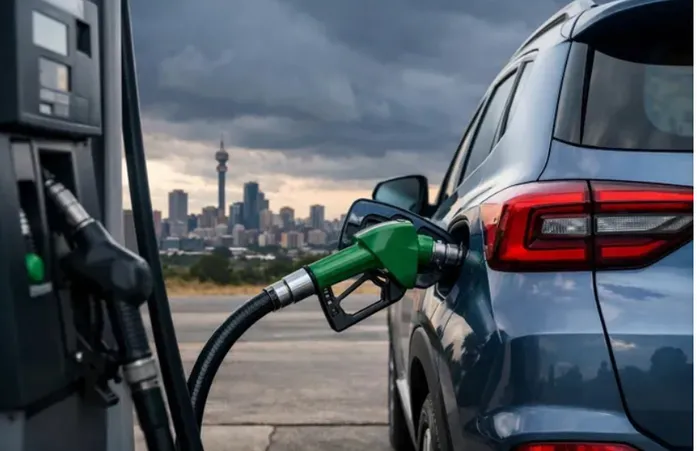
Petrol will increase again in June as the temporary fuel tax relief programme winds down, but diesel sees a significant decrease.
Image: IOL
The proximate cause is geopolitical. The effective closure of the Strait of Hormuz which is a critical maritime route through which roughly 20% of global oil flows, sent shockwaves through energy markets from the moment the US-Iran conflict escalated. Brent crude climbed from $93.67 per barrel to a peak of $138 per barrel in April, before stabilising above $100 for much of May. By the time those prices filtered through into South Africa's fuel cost structures, the damage was already set.
What made it worse was the timing of the government's exit from its own relief intervention. In April and May, National Treasury slashed the General Fuel Levy by R3.00 per litre for petrol and R3.93 per litre for diesel as an emergency buffer. That relief is now being phased out. Effective 3 June, 50% of that tax relief was added back to the price of fuel, with petrol taxes increasing by R1.50 per litre. The remaining 50% is confirmed to expire on 1 July 2026. South Africans are being asked to absorb an international oil shock and a domestic tax reinstatement simultaneously.
In January 1976, petrol cost 21.1 cents per litre. The R1 mark was crossed in November 1985. The R10 barrier fell in 2008. By December 2021, motorists were paying over R20 per litre. By May 2026, the price had climbed to R26.52, an increase of roughly 12,470% over five decades, according to Statistics South Africa. June's record-breaking R28.06 now rewrites that history again.
Each of those inflection points tells a story about geopolitical shocks, currency vulnerability, and the limited buffer the South African state has ever been able to provide its citizens. The 2008 crisis drove six consecutive hikes fuelled by oil prices exceeding $145 a barrel. The 2022 peak was tied to the Russia-Ukraine war. This moment belongs to a similar category, but strikes a population with far less resilience left.
South African motorists have already begun adjusting their behaviour, with Discovery Insure data showing a 35% reduction in fuel purchases in April compared to March, with trips down 10% and total distance travelled dropping 9%. That is not restraint born of choice. It is the rationing of a household under siege.
The knock-on effects reach every corner of the economy. Agriculture, which runs predominantly on diesel, is among the hardest-hit sectors, with consequences that will feed through directly into food prices for lower-income consumers. The oil market volatility has also effectively closed the door on any SARB interest rate cuts this year, with some economists now floating the possibility of rate increases before 2026 is out. For households already managing mortgage repayments, the compounding of high fuel, high electricity, and high food costs is not an economic inconvenience. It is a survival question.
When the final 50% of the fuel levy relief expires on 1 July, the general fuel levy will revert fully to R4.10 per litre for petrol. Unless global oil prices fall aggressively enough over June to absorb that reinstatement, July's adjustment will push the pump price even higher than the current record.
South Africa has been here before, and survived. But surviving a fuel crisis and emerging from it intact are different things. The former requires endurance. The latter requires structural reform of how this country taxes fuel, how it protects its lowest earners from external shocks, and how it builds enough economic resilience to stop treating every global conflict as a domestic catastrophe. That conversation is long overdue.
Written by:
*Sesona Mdlokovana
Associate at BRICS+ Consulting Group
Africa Specialist
**The Views expressed do not necessarily reflect the views of Independent Media or IOL.
** MORE ARTICLES ON OUR WEBSITE https://bricscg.com/
** Follow @brics_daily on Twitter for daily BRICS+ updates and instagram @brics_daily