

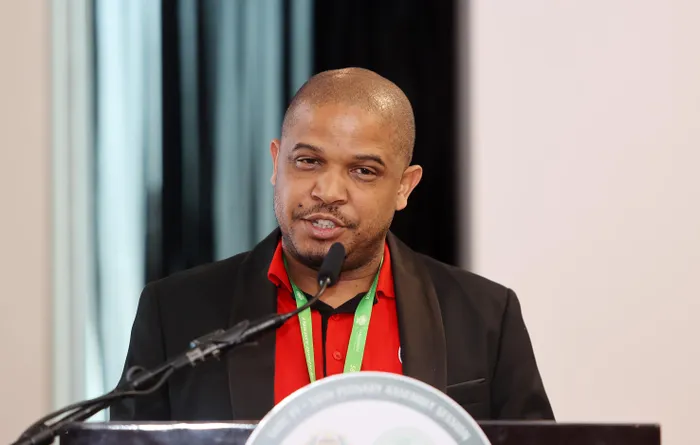
Thapelo Mohapi addresses the SADC Parliamentary Assembly, highlighting the importance of local engagement in disaster response.
Image: Tumi Pakkies/ Independent Newspapers
At the recent symposium of the 58th Plenary Assembly of the SADC Parliamentary Forum, Thapelo Mohapi from Abahlali baseMjondolo emphasised that the nature of one’s dwelling—be it a shack or a solid house—does not dictate one’s mindset or capabilities. This message proved especially poignant as he highlighted the critical impact of climate change on vulnerable communities, particularly in Durban.
Mohapi said that recently they have had an engaging partnership with the eThekwini Municipality.
“It is assumed that when you live in the shack and you’re poor, your state of thinking is the same as the structure that you are living under,” Mohapi said.
He said their engagement with the City of eThekwini focuses on disaster preparedness, particularly for the expected disasters in Durban next year (February, March, April). They are addressing how to prepare, what to do during a disaster, and the post-disaster aftermath, including allocating people to temporary relocation areas.
Mohapi said following the 2022 floods, which killed over 300 and displaced 42,000, eThekwini's social movements, non-governmental organisations (NGOs), academia, and governmental organisations resolved to unite as citizens to discuss disaster preparedness.
He said engagements with scientists revealed that in the coming years, the east coast of South Africa must prepare for more frequent and severe weather due to climate change.
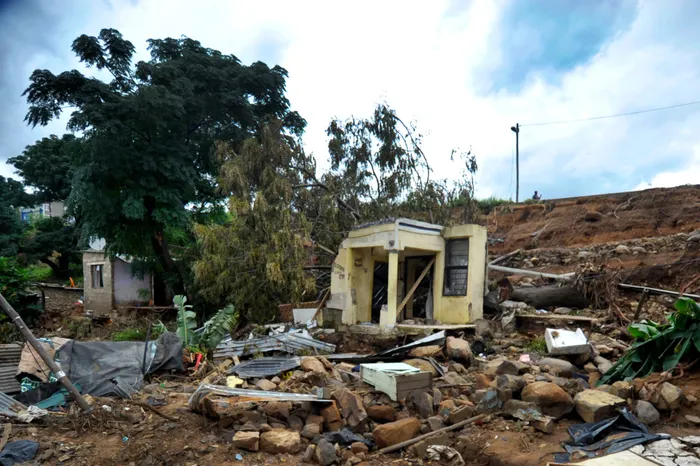
The April 2022 floods displaced thousands of people in eThekwini.
Image: Theo Jeptha/ Independent Newspapers
Mohapi highlighted that in the Durban Coalition, they now have the People’s Plan, an idea of how to build houses in the times of climate change.
He commended the eThekwini municipality for the work they have accomplished. He said he is satisfied that the People’s Plan, which involved community engagement, has allowed residents to provide input on their approach to climate change response.
“The People’s Plan, a document, has now been part of the Integrated Development Plan (IDP) of the eThekwini municipality. We are now trying to find the implementing stage,” Mohapi said.
“We are very happy with what the eThekwini municipality has done in as far as ensuring that the People’s Plan, which comes from the people, society itself, that how to actually build houses that are resilient to climate change.
“The People’s Plan actually includes monitoring and research, evaluation, knowledge sharing, learning from each other and finding solutions for the poor and the marginalised. We are sitting together as the poor, working with academics and scientists to actually say: How do we prepare for the next disaster that is about to take place?”
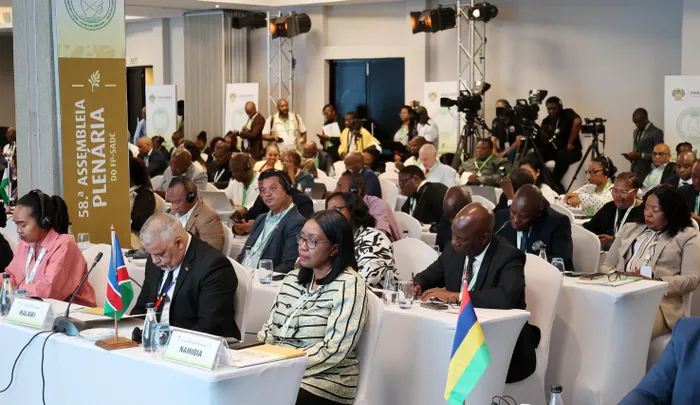
Delegates at the SADC Parliamentary Assembly during the Symposium of the 58th Plenary Assembly Session of the SADC Parliamentary Forum.
Image: Tumi Pakkies/ Independent Newspapers
Mohapi said that they have engaged with the eThekwini municipality through Disaster Management because, often, when floods occur, the government says its disaster teams are on the ground. Yet, people affected frequently question their presence, saying, “Where are these people? No one is here to save us from these disasters”.
“We came with a very unique way of saying, ‘Let's train people, young people in the informal settlements to actually be stewards and be the ones who are going to be foot soldiers, who are going to save people’. Because while the government officials are trying to come into the area, it’s very difficult to drive in the area when there are floods. But there are people in the community who are going to be trained in order for them to be responsive,” Mohapi said.
“We decided let’s have champions and soldiers who are going to be on the ground to actually save people's lives. So we identified people and people are doing community mapping so that people in the informal settlement understand their communities, and when they understand their communities, they can actually try and see where people can be moved from the area where there’s danger and so forth.”
Mohapi criticised the South African government and weather services for using complex language, like “Yellow Level 5”, to communicate weather dangers, arguing it is unsuitable for informal settlements and rural areas. He called for simplified language.
Furthermore, he highlighted a communication gap, noting the false assumption of universal internet and cellphone access.
Mohapi stressed the necessity of using loudhailers for evacuation warnings. He concluded that while the forecasts are satisfactory, the information needs to be communicated in an accessible and understandable way for people on the ground.