

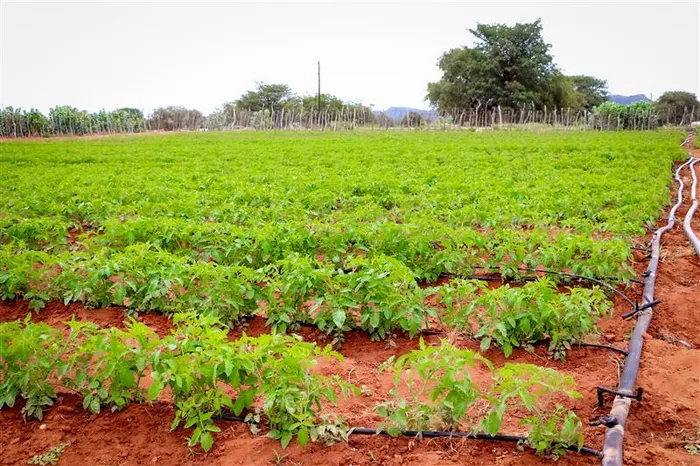
An archive image of a newly developed agriculture development cohort in Musina which saw women farmers in the majority.
Image: Supplied
The Rural Women’s Assembly (RWA) of Southern Africa has called for governments to place women smallholder farmers at the centre of food and climate policy, saying rural women are already producing the answers needed to build resilient food systems across the region.
In a statement following the dialogue, the RWA said the gathering, held at the University of Pretoria in Pretoria, closed on Tuesday, June 9, after what it described as a successful three-day consultative policy dialogue.
The dialogue, which opened on Sunday, June 7, was held under the theme: "We Have Answers: Building Resilient Food Systems," and brought together women smallholder farmers, government representatives, academics and civil society organisations from across Southern and Eastern Africa.
It took place against the backdrop of 2026 being marked as the International Year of Women Farmers, and at a time when many communities across the continent continue to face rising poverty, food insecurity, climate shocks and escalating food prices.
According to the statement, delegates attended from several countries, including Lesotho, Zimbabwe, Tanzania, Namibia, Zambia, South Africa, Eswatini, Malawi, Mauritius and Madagascar. Among those present was Ts’epang Matlhohonolofatso Ts’ita Masena, deputy Speaker of the National Assembly of Lesotho.
South African Human Rights Commission commissioner Philile Ntuli delivered the keynote opening address, setting the tone for discussions on the rights, knowledge and leadership of rural women in food systems.
The RWA said the dialogue was intended to bring smallholder farmers, most of whom are women, into the same space as government representatives and policy makers, with the aim of linking grassroots innovations to regional and national policy frameworks.
The organisation said the gathering emphasised the critical role rural women play in shaping resilient, inclusive and sustainable food systems, especially in communities where women remain responsible for food production, seed saving, household nutrition and climate adaptation.
Closing the dialogue, Mercia Andrews of the Rural Women’s Assembly said women farmers should not be treated as passive beneficiaries of policy, but as leaders whose knowledge and labour already sustain communities.
"Small-scale women farmers and peasant farmers produce the majority of food consumed across the Global South," Andrews said.
Furthermore, Andrews said the gathering had created an important space for farmers to speak directly about their lived realities and the solutions they were already using in their communities, including agroecology, local seed systems, farmer-to-farmer learning, and community-based food production.
She said the challenge was for governments to move beyond symbolic recognition of rural women and ensure that their voices were included in policies, budgets and programmes that affect food systems.
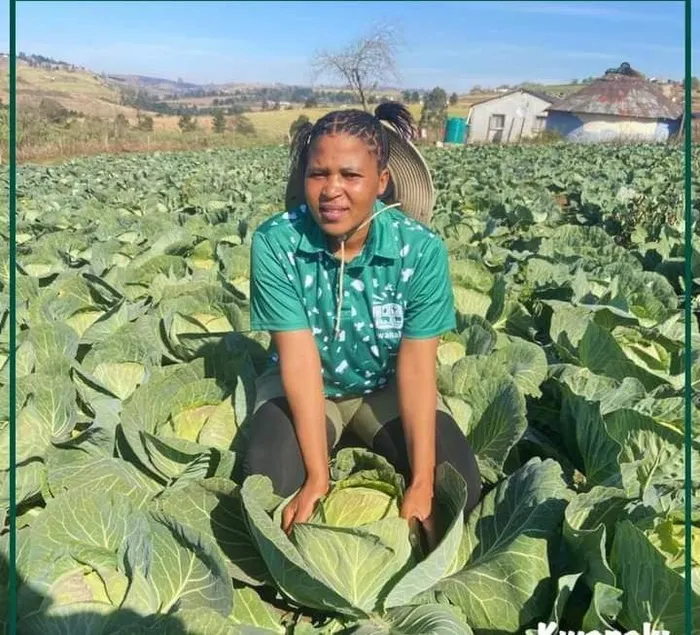
Neliswa Khanyile who always wanted to be a farmer, following in the footsteps of her mother and grandmother.
Image: Supplied.
Mariam Mayet, executive director of the African Centre for Biodiversity, said women-led agroecology was urgent because it responded to several overlapping crises at once, including climate change, hunger, land insecurity and inequality.
"Across Southern Africa, women are central to food production, seed stewardship, and household nutrition. Yet they remain disproportionately exposed to climate volatility, land insecurity and escalating food prices," Mayet said.
"Women-led agroecology is urgent because it addresses these intersecting crises in a systemic way by rebuilding resilient local food systems, restoring ecological health, and advancing gender equity in contexts marked by deep structural inequality."
Mayet said mainstream agricultural systems had failed many smallholder farmers because they continued to prioritise large-scale, input-intensive production models.
"The dominant agricultural model has prioritised uniformity, chemical dependency, and short-term yields, often at the expense of ecological stability and social wellbeing," she said.
Mayet said one of the biggest policy gaps in the region was that agricultural frameworks continued to favour large-scale farming while women and small-scale producers remained marginal to decision-making and investment.
"Policy frameworks across the region continue to favour large-scale, input-intensive agriculture, while small-scale and women farmers remain marginal to decision-making and investment,” Mayet said.
"Land reform has been uneven and slow, women’s land and resource rights remain insecure, and climate, food, and agricultural policies are rarely integrated."
She said these gaps were not caused by a lack of evidence or alternatives, but reflected political and economic priorities that had sidelined farmer-led systems.
Mayet also said public funding had not sufficiently shifted towards agroecology and farmer-led food systems.
She said a stronger agroecology framework should be grounded in farmers’ rights, with particular attention to women’s access to land, resources and decision-making.
"It should redirect public investment towards agroecological practices, strengthen local and farmer-managed seed systems, support farmer-to-farmer knowledge exchange, and embed agroecology coherently within climate, food, and development policy agendas," Mayet said.