

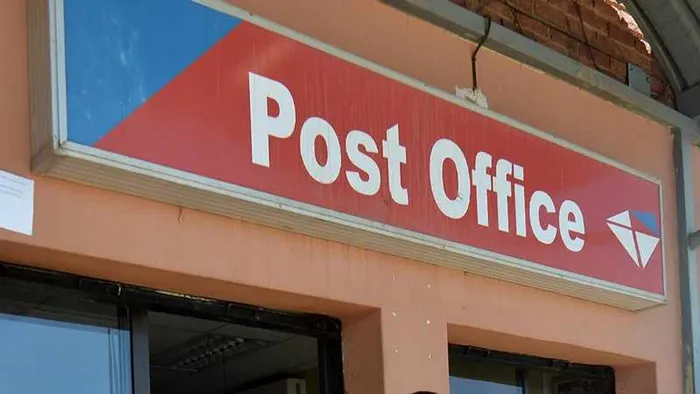
Communications and Digital Technologies Minister Solly Malatsi has outlined plans for the troubled SA Post Office.
Image: File
Communications and Digital Technologies Minister Solly Malatsi has revealed that the government is working on a plan to set aside state business for the struggling SA Post Office (Sapo).
Three unions representing Sapo employees – the Communication Workers Union, the Democratic Postal and Communication Union and the SA Postal Workers Union – wrote to Malatsi late last month seeking clarity on the troubled entity’s future.
Among their demands was that the government set aside a guaranteed 30% of its business for the Sapo.
In his response, Malatsi said the Sapo is already providing services on behalf of some government departments.
“The issue of government business allocation to Sapo is receiving attention and forms part of broader government engagements to expand on the services already provided and to bring in additional government services utilising Sapo’s infrastructure. This is part of the mechanisms to support and enhance Sapo’s revenue streams and operational sustainability,” he promised.
According to Malatsi, the Sapo’s infrastructural capabilities require modernisation and enhancement to be able to deliver effectively as many government services as possible.
He said such an initiative is also receiving attention and is being done within the broader partnership programme.
In his department’s budget vote last week, Malatsi allocated R595 million to the Sapo for its universal postal obligation.
The minister also said engagements relating to support for the entity remain ongoing with the relevant authorities and stakeholders.
“Any funding interventions remain subject to applicable processes, approvals, fiscal considerations, and accountability measures.
"To this end, the Department made several submissions and requests for a funding allocation to the National Treasury, all of which have been unsuccessful thus far,” he explained.
Malatsi told the unions that the funding interventions were undertaken as short-term measures to ensure the operational sustainability of the Sapo and to ensure that no further jobs are lost, as his department continues to engage the National Treasury for long-term sustainable funding and also to settle outstanding 18 cents to the rand of statutory creditors including the pension benefits owed to retrenched workers.
He added that the Sapo was placed under business rescue to ensure the entity survives while measures are put in place for its long-term sustainability.
“During the process, the business rescue plan was developed in consultation with all stakeholders, including organised labour. As part of the process, a Turnaround Strategy was also developed by the business rescue practitioners and Sapo management.
The turnaround plan is no different from the business rescue plan, which was consulted with all stakeholders, as the issues remain the same,” Malatsi explained.
He said the department will continue to support Sapo in the implementation of the turnaround strategy and engaged extensively within government and with the National Treasury for the Post Office funding to ensure the effective implementation of the strategy.
“The strategy indeed prioritises the repositioning of Sapo as an integrated service delivery channel to ensure Sapo's operational and financial sustainability beyond business rescue,” Malatsi indicated.