

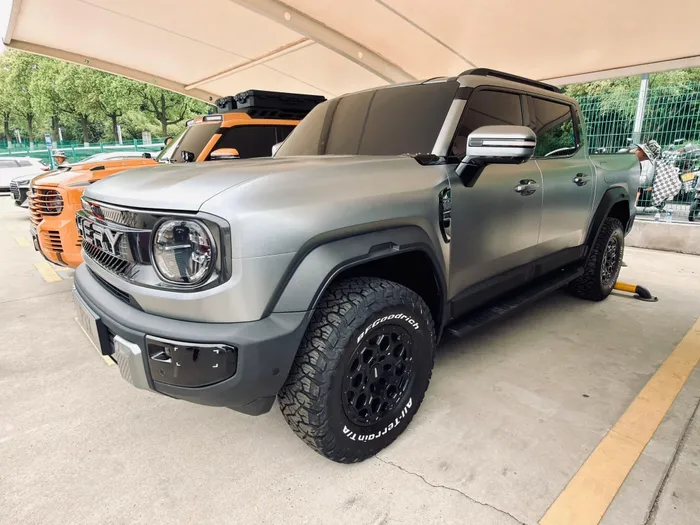
Chery are looking at manufacturing a hybrid bakkie, codenamed KP31 fitted with a 2.5-litre four cylinder diesel engine.
Image: Bernie Hellberg Jr.
Chinese manufacturer Chery has confirmed that either the popular Jetour T1 or T2 will be produced at their Rosslyn plant, which they recently took over from Nissan.
Speaking on the sidelines of the Auto China 2026 in Beijing, Toni Liu, Executive Deputy General Manager and CEO of Chery South Africa, said that one of them will be built at the Pretoria plant.
Jetour is a sub-brand of Chery International.
Liu also said that they are looking at manufacturing a hybrid bakkie, which we reckon is, for now, the codenamed KP31 fitted with a 2.5-litre four-cylinder diesel engine.
He also said that their plans for the plant are moving along swiftly, saying that supplier localisation is already underway, although it will take time to fully establish itself.
“Some suppliers are already busy with engagement to localise,” he said.
“We will see how we can plug in quickly with existing players, but I believe it’s not going to be enough, so we have to bring our own suppliers.”
For now, Liu confirmed that Chery will rely on imported components while building local capacity.
“We will bring our own parts in CKD form, but step by step, we will set up our own supplier base. “We’ve got Chery Technology Company, which is focused on Chery components as an auto supplier around the brand,” he said.
In the long term, these suppliers are expected to form part of a broader industrial ecosystem.
“I believe that’s where we are heading, but it will take time. We need guidance and support from the local side. This is exactly what the South African government wants to see.”
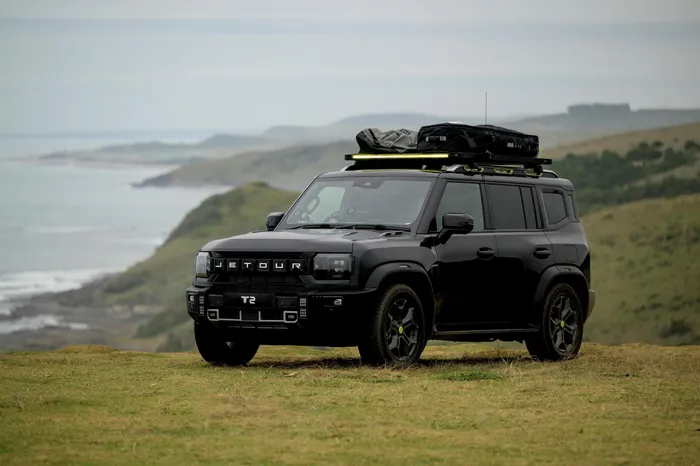
There are strong indications that the Jetour T2 will be manufactured locally.
Image: Supplied
On the Nissan plant deal, Liu said a key part of the agreement was retaining jobs.
“We are taking the majority of the employees. That’s exactly what we need to focus on, so in the long run, we will need more people, not only the current numbers.”
“We will need more capacity for the bakkie and probably some other models. “We want to manufacture an affordable car for South Africans first, not always focus on export. Otherwise, the consumer will not benefit.”
Production is still some way off as the plant requires retooling, which is expected to take about a year.
“We are taking over around mid-June, and we are busy with preparations now and will need about one year for retooling and everything else,” Liu said.
Looking beyond South Africa, Liu said the deal marks a significant milestone for Chery on the continent.
“This will be our first fully-owned plant in Africa,” he said, adding that while Chery has operations elsewhere, they are not fully owned facilities.
Despite challenges, Liu believes South Africa still holds strategic advantages.
“South Africa has many advantages, with a lot of resources. Hopefully that can be utilised,” he concluded.