

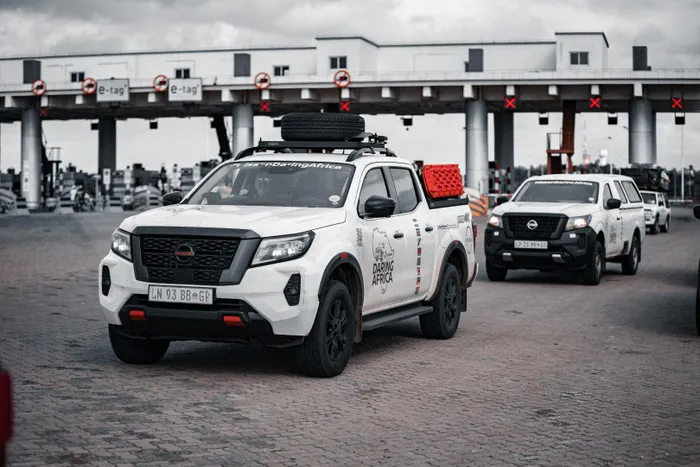
The Nissan Navara is still very much a core product for South Africa and Africa.
Image: Supplied
Nissan is reshaping its African business with a sharper focus on profitability, model relevance and long-term sustainability, according to Massimiliano (Max) Messina, chairperson for the AMIEO region.
Speaking about the broader strategy at the Nissan Vision Event in Yokohama, Japan, Messina said that cutting uncompetitive models like the Qashqai was overdue.
“We’ve been eliminating some models that were not profitable. The mistake was not to have done this before. What’s the point of keeping vehicles if they are not competitive in the market?”
Locally, this means a more selective product approach, where only models that can compete on cost and positioning will remain. The reset, he said, allows Nissan to start “from a much more profitable line-up”, brought on, in part, by growing pricing pressure from new entrants, particularly Chinese brands.
Bakkies remain at the core of Nissan’s African strategy, with South Africa playing a leading role in the segment.
Asked whether there would be a possible half-ton bakkie to replace the discontinued NP200, Messina said: “If we do, we need to do it right; there is quite significant competition, so the cost of the product has to be viable.”
On the one-ton side, the Navara remains central, although sourcing has shifted to Thailand following the end of local production.
“The core model is Navara,” Messina said.
South African buyers can also expect the continuation of the off-road-focused Warrior and Stealth models, as well as the introduction of other special editions.
“The idea is to keep building the Warrior derivatives and maybe develop other ideas on special editions,” he added.
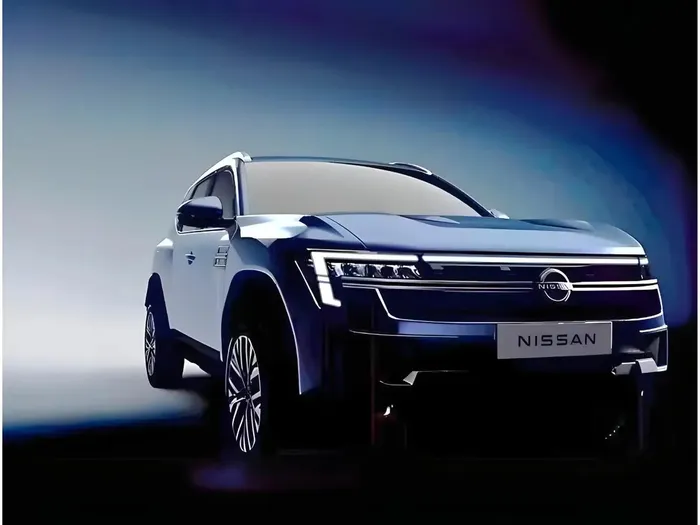
Nissan are looking at bringing in the Indian-sourced Tekton.
Image: Supplied
Nissan is taking a pragmatic view of Africa as far as electrification is concerned, where infrastructure and market conditions differ significantly from other parts of the world.
Messina emphasised that internal combustion engines, including diesel, will remain a core part of the mix for the foreseeable future.
“In Africa, we are basing the strategy in the shorter term on combustion engines. When it comes to diesel or petrol, we have, and we will have a line-up in African countries for a while,” he said.
This is particularly relevant for South Africa, where diesel continues to dominate in the bakkie and commercial vehicle segments.
“We don’t expect electric vehicles to be the majority of sales soon because a key factor is the current infrastructure.”
Instead, the brand is positioning hybrid and range-extender technologies such as e-Power as a transitional solution. They offer improved efficiency without relying on charging networks, making them more suitable for current African conditions.
“We have an array of solutions,” he said, pointing to the need for flexibility across different markets.
Beyond bakkies, Nissan is also strengthening its SUV line-up.
Models such as the Indian-built Magnite have already gained significant traction in South Africa, with further expansion planned.
New products, possibly including the C-SUV Nissan Tekton and seven-seater Nissan Gravite based on Renault’s Triber, both built in India, are expected to reach South Africa within the next product cycle.
Messina said their strategy spans multiple segments, from accessible vehicles for first-time buyers to flagship models like the Patrol.
While Chinese brands continue to gain ground across Africa, Nissan’s strategy is not to chase competitors directly, but to refine its own strengths.
“Our strategy is not to think about them. It’s thinking about us. “The right model, in the right country, with the right production setup and price,” Messina stressed.
He pointed to Nissan’s brand heritage, durability and long-term quality as key differentiators, particularly in markets where vehicles are expected to perform reliably over many years.
For South Africa and the continent, it seems that Nissan’s strategy is one of measured, realistic growth.