

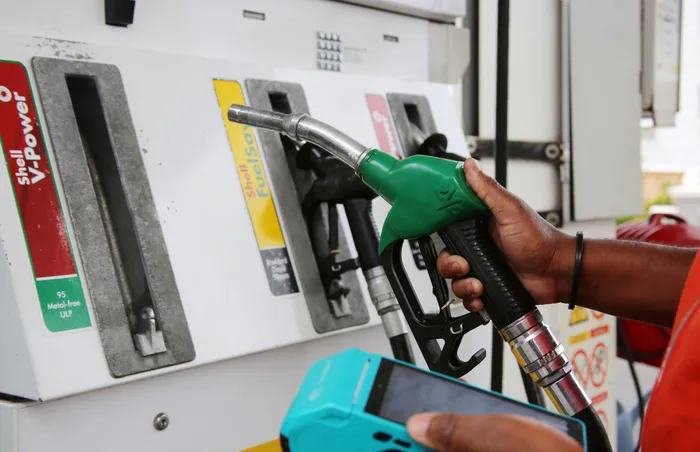
This is how much South Africans pay for petrol compared to other African countries.
Image: Tumi Pakkies / Independent Newspapers
As South African motorists brace for yet another month of fuel price changes, we break down and compare petrol prices across the rest of Africa, revealing just how wide the gap is across the continent.
While South Africans are paying around R28 per litre of petrol, motorists in some African countries are paying much more, while others enjoy some of the cheapest fuel prices in the world.
According to data compiled by GlobalPetrolPrices and analysed by Statista, Malawi currently has the most expensive petrol in Africa, with motorists paying about $3.83 (approximately R68) per litre.
Zimbabwe follows at around $2.08 per litre, while Rwanda's petrol price stands at approximately $2.01 per litre. Other countries among Africa's most expensive fuel markets include the Central African Republic and Sierra Leone.
So which countries enjoy cheap petrol?
In contrast, Libya remains the cheapest country in Africa and one of the cheapest globally for petrol. Fuel there costs just $0.024 (about 43 cents) per litre. This is largely to government subsidies and the country's substantial oil reserves.
Other countries with comparatively low fuel prices include Angola at $0.327 per litre, Algeria at $0.355, Egypt at $0.454 and Sudan at $0.700 per litre.
South Africa has increasingly featured among the continent's more expensive fuel markets. According to Business Insider Africa's analysis of GlobalPetrolPrices data, South Africa ranked among the ten African countries with the highest fuel prices in May 2026.
To put the differences in perspective, a South African motorist can pay more than 60 times what a driver in Libya pays for a litre of petrol, while motorists in Malawi are paying more than double South Africa's fuel price.
Fuel prices across the continent are influenced by a range of factors, including crude oil production, government subsidies, exchange rates, taxes, transport costs and refining capacity.
Oil-producing countries such as Libya, Algeria and Angola often maintain lower fuel prices through subsidies and domestic production, while countries that rely heavily on imported refined fuel tend to face higher costs that are passed on to consumers.
If we are looking at South Africa, our fuel prices remain closely tied to international oil prices and the rand-dollar exchange rate, so local motorists are likely to continue feeling the effects of global market volatility.
IOL