

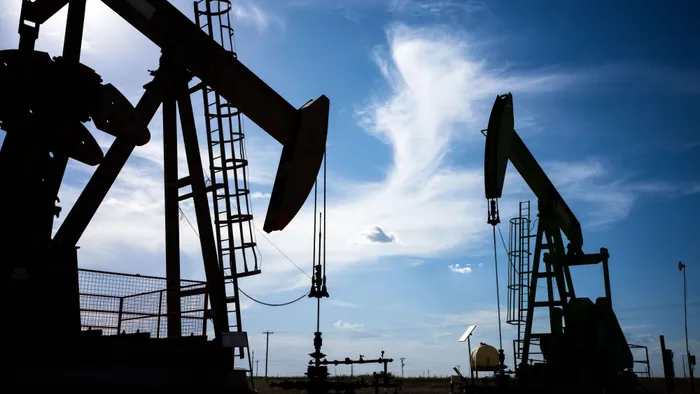
Global oil markets are moving from fears of supply shortages to concerns about oversupply, but analysts warn geopolitical risks could keep prices elevated.
Image: File / AFP
Global oil markets are entering a new phase as easing tensions between the United States and Iran push prices lower, shifting investor focus from supply shortages to the possibility of a future surplus.
After months of elevated geopolitical risk, market sentiment has moved sharply from concerns about disrupted supply to expectations of increased availability as the Strait of Hormuz gradually returns to normal operations.
Francis Osborne, Head of Oil Consulting at Argus Media, said the market has experienced a significant change in outlook.
“Looking ahead, as geopolitical risk fades, oil market sentiment has flipped sharply from war premium to paper surplus; from crisis tightness to a headline oversupply,” Osborne said.
Brent crude has moved closer to pre conflict levels, trading around $76 a barrel, after concerns around Middle East supply disruptions eased.
According to Anchor Capital’s latest market commentary, Brent declined further as easing US Iran tensions reduced supply concerns, while more than 1 200 cargo ships carrying an estimated $125 billion in goods remain affected by the disruption caused by the Strait of Hormuz closure.
The key issue for the oil market now centres on production quotas.
Argus forecasts indicate that global oil supply could exceed demand by around 4.5 million barrels per day in 2027 if no new OPEC+ quota agreement is reached after current arrangements expire at the end of the year.
Osborne said negotiations around a new framework are expected to be challenging.
“Negotiating a new agreement will be complex and politically fraught as OPEC cohesion is under strain,” he said.
However, Argus expects a new agreement to eventually be reached as major producers attempt to balance market stability with their own production interests.
While headline figures point towards a possible supply surplus, Osborne cautioned that the reality could be more complicated as countries rebuild inventories after months of disruption.
He said global oil stocks could require significant rebuilding following supply losses.
“Assuming trade starts to recover after the 60 day MoU between Iran and the USA expires, about 1.3 to 1.5 billion barrels of stock will have been drawn down,” Osborne said.
“If this is replaced over the course of 2027, this would mop up over 3.5 million barrels per day of the calculated surplus.”
The rebuilding of strategic reserves by governments and commercial inventories could therefore absorb much of the expected excess supply.
Despite improving supply conditions, analysts warn that geopolitical risks have not disappeared.
Osborne said tensions between Washington and Tehran remain unresolved, with ongoing disputes around sanctions, regional influence and nuclear issues continuing to create uncertainty.
“The Strait of Hormuz remains a pressure point and Iran has demonstrated leverage over maritime flows, reinforcing its ability to disrupt supply,” he said.
Any renewed restrictions on shipping through the key oil route could quickly reintroduce a risk premium into prices.
For consumers and businesses, the decline in oil prices provides some relief after months of elevated fuel costs, but the impact will take time to filter through economies.
South African markets have already reacted to the changing environment. The JSE All Share Index declined 1% as mining and resource stocks came under pressure, with gold producers among the decliners as safe haven demand eased.
Gold also retreated, falling below $4 100 an ounce as investors shifted focus away from geopolitical concerns and towards interest rate expectations.
Anchor Capital noted that gold declined as a stronger dollar weighed on safe haven demand, while Brent crude continued moving closer to pre conflict levels.
Osborne said current oil prices appear to reflect the competing forces shaping the market.
“Fundamentals are turning softer, further downside for oil prices is fragile, with structural oversupply counterbalanced by restocking demand and a high probability of recurring geopolitical shocks,” he said.
Argus expects Brent prices to remain within a relatively narrow range.
“The current futures price for Brent seems to have settled in the $75 to $80 per barrel range,” Osborne said.
“This seems to be fair value given the conflicting pressures at work, with probably more upside than downside risk.”
For global markets, the next challenge will be determining whether the peace framework delivers a lasting return to stable energy flows or whether renewed geopolitical tensions once again reshape the oil landscape.
Follow Business Report on Facebook, X and on LinkedIn for the latest Business and tech news.