

Rising energy costs, fertilizer shortages, and supply chain disruptions are quietly pushing up production costs across global industries, according to Citadel Global.
Image: Siphiwe Sibeko
While global attention remains focused on oil prices and currency volatility amid escalating tensions in the Middle East, Bianca Botes said the deeper and longer lasting economic consequences are unfolding quietly across industries that many consumers would never directly associate with the conflict.
According to Botes, the impact of the ongoing geopolitical tensions cannot be measured purely through oil market headlines.
“The impact of the war cannot be measured based on headlines alone,” she said.
“While the news may focus on the oil price and currency moves, there is a far more silent effect that is worth discussing, one that will have a far longer impact than the shorter term pain of higher oil prices.”
Botes pointed to industries such as glass manufacturing, fertiliser production, aluminium, petrochemicals, and even helium supply as examples of sectors already absorbing significant cost pressures linked to higher energy prices and disruptions around the Strait of Hormuz.
Glass manufacturing, for example, is heavily dependent on natural gas, with furnaces operating continuously at temperatures of around 1 500 degrees Celsius.
“Glass rarely features in energy market commentary, but this example makes the point that narrow coverage on the oil price ignores the fact that energy prices underpin every input cost,” Botes explained.
She noted that O-I Glass, one of the world’s largest glass producers, had already entered the current crisis facing a sharp increase in European energy costs linked to expiring gas hedges.
The fertiliser industry is facing even more immediate pressure.
Natural gas is a key feedstock used in ammonia production, which forms the basis of most nitrogen fertilisers, while around 30% of global fertiliser shipments move through the Strait of Hormuz.
“Constrained supply and elevated gas prices feed into crop nutrient costs, and those costs take time to clear,” Botes said.
“Planting decisions made under limiting high input cost conditions determine food supply months later.”
She added that the International Energy Agency has already warned that the conflict is likely to keep global natural gas supplies tight for at least the next two years.
Food price inflation, she argued, is therefore becoming a medium term certainty rather than simply a short term risk.
Botes also highlighted lesser discussed supply chain vulnerabilities, including helium shortages.
The Gulf region remains an important source of global helium supply, which is critical for MRI machines, semiconductor manufacturing, and data centre cooling infrastructure.
“A sustained constraint will not make headlines, but it adds real cost and friction to chip production and medical services at a time when neither can absorb much pressure,” she said.
The Gulf’s role in aluminium exports is also becoming increasingly important as supply chain pressures intensify across sectors such as automotive manufacturing, construction, and packaging.
Meanwhile, rising petrochemical costs are expected to filter through to products ranging from detergents and plastics to synthetic fabrics and pharmaceutical packaging.
“The link between a Hormuz disruption and the manufacturing cost of soap or pharmaceutical packaging is real, even if it takes several months to appear in a margin report,” Botes explained.
India has emerged as one of the clearest examples of how sustained oil price shocks can affect a national economy.
The country, which is the world’s third largest oil importer, has seen its import bill rise sharply as Gulf supply tightens.
Its currency, the rupee, has weakened to record lows while foreign exchange reserves have declined significantly despite intervention by the Reserve Bank of India.
Botes said Indian Prime Minister Narendra Modi has even urged citizens to reduce gold purchases and overseas travel to limit dollar outflows.
“These are signals of genuine balance of payments stress,” she said.
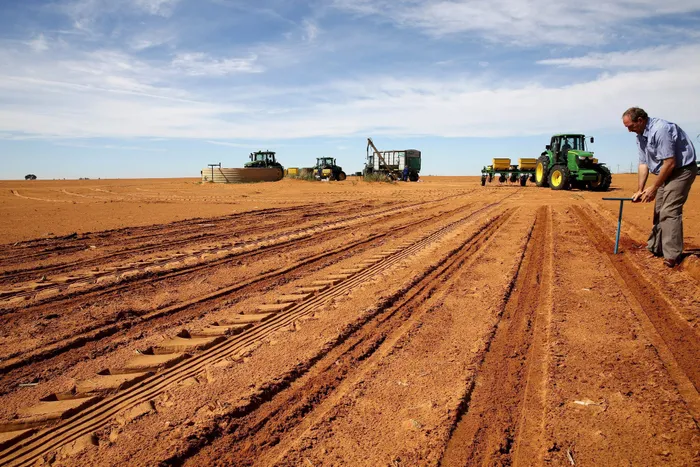
For South Africa, the risks are particularly acute in the agricultural sector.
Botes noted that approximately 98% of South Africa’s agro chemicals and 80% of fertiliser and farming machinery are imported.
“Higher shipping costs, a weaker rand and elevated fertilizer prices represent a simultaneous three way squeeze on farming inputs,” she said.
“The farmer absorbs it first, but the consumer’s prices follow, although much later and without much warning.”
Beyond the supply chain concerns, global financial markets are also reacting sharply to persistent inflationary pressures and heightened geopolitical risk.
United States Treasury yields have climbed above 4.5% for the first time in a year as inflation data weakened expectations of near term interest rate cuts by the Federal Reserve.
Meanwhile, South African bond yields have also risen amid domestic political uncertainty and global risk aversion.
Botes noted that the rand weakened to R16.61 against the US dollar following news linked to renewed political pressure surrounding President Cyril Ramaphosa and increased geopolitical tensions involving Taiwan and China.
Despite the volatility, Wall Street markets continued to push higher this week, with technology stocks leading gains amid optimism around artificial intelligence and improving trade sentiment between the United States and China.
Commodity markets, however, remain highly sensitive to developments around the Strait of Hormuz.
Brent crude oil prices remain above US$106 per barrel, while the continued blockade and fragile ceasefire negotiations continue to fuel concerns around supply shortages.
“The more durable story is in the industries nobody is watching,” Botes said.
“The effects accumulate across supply chains that were not designed for this and they reach the end of the chain long after the original event has stopped making news.”
Follow Business Report on Facebook, X and on LinkedIn for the latest Business and tech news.