

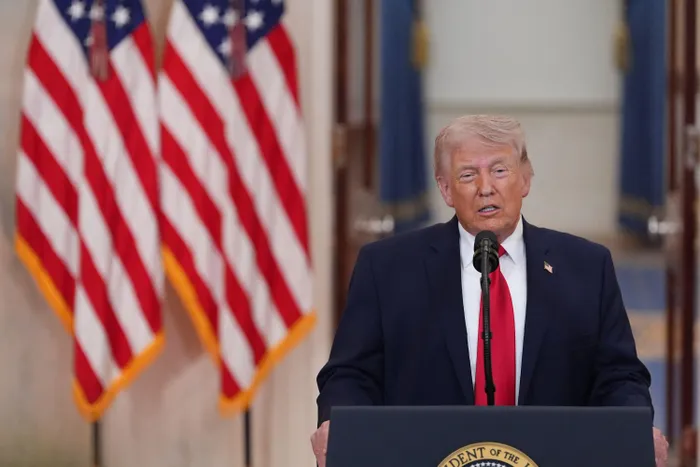
Global markets experienced a temporary boost following US President Donald Trump's indefinite ceasefire extension with Iran. This article explores the implications for oil prices, inflation, and economic forecasts amid ongoing geopolitical tensions.
Image: Getty Images via AFP
A momentary boost was given to global markets after United States (US) President Donald Trump announced an indefinite extension of the ceasefire with Iran.
The US blockade of the strategically crucial Strait of Hormuz is set to remain in place, which keeps concerns over oil supply firmly on the table.
Trump said the ceasefire would last until such as time as Tehran could submit a 'unified proposal' to end the war.
Brent crude oil prices remained elevated as it tested the $100/barrel level early on Wednesday morning, with market analysts have taken a cautious approach.
It dropped slightly as the day went on to about $98 per barrel.
Neil Wilson, Saxo UK Investor strategist said, "The direction of travel is what matters here, and the extension of the ceasefire shows us where that lies. Despite this as we move away purely from headline and sentiment-driven price action the true economic impact from the lasting disruption is starting to show up in some company updates."
"The Strait remains shut and we are seeing the real-world impact in the latest UK inflation data, where CPI rose to 3.3% because of a jump in fuel prices. Clearly the conflict in the Middle East is already hurting consumers here,' Wilson added.
Meanwhile, local Consumer Price Index (CPI) data was released on Wednesday and it showed that headline inflation in March accelerated slightly, from 3,0% year-on-year in February, to 3,1%.
John Loos, Independent Economist, said that there was not much movement in ininflation yet.
"We await April’s number for the first major signs of the Gulf War impact. The March inflation rate is expected to have a limited impact on the South African Reserve Bank's (Sarb) Monetary Policy Committee ( MPC) interest rate decision late in May. By that stage, the MPC will have insight into April CPI inflation, and it is the April data point where the first meaningful impact emanating from the Middle East Conflict via fuel prices is expected to become visible in the numbers," Loos said.
Meanwhile gold prices rebounded to a certain extent on Wednesday, recovering part of the previous session’s losses as markets reacted to the extension of the ceasefire.
Eric Chia, Financial Markets Strategist at Exness said that Trump’s decision to allow additional time for negotiations could help de-escalate the current tensions and temper concerns over energy-driven inflation.
Chia added, "This could help push yields down and provide support to bullion. However, uncertainty remains elevated as the fragile backdrop continues to create risks for gold. Any breakdown in negotiations could quickly reignite inflation fears, pushing the dollar and treasury yields higher and weighing on the metal."
"Monetary policy expectations are also in focus. Interest rates are still expected to remain unchanged, while recent data showed economic resilience in the US. This continues to limit the upside for gold in the near term. In the long term, however, ongoing tensions in Eastern Europe, sustained central bank purchases and a third consecutive week of ETF inflows provide a positive backdrop," Chia further stated.
“While the extension of the ceasefire offers a glimmer of hope, it’s important for investors to remain vigilant. Market movements are not just reacting to today’s news but are still influenced by the backdrop of geopolitical tensions and the logistics of oil supply,” Bianca Botes, Managing Director at Citadel Global said.
Frank Blackmore, Lead Economist at KPMG South Africa told Business Report that the main contributors to the higher inflation in February were housing and utilities, which increased in their contribution by 0.1 percentage point, as well as entertainment, restaurants, and accommodation services, which increased by 0.2 percentage points over the February read.
Blackmore said, "There is still a lot of uncertainty around the war in Iran, both in terms of its duration and intensity. Therefore, most central banks have decided to hold interest rates at current levels. These levels are seen to be slightly restrictive, or moderately restrictive, affording authorities more room to look through the first-round effects of the energy price shocks that have come through."
"What this means for inflation is that interest rates are likely to stay higher for longer in South Africa and may even increase, depending on the intensity and duration of the inflationary shock of the war. The Reserve Bank’s inflation model shows a number of alternative paths, depending on the assumptions used regarding the duration and intensity of these inflationary effects," Blackmore added.
Follow Business Report on Facebook, X and on LinkedIn for the latest Business and tech news.