

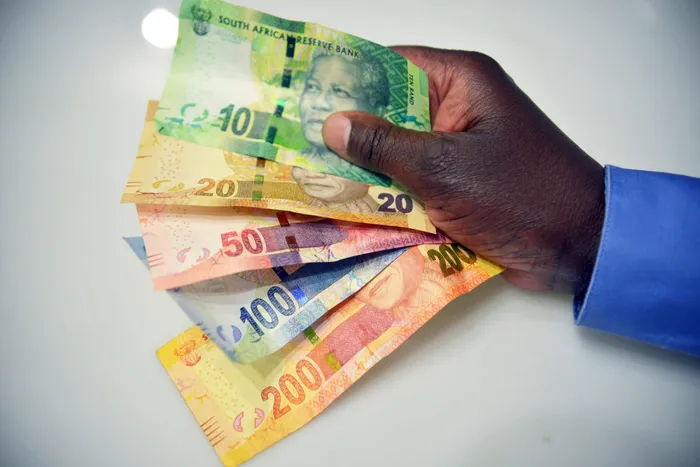
The currency has faced sustained pressure since the U.S.-Israeli war on Iran started nearly two weeks ago.
Image: File
The South African rand weakened on Friday, heading for a second consecutive week of losses as surging energy prices fueled by conflict in the Middle East rattled global markets and heightened inflation concerns.
At 10:05 the rand traded at 16.94 against the dollar , 0.9% weaker than Thursday's close.
The currency has faced sustained pressure since the U.S.-Israeli war on Iran started nearly two weeks ago. It fell over 3% last week and is poised to decline by around 2% this week. Rising oil prices pose a challenge for South Africa, a net energy importer.
Iran's new Supreme Leader Mojtaba Khamenei said on Thursday that Tehran will keep the strategic Strait of Hormuz closed as leverage against the U.S. and Israel, which has stoked concerns about global energy supply and risk assets.
Oil prices rose above $100 a barrel, despite the U.S. trying to ease supply concerns by issuing a 30-day license for countries to buy Russian oil and petroleum products stranded at sea.
"Higher oil import costs could narrow trade surpluses and place renewed pressure on the current account if elevated prices persist," ETM Analytics said in a research note.
On Thursday, South Africa recorded its first current account surplus in more than two years in the final quarter of 2025, helped by rising precious metal prices, but the data had little effect on the rand.
"While this war continues and the stress in the oil market builds, one should expect emerging-market currencies such as the rand and its LATAM peers to underperform developed-market currencies, especially the U.S. dollar," ETM Analytics said.
The greenback was last up 0.4% against a basket of currencies.
On the Johannesburg Stock Exchange, the Top-40 index fell 1.2% in early trade.
South Africa's benchmark 2035 government bond also weakened, as the yield rose 11 basis points to 8.825%.
Reuters