

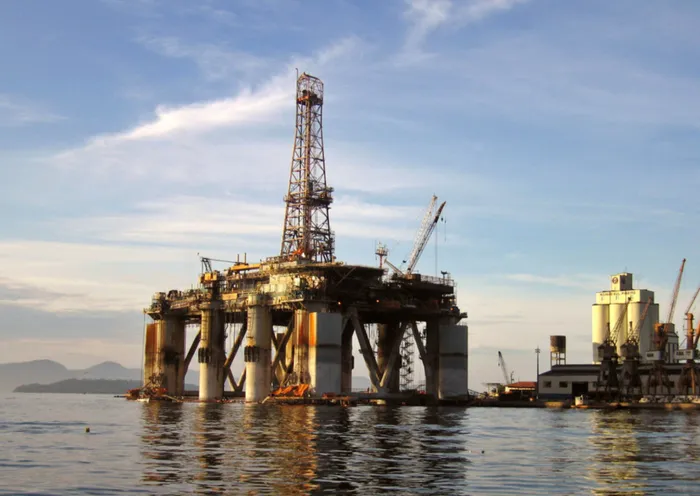
Within days of the conflict intensifying, oil prices surged and analysts began warning about potential disruptions in the Strait of Hormuz - the narrow shipping corridor through which roughly a fifth of the world’s oil supply passes.
Image: File
The latest escalation of tensions involving the United States, Israel and Iran has once again exposed how fragile global oil supply can be.
Within days of the conflict intensifying, oil prices surged and analysts began warning about potential disruptions in the Strait of Hormuz - the narrow shipping corridor through which roughly a fifth of the world’s oil supply passes.
For countries like South Africa, events thousands of kilometres away can quickly translate into pain at the petrol pump. Brent crude briefly climbed above $100 per barrel after the latest escalation, highlighting how rapidly geopolitical tensions can push up global energy prices.
Even before the latest crisis in the Middle East, forecasts were already pointing to significant fuel price increases in South Africa, with diesel price hikes of as much as R5 per litre widely discussed. When oil markets are shaken by geopolitical shocks, the consequences ripple quickly through the economy. Transport costs rise, food prices follow, and inflation spreads.
This vulnerability is not temporary. It is structural.
South Africa imports the majority of the refined petrol and diesel that powers its transport system. Around 69% of those imports originate from Middle Eastern suppliers, making the country particularly exposed to instability in that region. Local refineries currently have the capacity to process only about half of national fuel demand, leaving the remainder to be sourced through global supply chains over which South Africa has little control.
In practical terms, this means the cost of moving people and goods around the country is influenced by conflicts, sanctions, and shipping disruptions in distant parts of the world.
The consequences are most visible in diesel prices. Diesel powers freight trucks, agricultural machinery and mining equipment, which are the backbone of South Africa’s productive economy. When diesel prices spike, the cost of transporting food, materials and goods rises with it. The result is a broad inflationary impact that affects households and businesses alike.
This is why the conversation around electric mobility should not be framed purely as an environmental issue. Increasingly, it is about economic resilience and energy security.
Electric vehicles allow transport energy to be generated locally rather than imported. Instead of relying on oil shipped from overseas, vehicles can run on electricity produced domestically, particularly from renewable sources such as solar, which South Africa has in abundance.
In effect, electrification allows a country to replace imported fuel with locally generated energy.
But electric mobility only works if the infrastructure exists to support it. Drivers and fleet operators must know that reliable charging networks exist along major highways and logistics corridors so that vehicles can travel long distances without concern. Thankfully this infrastructure is now beginning to take shape.
One example is the off-grid charging network being developed by Zero Carbon Charge (CHARGE). Our company has already launched an operational charging site in Wolmaransstad and is currently building two additional stations along the N3 corridor between Johannesburg and Durban, scheduled to open in May 2026.
The N3 sites form part of a broader rollout of 60 charging stations positioned roughly 300 kilometres apart along South Africa’s national highway network, creating the backbone for long-distance electric travel between the country’s major economic centres. As electric vehicle adoption grows, the network is expected to expand further to around 120 stations spaced roughly 150 kilometres apart. If fully developed, infrastructure of this scale would effectively create South Africa’s first national charging spine for electric mobility.
Supporting this rollout, CHARGE has secured a funding facility from the Development Bank of Southern Africa and is engaging with a range of financing and capital-markets participants, including Mesh.trade, in relation to long-term funding options for the network’s expansion.
Each station generates electricity on site using solar power and battery storage instead of drawing power from the national grid. This approach addresses two of South Africa’s key energy vulnerabilities at once. It reduces dependence on imported fuel while also avoiding additional strain on an electricity grid that is already under pressure.
For transport operators, locally generated renewable energy also offers greater cost stability. Unlike oil prices, which fluctuate with geopolitical tensions and global supply disruptions, solar energy is produced from a resource that is abundant and locally available.
Commercial logistics fleets are likely to play an important early role in the transition. Freight vehicles travel predictable routes, operate at high utilisation levels and consume large volumes of fuel, characteristics that make them particularly well suited to electrification once reliable charging infrastructure exists along major transport corridors such as the N3 between Durban and Gauteng.
As electric freight begins to scale on these routes, the consistent demand from fleet operators can help anchor the economics of charging infrastructure, creating the conditions for passenger EV adoption to grow alongside it.
This shift represents more than a change in vehicle technology. It marks the gradual development of a transport system powered by locally generated electricity rather than imported oil. For South Africa, electrifying transport is therefore not simply about cleaner mobility. It is about building a more resilient and self-reliant economy.
Roux, co-founder and chair of CHARGE.

Roux, co-founder and chair of CHARGE.
Image: Supplied.
Follow Business Report on Facebook, X and on LinkedIn for the latest Business and tech news.