

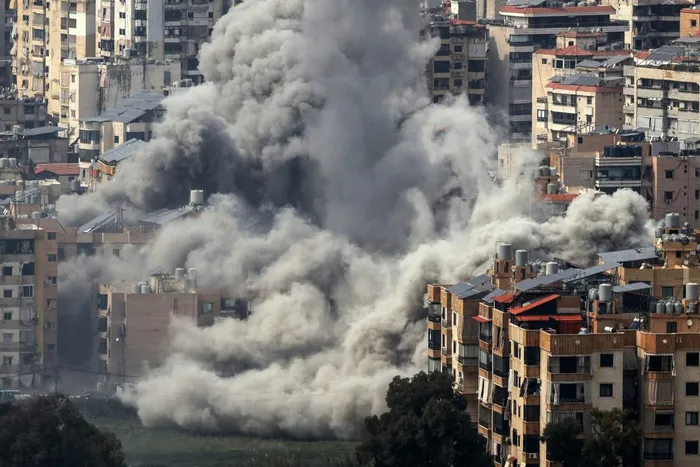
Smoke rises from the site of an Israeli airstrike in Beirut’s southern suburbs on March 6, 2026. As global markets contend with the repercussions of geopolitical tensions, the sudden surge in oil prices has raised alarms about potential inflation spikes. Will the markets stabilise, or are we in for a prolonged period of volatility? Stay tuned for updates.
Image: AFP
In a clear demonstration of the unpredictability of global markets, sentiment swung dramatically yesterday amid escalating geopolitical tensions in the Gulf.
Reports emerged of further ship targeting in the region, prompting oil terminals to shut down and sending oil prices skyrocketing to over $100 per barrel, with a staggering increase of nearly 9.5%.
The renewed fears of persistently high energy costs, an ongoing conflict, and the accompanying threat of soaring global inflation are once again at the forefront of economic discussions.
Bianca Botes, Director at Citadel Global said that despite the International Energy Agency (IEA) pledging to release 400 million barrels of oil to stabilise the market, these efforts appear futile against the backdrop of escalating unrest in the Middle East.
"The rising costs at the pumps now overshadow economic data, including the recent Consumer Price Index (CPI) print from the US, which largely aligned with analyst expectations but was overshadowed by heightened inflationary concerns stemming from the region," Botes said on Thursday morning.
Market reaction has been pronounced.
"While Wall Street concluded the previous day largely unchanged, S&P futures have dipped just over 1% in early trading. Asian markets have also reacted negatively, with the MSCI Asia Pacific index down nearly 2% this morning. The strengthening dollar benefitted from the spike in oil prices, nudging the US Dollar Index up to just below 99.5. In contrast, gold has declined by 0.45%, selling at $5,153 per ounce as investors digest the implications of high oil prices," Botes added.
She said that as the situation remains fluid, traders will be closely monitoring today's busy data calendar.
"Local gold and mining production statistics and US jobless claims are set to be released, yet the overarching sentiment will likely be dictated by developments in the Middle East, indicating that volatility in the financial markets is far from over," Botes said.
"The South African rand exhibited signs of strain amidst this deteriorating sentiment, trading at R16.61 against the dollar, R19.17 to the euro, and R22.21 to the pound. The surge in oil prices compounds inflationary pressures locally, effectively diminishing the likelihood of a rate cut by the South African Reserve Bank (SARB) later this month, a significant shift in market expectations," Botes further said.
Follow Business Report on Facebook, X and on LinkedIn for the latest Business and tech news.