

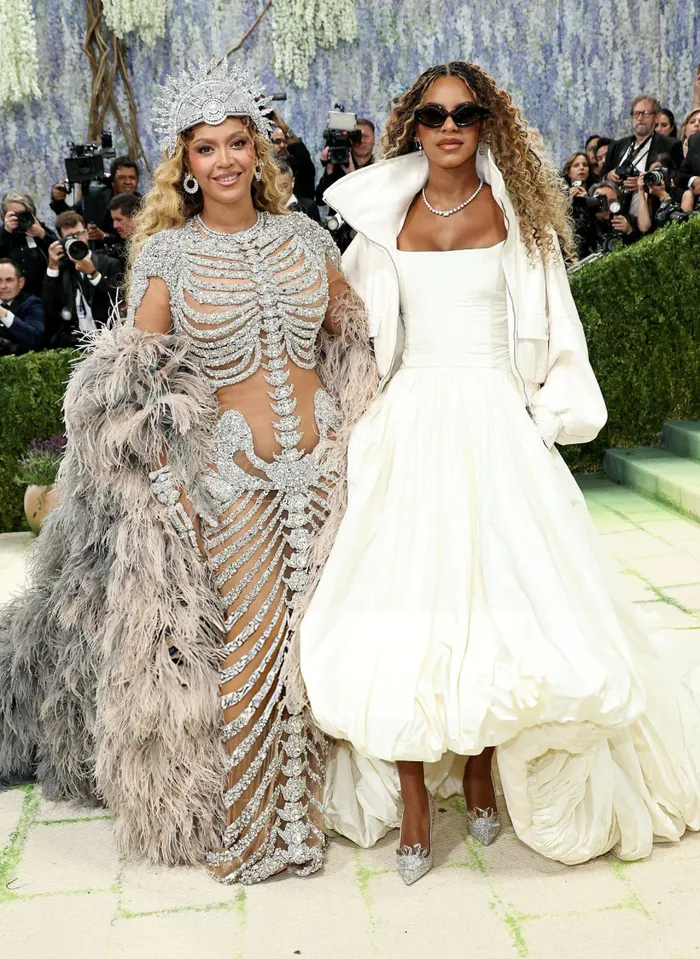
While fashion dominated the Met Gala spotlight, a growing wave of criticism is questioning the event’s billionaire ties, celebrity culture and the meaning of glamour in a world facing deeper global tensions.
Image: X/@21metgala
While some of you are praising this one and that one’s outfit at the Met Gala, some are sitting here trying to make sense of it all.
You would think the eyes of society would be open by now, but the celebrity culture machine is still running strong.
The Met Gala has once again sparked debate, not only for the fashion but for what it represents in today’s cultural and political climate.
While the event is known as a glamorous fundraiser for the Metropolitan Museum of Art’s Costume Institute, its ties to billionaire influence and brand power have left many questioning the optics behind the spectacle.
Meredith Lynch took to Instagram to criticise the stars attending this year’s event, particularly due to its association with honorary co-chairs Jeff Bezos and Lauren Sánchez Bezos.
She warned celebrities against wearing “ICE Out” pins at the gala, arguing that Bezos is “part of the reason we’re in this mess”, linking it to wider political tensions and his past support of Donald Trump.
Lynch acknowledged that the Met Gala raises funds for a cultural institution but questioned how that aligns with billionaire-backed prestige events.
Actress Taraji P. Henson also reacted to the discussion, commenting on the post: “I am so confused by some ppl that are going. I am just like WTF ARE WE DOING!?!?!?!”
Her response reflects a growing sense of disbelief among some public figures about the direction and meaning of such highly publicised cultural events.
American astrologer and writer Rob Brezsny offered a more extended critique, describing his reaction in strong terms: “Watching the Bezos-sponsored Met Gala last night, I felt disgust.”
He added that while he has never opposed glamour or celebrity pageantry in principle, “this year it felt grotesque.”
Brezsny went on to question the contrast between extreme wealth and global instability, arguing that “we are in the midst of an ongoing moral emergency” while elite figures gathered in celebration of luxury fashion.
He also suggested the event operates as a form of image-making disguised as philanthropy, calling it “elite self-consecration” where status and influence are reinforced under the banner of culture and charity.
He further challenged public figures to reflect on their role, asking: “What will you do with your visibility while the world is being decimated? Will you bear witness? Will you resist? Or will you keep posing?”
The Met Gala debate is no longer just about fashion but what it represents. Critics question billionaire influence, celebrity participation and the disconnect between glamour and global reality.
As Brezsny suggests, it feels like “elite self-consecration” while the world faces a crisis. The real question is why this spectacle still holds so much attention.