

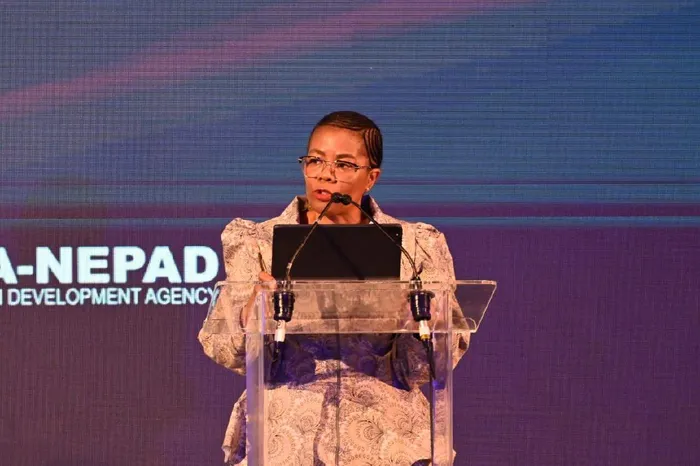
Prof Puleng LenkaBula, Principal and Vice-Chancellor of University of South Africa, will speak at the United Nations Headquarters in New York this week, highlighting the role of higher education institutions in driving collaborative, locally led solutions for sustainable urban development.
Image: Bheki Radebe
As urban inequalities deepen and climate pressures mount globally, Professor Puleng LenkaBula, Principal and Vice-Chancellor of the University of South Africa (Unisa), is set to make significant strides for sustainable urban development at the United Nations. Standing alongside esteemed international leaders, she will bring a vital higher education perspective to the forefront of the urgent conversation regarding local actions to foster global progress.
Dr Genevieve James, Deputy Director of Engaged Scholarship at Unisa, says Professor LenkaBula is slated to address the UN Local2030 Coalition Special Event during the High-Level Political Forum (HLPF) on Sustainable Development at the UN Headquarters in New York. Her address, titled “Advancing SDG 11 and the New Urban Agenda: Local Action for Global Acceleration,” comes at a crucial moment that coincides with the 10th anniversary of the New Urban Agenda adopted during the Habitat III Conference in Quito, Ecuador, in 2016. This milestone has ignited a renewed focus on the challenges and opportunities shaping the trajectory of sustainable urbanisation.
Dr James says at the heart of these discussions lies Sustainable Development Goal 11, which aims to make cities and human settlements inclusive, safe, resilient, and sustainable. Increasingly, experts view SDG 11 not just as one of the 17 goals but as a critical linchpin for achieving the broader objectives of the 2030 Agenda. Policymakers emphasise that urban environments are not only indicators of global development successes or failures but also fundamental to addressing key issues like access to adequate housing, basic services, and climate resilience.
In her presentation, Professor LenkaBula will underscore the essential role that universities play in driving urban development. As an advocate for engaged scholarship and societal transformation, she will shed light on how higher education institutions serve as connectors between development data, knowledge, and practical action. Her insights will reflect Unisa's commitment to fostering collaborative ecosystems that transcend traditional institutional barriers, aligning multiple stakeholders — urban development theorists, government organisations, industry leaders, and civil society — in joint efforts to solve complex urban challenges.
Dr James says that recognising that sustainable solutions should arise from the realities of local communities, she will argue for approaches that engage local territories as co-creators of development knowledge and innovation, rather than mere beneficiaries of global initiatives. The event will also serve as a platform for showcasing progress made in local-driven development, with SDG 11 taking centre stage alongside goals related to clean water, affordable energy, and global partnerships.
LenkaBula’s presence at the UN not only embodies a significant achievement for Unisa but also reflects the increasing stature of African universities in global development discussions. It demonstrates how institutions like Unisa, with their commitment to social, economic, and environmental advancement, are reshaping the narrative and providing intellectual leadership on pressing issues that affect communities worldwide.
As global leaders gather to assess their journey towards the ambitious 2030 Agenda, Professor LenkaBula's message is clear: achieving sustainable cities necessitates a collective effort that harnesses the diverse strengths of government, academia, industry, civil society, and citizens. In a decade marked by growing urban challenges, she serves as a poignant reminder that lasting solutions arise from collaborative efforts to forge a more just, resilient, and sustainable future for all.
IOS