

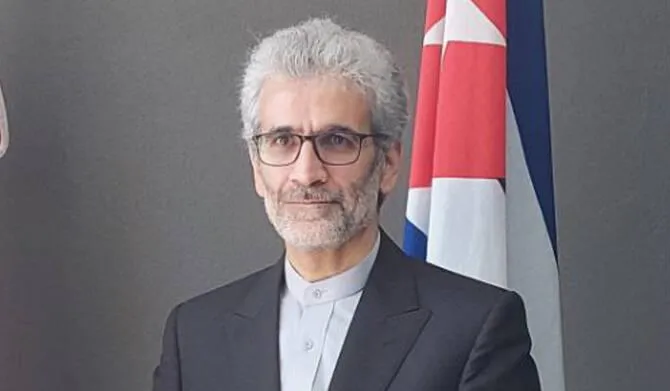
Iranian ambassador to South Africa Mansour Shakib Mehr spoke in Durban on Thursday night.
Image: X
IRAN’s ambassador to South Africa says they won’t let their guard down, despite this week’s signing of a Memorandum of Understanding with the US aimed at ending hostilities.
Addressing activists, academics and interested citizens in Durban on Thursday night, Mansour Shakib Mehr said Iran did not have confidence that the US would keep its part of the bargain.
“We don't have any trust in the United States, but our people are happy with this MOU, and they think the US cannot reach the goals that it described at the beginning of this war,” he said.
Those goals included regime change and limiting some of Iran’s activities like its missile programme, said Shakib Mehr.
Some of his remarks were made during a speech in Durban, while others were given in an interview with The Independent on the sidelines of the event.
Despite US claims that its strikes had significantly weakened Iran, the ambassador said “we are ready to continue fighting against the oppression and against any invasion against our people.”
He said the US thought it could destabilise the country and get access to Iran’s natural resources like it did in Venezuela. “But Iran is not Venezuela,” he stressed.
He implied that Iran was also targeted by the US and Israel because of its support for the Palestinian people and for condemning Israel for its policies and attacks on Palestine.
According to Shakib Mehr, the US and Israel acted together in regional military and political dominance, and therefore Iran was a target of pressure, sanctions, and what he described as military attacks.
As the world waited for talks between the US and Iran to start in Switzerland aimed at reaching an agreement to reduce tensions, Israel reportedly carried out strikes against Hezbollah, according to various media reports, bringing further strain to the process.
Meanwhile, the Strait of Hormuz has seen periods of disruption in recent months amid heightened regional tensions that affected global fuel supplies and contributed to a surge in oil prices.
However, following a preliminary agreement between the two countries, he said it was reopened this week, with restrictions on movement through the strategic maritime corridor eased.
Shakib Mehr said that under international law, the Islamic Republic of Iran, as a coastal state bordering the Strait, has the right and authority to take necessary measures to safeguard its security and protect its national interests.
He emphasised that the Strait of Hormuz is in Iran’s territorial waters and that Iran therefore has the right to decide when to open or close it.
“I want to ask Mr. Trump, what is the consequence of this war?” he said, arguing that the Strait of Hormuz was open before the conflict and that the war had disrupted regional stability and shipping flows.