

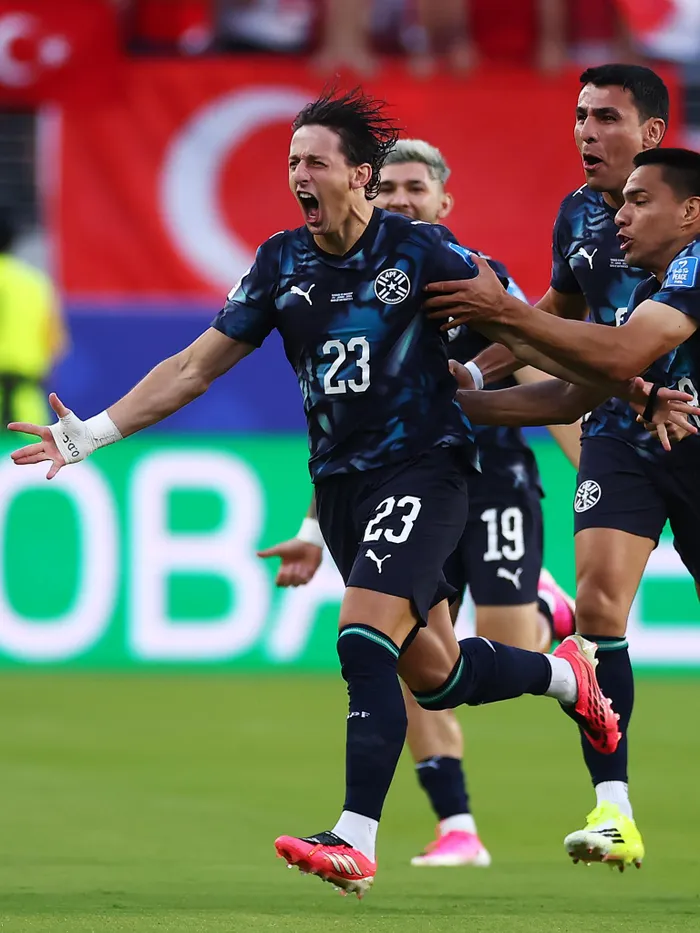
Paraguay stunned Germany, Morocco defeated the Netherlands on penalties, and Brazil beat Japan as the World Cup 2026 Round of 32 produced dramatic knockout-stage exits and decisive shoot-outs.
Image: X: @FIFAWorldCup
For decades, the World Cup has largely reinforced football's established hierarchy. While the occasional upset has always been part of the tournament's appeal, the sport's traditional superpowers usually restored order once the knockout rounds arrived.
This World Cup, however, is telling a different story.
The giants may still dominate the list of favourites to lift the trophy, but reaching the latter stages is becoming an increasingly uncomfortable exercise. Every knockout match now carries the genuine possibility that another established nation could be sent packing by a team once labelled an outsider.
Morocco's penalty shoot-out victory over the Netherlands and Paraguay's dramatic elimination of Germany were among the biggest shocks of the Round of 32, but they were far from isolated results.
Two nations with proud footballing traditions and lofty ambitions suddenly found themselves heading home far earlier than expected, underlining just how unforgiving this tournament has become.
Even when the favourites have advanced, few have enjoyed comfortable evenings. England were pushed all the way by the Democratic Republic of Congo before prevailing 2-1, Belgium survived a thrilling 3-2 encounter with Senegal and Brazil were forced to dig deep to edge Japan by the same scoreline. Reputation alone is no longer enough to guarantee smooth progress.
That is perhaps the biggest shift.
The surprise is no longer that a so-called minnow can compete with one of football's heavyweights. Instead, every knockout fixture is now viewed as a genuine contest, regardless of pedigree or world ranking, with the traditional powers increasingly aware that complacency can prove fatal.
The reasons extend well beyond a handful of memorable results.
Football's globalisation has steadily eroded the gap between the elite and the chasing pack. Players from nations once considered peripheral are now regulars in Europe's biggest leagues, gaining invaluable experience against world-class opposition every week.
Several members of the DR Congo side that stretched England, for example, ply their trade in the Premier League, while countless others across the tournament have honed their skills in Europe's top competitions.
Coaching standards, tactical sophistication, sports science and player development have also improved dramatically across every continent. As a result, the traditional powers can no longer rely solely on superior talent to overwhelm opponents.
Organisation, athleticism and tactical discipline have become powerful levellers, while the expanded 48-team World Cup has given more nations the opportunity to gain valuable tournament experience and, perhaps more importantly, genuine belief.
The ripple effects are already being felt throughout the knockout draw. Germany's early exit has handed France an unexpected meeting with an inspired Paraguay side in the last 16, while Morocco's victory over the Netherlands guarantees that either the Atlas Lions or Canada will reach the quarter-finals.
There may yet be more surprises to come as the remaining Round of 32 matches are completed, with tournament debutants Cape Verde attempting to produce perhaps the biggest upset of them all when they face defending champions Argentina on Friday.
Whether another giant falls remains to be seen, but this World Cup has already altered the mindset of both favourites and outsiders. The biggest names may still be expected to contest the final, yet they can no longer bank on safe passage through the knockout rounds.
Football's old order has not been dismantled, but it has rarely looked more vulnerable.