

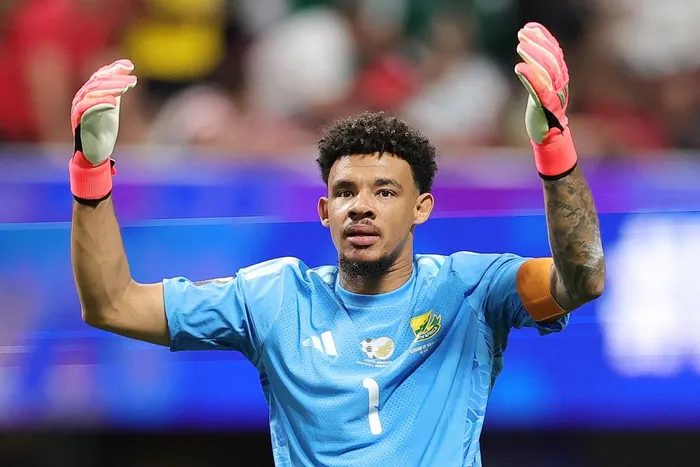
Ronwen Williams #1 of South Africa reacts after the 1-1 draw during the FIFA World Cup 2026 Group A match between Czechia and South Africa at Atlanta Stadium on June 18, 2026 in Atlanta, Georgia. Picture: Alex Slitz/Getty Images/AFP
Image: Alex Slitz/Getty Images/AFP
Two matches into their first Fifa World Cup appearance since 2010, Bafana Bafana have given us a much clearer picture of where they stand on football’s biggest stage.
The good news is that qualification for the Round of 32 remains within reach. The bad news is that the version of Bafana that topped their qualifying group has yet to arrive in the United States.
Let’s not beat around the bush: this Bafana Bafana side is not the same team that topped their qualifying group to qualify for the Fifa World Cup for the first time since 2002 (they qualified automatically as hosts in 2010).
In the two matches they have played so far, Bafana have offered precious little attacking threat.
Against a highly fancied Mexico side ranked 11th in the world, that was somewhat understandable. As tournament co-hosts, Mexico were always expected to dominate and they did exactly that, with Bafana seeing just 39% of the ball. Conceding in the eighth minute appeared to disrupt whatever game plan Hugo Broos had prepared, and a Plan B never seemed to materialise.
Going forward, Bafana were utterly toothless and the 2-0 scoreline was probably the best outcome they could have hoped for after doing well to avoid conceding more goals.
Against Czechia, ranked 44th in the world, Bafana dominated many of the key statistics, including 61% possession in Atlanta, but once again conceded inside the opening 10 minutes.
They eventually equalised through a Teboho Mokoena penalty in the 83rd minute, but the single point leaves plenty of work to do heading into their final group match.
Despite looking the better side in possession, Bafana did precious little with the ball. It was only during the final 15 minutes that they showed any real urgency going forward.
Even then, creativity was in short supply. The best example came from a free kick just outside the box. Instead of testing the goalkeeper directly, the ball was laid off and the eventual shot was comfortably blocked by the Czechia defence, who gratefully accepted the extra time to close down the opportunity.
The worrying part is that it wasn’t an isolated incident.
Bafana attempted virtually the same routine against Mexico from a dangerous position, once again choosing to lay the ball off rather than take a direct shot at goal.
There are at least a handful of Betway Premiership clubs that execute set-pieces with greater conviction than Bafana currently do, which is surprising considering how many locally based players make up the national squad.
What made this Bafana team so successful during qualifying was their willingness to play on the front foot, move the ball quickly and commit numbers forward when opportunities presented themselves.
That urgency and attacking intent appear to have evaporated on football’s biggest stage.
While a draw against Czechia was less than ideal, all is not lost.
Bafana remain bottom of Group A with a goal difference of minus two. They are level on points with Czechia, who have a superior goal difference of minus one. South Korea sit second on three points, while Mexico top the group on six points.
All that remains for Bafana is a final group-stage clash against South Korea.
At the very least, Bafana need a draw. That would move them onto two points and above Czechia if the Europeans lose to Mexico.
In that scenario, Bafana would still have a realistic chance of progressing as one of the tournament’s best third-placed teams.
A victory over South Korea would be the ideal outcome. It would take Bafana to four points and, assuming Czechia lose to Mexico, secure qualification for the next round.
More importantly, a win would almost certainly see Bafana finish second in the group, avoiding the nervous wait that comes with relying on a best third-placed finish.
The biggest lesson from Bafana’s opening two matches is that qualification remains possible, but only if they rediscover the qualities that got them to the World Cup in the first place.
The team that dominated qualifying played with confidence, urgency and attacking intent. The team that has appeared in the United States has largely looked cautious, predictable and short of ideas in the final third.
The equation is therefore simple: beat South Korea and qualification should be within reach.
Doing it on paper is easy. Doing it on the pitch will be the hard part.