

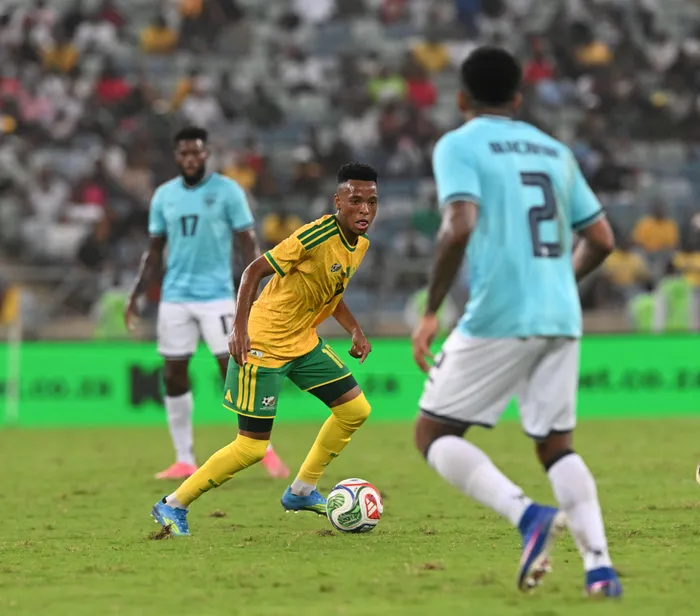
Bafana Bafana attacker Relebohile Mofokeng is one of 19 South African-based players in Hugo Broos' Fifa World Cup squad.
Image: BackpagePix
When Bafana Bafana walk out at the Azteca Stadium on June 11 to face Mexico in the opening match of the 2026 Fifa World Cup, it will mark a triumphant return to the global stage after a 16-year absence.
Yet, beneath the tactical shapes and game plans that will be drawn up by Hugo Broos lies a fascinating structural shift in the composition of the squad itself. The 26-man group that has headed to North America represents a radical departure from the European-heavy squads of South Africa’s footballing heyday, signalling a massive reliance on the domestic Betway Premiership to prop up the national team.
To understand the magnitude of this evolution, one must trace the geopolitical and sporting landscape of Bafana's previous World Cup appearances.
In 1998, fresh off their 1996 Africa Cup of Nations triumph, South Africa’s maiden World Cup squad was a glittering constellation of European-based stars. Philippe Troussier’s side, which was first moulded by the legendary Clive Barker, featured 15 overseas-based players out of a squad of 22.
Icons such as Lucas Radebe (Leeds United), Benni McCarthy (Ajax), and Quinton Fortune (Atletico Madrid) formed the spine of the team, leaving just seven domestic players in the travelling party.
By 2002, under Jomo Sono, the template remained largely identical. The squad that travelled to South Korea and Japan boasted 16 European-based players, with heavyweights from the English Premier League, Bundesliga, and La Liga dictating the team's identity. Only seven domestic players, predominantly from Orlando Pirates and Kaizer Chiefs, squeezed into the final selection.
The script was flipped entirely in 2010 out of sheer necessity. As hosts, Carlos Alberto Parreira built his team around a core squad of locally-based players, selecting 16 PSL-based stars. Only seven overseas assets, including Steven Pienaar and Kagiso Dikgacoi, were brought in from Europe’s top leagues.
Yet, as Bafana prepare for the 2026 edition, what once looked like an anomaly has become the permanent blueprint. Broos's squad features a mere handful of European and North American-based players, such as Burnley’s Lyle Foster and Sphephelo Sithole, who plays for Liga Portugal club CD Tondela.
Instead, the overwhelming majority of the 2026 squad has been mined directly from the domestic league, with 19 members of the chosen 26 playing their football in South Africa.
The country sits remarkably fourth on the global list of domestic league players representing their countries at the tournament, with only England (21), Saudi Arabia, and Qatar (both 25) sitting above them.
This modern shift for Bafana is anchored by the continental rise of Mamelodi Sundowns and the recent domestic renaissance of Orlando Pirates. Unlike the fractured domestic cohorts of 1998 or 2002, the 2026 squad benefits from Sundowns’ highly sophisticated, club-based spine that regularly dominates in the CAF Champions League. These domestic stars are no longer raw local talent; they are hardened continental campaigners operating at an elite tactical level.
While the romantic era of 1998 and 2002 relied on the individual brilliance of Europe's elite leagues, the 2026 iteration relies on collective cohesion and domestic synergy.
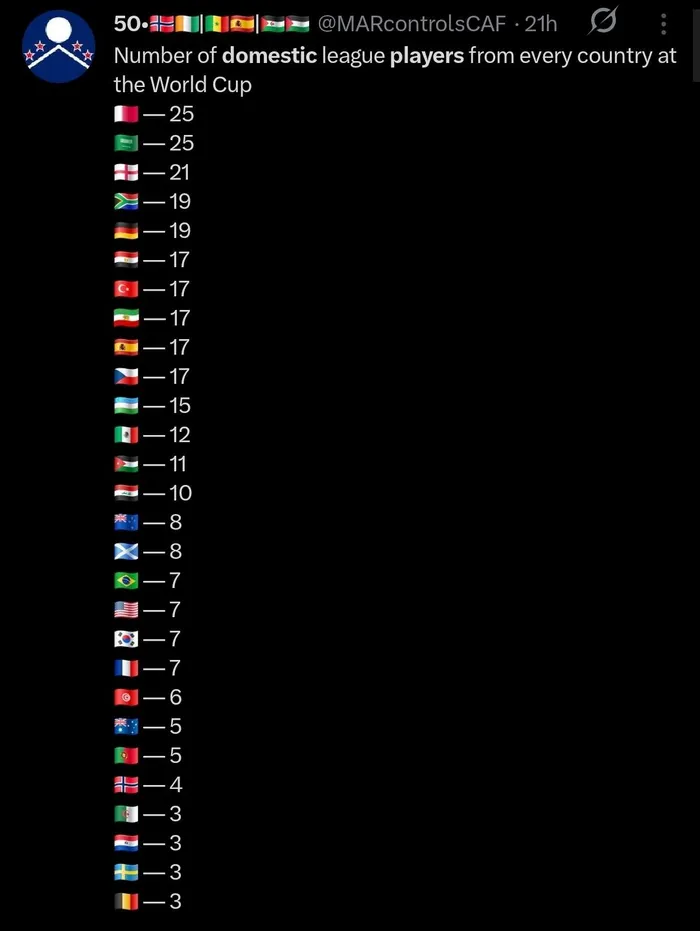
South Africa is fourth on the list of domestic league players representing their countries at the tournament, with only England (21), Saudi Arabia and Qatar (both 25) above them.
Image: Supplied
On the other side of the coin, not many South Africans are currently being scouted by Europe’s top leagues, a harsh reality that Broos has warned about over the last five years.
The recently relegated Foster was the only South African in the Premier League this past season, compared to the late 90s and early 2000s which frequently saw up to five or six players from Mzansi starring in the English top flight.
But all of this could change as Bafana’s players step into the ultimate shop window over the next two months. Top performances from players such as the talented Relebohile Mofokeng on the grandest stage could see dream moves being realised and bank balances significantly bolstered.
For the Betway Premiership, this World Cup is the ultimate validation. But for Bafana's emerging stars, it is also a lucrative pathway to bigger and greater things.