

Discover how community ties and local businesses intertwine to create a resilient economy in South Africa. What lessons can we learn from the enduring success of community-driven enterprises?
Image: Supplied.
“Every success is a mosaic of invisible contributions; we are shaped by the communities we’re part of, opportunities we are given, and the generosity of others.”
These words, attributed to Simon Alexander Ong, came to mind during my recent Easter trip back home. Away from the city lights and hurried pace of Johannesburg, I was reminded of something both simple and profound: the enduring power of community in shaping not only individuals, but entire local economies.
There is a particular pride that comes with returning to one’s roots; a quiet, grounding awareness of where one comes from and who helped along the way.
In South Africa, especially across rural areas and townships, community is not an abstract idea; it is a living, breathing ecosystem. It is found in the informal greetings between neighbours, in shared resources, and, importantly, in the small businesses that anchor daily life.
Among the most visible expressions of this ecosystem are spaza shops, informal convenience stores that have become indispensable to millions.
Often modest in appearance, these shops collectively form a powerful economic engine.
The informal retail sector contributes significantly to economic activity and sustains livelihoods for countless South Africans.
Yet their importance goes beyond numbers. They are embedded within the social fabric, serving as places of exchange not only for goods, but for trust, information, and connection.
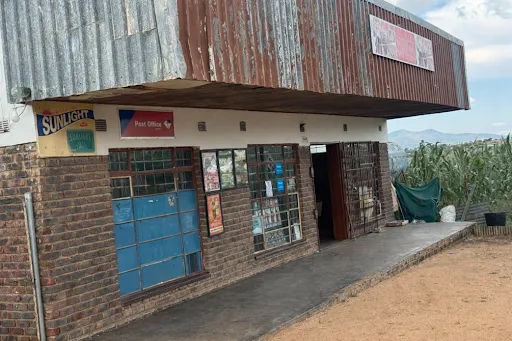
Take, for instance, Mamphoto Café, a community shop nestled deep in rural Limpopo, Ga-Lekgothoane. More than 40 years ago, it served my mother’s generation.
Today, it continues to serve mine, and perhaps, one day, it will serve the coming generations. What may have begun as a small spaza shop has, through resilience and consistency, evolved into something far greater: a sustainable enterprise with generational impact.
Mamphoto Café is not unique in its origins, but it is remarkable in its longevity. In many underserved communities, small businesses struggle to survive beyond their founders.
Research suggests that as many as 75% fail within a relatively short period, largely due to limited access to finance, intense competition, and operational challenges.
Yet, for those that endure, survival is rarely an individual achievement. It is collective.
Businesses like Mamphoto Café thrive because they are woven into the daily lives of the communities they serve. Before 1994, the retail landscape in South Africa’s rural and township areas was overwhelmingly informal, characterised by precisely these kinds of enterprises.
They emerged not only to meet economic needs but also to fill critical social gaps.
These community shops were and, in many cases, still are far more than retail outlets. They functioned as informal hubs of infrastructure and interaction.
For many households, they were the first point of access to necessities, from bread and paraffin to over-the-counter medication.
But they also provided something less tangible, yet equally vital: a sense of belonging.
At Mamphoto Café, the role of the shop extended well beyond commerce.
It was here that community members gathered to fetch water from one of the first accessible taps in the area, queuing with 25-litre containers, a shared ritual that fostered both cooperation and conversation.
Those needing transport to town could find a ride when the owner made supply runs, transforming logistical necessity into opportunity.
These journeys became spaces of exchange, where ideas about progress, education, and possibility were carried back into the community.
Even on Sunday afternoons, churchgoers would congregate at the shop before travelling together to Moria, the business a connector, linking individuals not only to goods and services, but to each other.
What emerges from this reflection is a clear truth: the success of such enterprises is deeply tied to the strength of the communities around them. In turn, the presence of these businesses reinforces community resilience. It is a reciprocal relationship, one that challenges the often individualistic narrative of entrepreneurship.
In contemporary South Africa, where economic inequality remains a pressing concern, there is much to learn from these models of community-driven enterprise.
Policymakers, investors, and development practitioners frequently focus on scaling businesses through formalisation and capital injection. While these are important, they must be complemented by an appreciation of the social capital that underpins success in underserved areas.
Trust, relationships, and local knowledge are not easily quantified, yet they are among the most valuable assets a business can possess. Supporting small enterprises, therefore, requires more than financial investment; it demands an understanding of the ecosystems in which they operate. It requires strengthening the very communities that sustain them.
Looking back, it becomes evident that what we often celebrate as “self-made” success is, in reality, community-made. The achievements of entrepreneurs in rural villages and townships are not solely the result of individual effort, but of collective contributions of customers who remain loyal, neighbours who lend support, and networks that share resources.
Mamphoto Café stands today not only as a business, but as a symbol of this collective resilience. It represents a form of excellence that is often understated.
A quiet, enduring strength rooted in community. Even in the face of challenges such as the Covid-19 pandemic, which disrupted economies worldwide, many of these establishments have remained standing.
Their survival is a testament not just to good business practice, but to the power of being embedded in, and supported by a community.
As South Africa continues to navigate its economic future, the lesson is clear: sustainable development cannot occur in isolation. It must be built on the foundations of strong, connected communities. For it is within these networks that opportunities are created, resilience is nurtured, and success in all its forms is truly realised.
Nthame Mametja is the stakeholder relations officer at 22 On Sloane.

Nthame Mametja is the stakeholder relations officer at 22 On Sloane.
Image: Supplied