

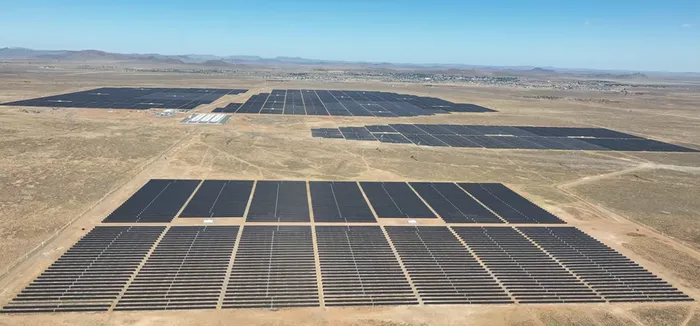
The Hydra project combines a 216 MW solar plant with a 500 MWh battery storage system, marking a major milestone in South Africa's energy transition and energy security ambitions.
Image: Supplied.
Africa's largest hybrid renewable energy project has officially been inaugurated in the Northern Cape, marking a significant milestone in South Africa's transition towards cleaner and more reliable electricity generation.
The Hydra project, developed by TotalEnergies in partnership with Hydra Storage Holding and Reatile Renewables, combines a 216 megawatt solar photovoltaic plant with a 500 megawatt hour battery energy storage system.
The facility will supply 75 megawatts of dispatchable renewable electricity to the national grid every day between 5 am and 9:30 pm under a 20 year power purchase agreement with Eskom.
The project is expected to deliver more than 400 gigawatt hours of renewable electricity annually, enough to supply the equivalent electricity needs of around 200 000 South African households.
The development forms part of South Africa's Just Energy Transition programme, which aims to reduce carbon emissions while improving energy security through greater investment in renewable energy.
Managing Director of TotalEnergies Southern Africa, Magali Pailhé, said the commissioning of the project represented an important achievement for both the company and the country's energy sector.
"We are delighted, together with our partners Reatile Renewables and Hydra Storage Holding, to bring the Hydra project into operation. It enables us to supply dispatchable renewable power to the South African grid, thereby strengthening the country's energy security while decarbonising its electricity generation."
Pailhé said the project also reinforced the company's renewable energy footprint in South Africa.
"This project reinforces our renewable production capacity in South Africa, the continent's largest power market in terms of electricity consumption," she said.
It comes as rising electricity costs and the need for uninterrupted power continue to reshape the country's energy sector.
South Africa's ageing grid infrastructure is one of the most significant bottlenecks facing the growth of renewables and the stability of South Africa's energy landscape - and therefore our economy.
However, with a focus on renewable energy following years of prolonged periods of load shedding, the country is working towards building a capable grid to meet the needs of the country.
Unlike conventional solar projects that only generate electricity during daylight hours, the battery energy storage component enables the Hydra project to deliver electricity during periods of peak demand, improving grid stability and making renewable energy more dependable.
The project has been developed by a consortium comprising TotalEnergies, which holds a 35% stake, Hydra Storage Holding with 35%, and Reatile Renewables with the remaining 30%.
Hydra was developed under the Department of Mineral Resources and Energy's Risk Mitigation Independent Power Producer Procurement Programme, which was designed to accelerate the addition of reliable generation capacity to South Africa's electricity network.
South Africa’s solar energy sector has seen remarkable growth in recent years.
This has been driven by falling equipment costs, technological advancements, and a shortage of electricity. Globally, the cost of solar panels and batteries has dropped by as much as 40% to 60% over the past two years, in addition to improvements in panel efficiency and battery power density.
Solar energy is not just a solution to loadshedding, it’s a pathway to a more resilient, inclusive, and sustainable energy future for South Africa.
The launch comes as South Africa continues to expand renewable energy generation to reduce reliance on coal fired power stations, strengthen energy security and attract investment into the country's growing clean energy sector.
Follow Business Report on Facebook, X and on LinkedIn for the latest Business and tech news.