

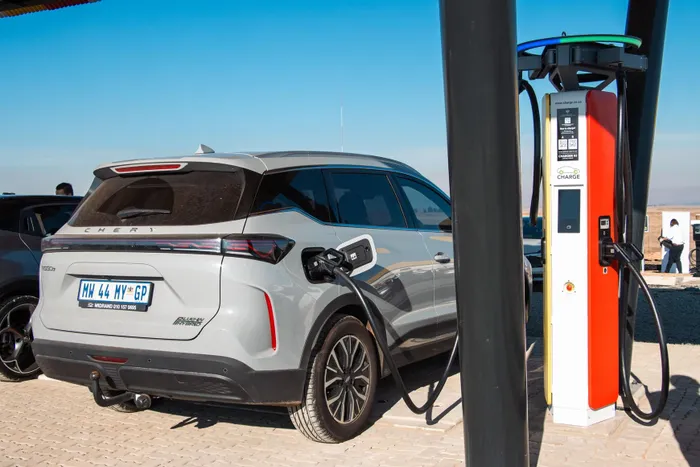
As South Africa grapples with energy challenges, innovative solutions are emerging to electrify transport without relying on the national grid.
Image: Supplied.
For years, one of the biggest criticisms of electric vehicles in South Africa has been simple: "How can we electrify transport when Eskom can't even keep the lights on?" It's a fair question. But it assumes the future of electric mobility depends on the national grid. Increasingly, it doesn't.
South Africa's energy transition is accelerating, but the infrastructure needed to support it is struggling to keep pace.
That tension, between the rapid growth of renewable energy and the grid's ability to absorb and distribute it, is becoming one of the defining infrastructure challenges facing the country. It affects everything from renewable energy projects waiting to connect to the grid to the rollout of electric mobility.
The concept at the centre of this challenge is grid inertia. Traditional coal-fired power stations run large spinning turbines. Those turbines do more than generate electricity. Their physical momentum helps stabilise the grid, absorbing sudden fluctuations in supply and demand. Wind and solar generation produce no such inertia. Their output changes with the weather, not with electricity demand.
As renewable capacity is added to the grid at pace, that physical buffer diminishes.
The grid becomes more dynamic and increasingly complex to manage, requiring greater investment in transmission infrastructure, energy storage, and system balancing technologies.
In South Africa, that investment has simply not kept pace with the rapid expansion of renewable generation.
But this should not be a reason to slow the energy transition. It is a reason to think carefully about how infrastructure is designed and where it is located.
The challenge is no longer producing renewable energy. It is getting that energy where it is needed.
South Africa now has a meaningful and growing base of renewable generation capacity.
Yet, transmission constraints continue to delay new projects, grid upgrades lag behind demand, and investment in network infrastructure has not matched investment in generation. The result is a structural bottleneck that will take years to resolve.
Even with significant capital commitment, rebuilding and expanding transmission infrastructure across a country the size of South Africa is not something that happens overnight. Until then, renewable energy projects will continue to face constraints that have little to do with generating electricity and everything to do with moving it.
The grid inertia challenge is real and solving it will require sustained investment in transmission infrastructure, energy storage, and system management technology. That work must happen, and it will take time. But waiting for a perfect grid before deploying the infrastructure its economy needs would be a mistake.
At CHARGE, we confronted this reality early. We are building a national network of electric vehicle charging stations across South Africa's major transport corridors - the N3, the N1, and beyond. We quickly realised that building around the grid would often be more practical than building into it.
The scale of what we are building requires a dependable, cost-predictable energy supply at each site. In many locations, the grid simply cannot provide that certainty.
Each CHARGE site is an off-grid microgrid - solar generation, battery storage, and fast-charging infrastructure, operating independently of Eskom.
No grid connection. No transmission constraints. No exposure to the many challenges associated with an increasingly stressed electricity network.
he demand is already real. In the first month of operations across the N3 sites (19 May to 18 June 2026), CHARGE’s infrastructure delivered 7,470 kWh of energy, generated off-grid, on-site, without drawing a single unit from Eskom.
A single JAC electric truck, charging from 10% to 100%, drew 104 kWh.
Six panel vans on the same route consumed a combined 305 kWh. These are early numbers, but they demonstrate something important: the demand for electric transport is already emerging, and the infrastructure needs to be ready before that demand scales.
And, we believe it points to a different way of thinking about energy infrastructure in South Africa.
By generating electricity at the point of demand, on the farm, along the corridor, at the logistics hub, the need to transport electricity across hundreds of kilometres of transmission infrastructure is significantly reduced. We produce, sell and deliver energy locally.
Adding value to sunshine - turning it into sellable electrons where the electrons are needed.
For decades, South Africa's transport system has depended on importing the energy that keeps people and goods moving. Off-grid charging infrastructure offers a fundamentally different model.
One where the energy that powers mobility can increasingly be generated where it is needed, rather than imported from thousands of kilometres away.
That shift is about far more than electric vehicles. It is about localising energy production, strengthening energy security and keeping more value within the South African economy.
South Africa's fuel market is worth approximately R500 billion annually.
A meaningful portion of that represents energy consumed in transport, predominantly diesel, almost entirely imported.
Every litre displaced by locally generated solar electricity is money kept in the South African economy, a tonne of emissions avoided, and less pressure on both imported fuel supplies and the national grid. That is why the transition to electric mobility is becoming as much an economic story as an environmental one.
Decentralised, off-grid infrastructure is not simply a temporary fix. It may well become one of South Africa's long-term competitive advantages.
Few countries combine abundant solar resources with the opportunity to generate transport energy exactly where it is needed. In a country where transmission capacity is constrained, that matters.
South Africa's energy future will not be built from the centre out. It will increasingly be built from where energy is consumed such as logistics hubs, along transport corridors on farms and in industrial precincts. One site at a time.
Joubert Roux is co-founder and chair of CHARGE.
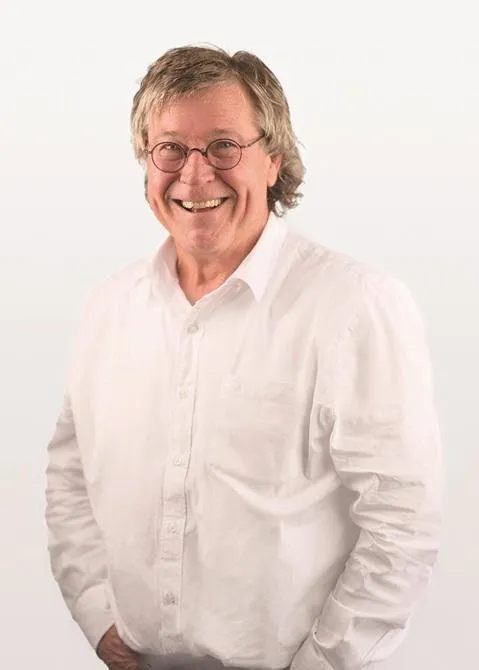
Joubert Roux is co-founder and chair of CHARGE.
Image: Supplied.
Follow Business Report on Facebook, X and on LinkedIn for the latest Business and tech news.