

While the sources and causes of environmental degradation, from industrial emissions and agricultural burning to biomass combustion and waste incineration, the burden falls most heavily on those least able to escape it: low-income communities, subsistence farmers, women burdened by indoor cooking smoke, workers in unregulated industries.
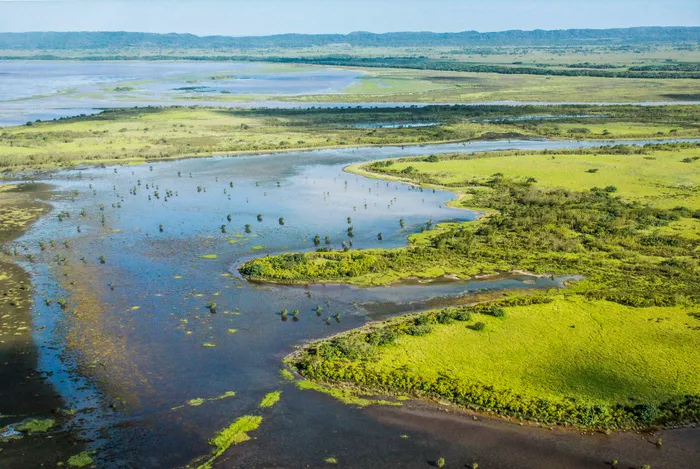
Image: iSimangaliso Wetland Park
It is more than 50 years since the declaration of June 5th as World Environment Day by the United Nations following the 1972 Stockholm Conference on the Human Environment, and almost 40 years since the release of the United Nations Report of the World Commission on Environment and Development (WCED) – “ Our Common Future” - known as the “Brundtland Report” in 1987.
In the foreword to the report, Brundtland characterised the mandate for the Commission as “A global agenda for change" – and an urgent call by the General Assembly to propose long-term environmental strategies for achieving sustainable development by the year 2000 and beyond.
The outcome of the commission was a report recommending ways in which the global environment crisis can be translated into greater co-operation among developing and developed countries towards the achievement of common and mutually supportive objectives, acknowledging the interdependency between human development, resources, environment, and economic development.
In doing so the commission focused its attention on the interrelated areas of population, food security, biodiversity, energy, industrial development, and human settlements - in realisation realisation of their interconnectedness.
While the sources and causes of environmental degradation, from industrial emissions and agricultural burning to biomass combustion and waste incineration, the burden falls most heavily on those least able to escape it: low-income communities, subsistence farmers, women burdened by indoor cooking smoke, workers in unregulated industries.
The economic consequences, too, extend further than conventional profit and loss counts, as studies continues to link long-term pollution exposure not just to the health of the planet, but of people, from to lung disease and to depression, anxiety, and other mental health disorders.
The gender dimensions show women face disproportionate risks, including heightened vulnerability during pregnancy, preterm birth, low birth weight, and developmental complications in newborn.
These are not distant or abstract alarms and scare tactics or sponsored agendas —they are being lived daily in communities that do not identify themselves with headlines or the myriad of climate summits -they are bold print and the underlined texts of deal we have broken with our planet and with posterity.
World Environment Day 2026 focuses on climate change, as the planet’s urgent warning signs grow louder. It also reminds us of the warnings we failed to heed since 1972 in Stockholm, in 1987 as called upon by Madame Brundtland, at the World Summit on Sustainable Development in Johannesburg in 2002, and at the UNFCCC Conference of the Parties (COP17) in Durban, 15 years ago.
We recall these milestones as we continue to bear the aggregate burden of humanity’s failure to keep our part of the deal to the planet.
This aggregate burden is the crisis of climate change, whose exacerbation is a product of years of dragging our feet, delaying the decision to act, yet pocketing the profits and benefitting from the degradation, few as we have remained.
As we mark we Environment Month all of us to step in and move further, to steer a world already in motion and guide it and how fast it happens, through a just transition.
The challenge of finding new and carbon neutral development pathways ought to provide the impetus –for a renewed search for multilateral solutions and a global deal and a restructured international economic system of co-operation.
These challenges cut across the divides of national sovereignty, of limited strategies for economic gain, and of separated disciplines of science - integration and wide of society deal is needed.
Efforts to reform our climate policy and emission reduction are often constrained by weak political commitment, industrial resistance, limited enforcement capacity and the difficulty of measuring and governing transboundary pollution.
All the while, policy makers continue to toy with and tout untested solutions while some corporations continue greenwash their emissions behind sustainability and renewable energy branding
For decades, the world has heard the climate story—warnings, target and, distant future processes, and texted work programmes.
As the clock ticks, we need to listen closer and act with honour and commitment. Earth has left the negotiating table and is sending signals of rising sea levels, wildfires, heatwaves, droughts, floods.
Behind the alarms a new call is beckoning, and it signals of hope.
Solar panels stretch across rooftops and farmlands.
Wind turbines line the horizon of our coastlines and hinterlands.
Cities are being redesigned for people and for prosperity, and communities are beginning to lead and own clean energy industries, all signs that positive tipping points are taking flight every corner of the planet.
After half a century of inconsistent and unpredictable global co-operation and national action, I believe the time has come for higher expectations, for common goals pursued together, and for increased political will to address our common future and a future we want.
Blessing Manale is the executive manager: consensus building, communications and outreach at the Presidential Climate Commission.
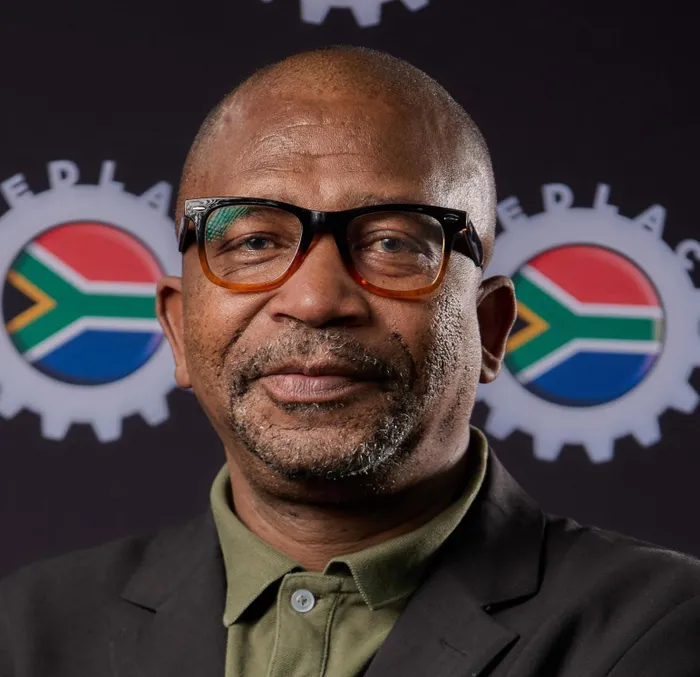
Blessing Manale is the executive manager: consensus building, communications and outreach at the Presidential Climate Commission.
Image: Supplied.
Follow Business Report on Facebook, X and on LinkedIn for the latest Business and tech news.