

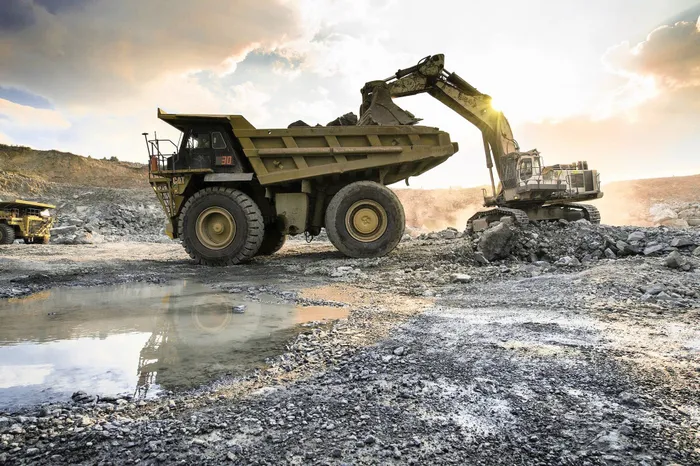
Explore the complexities of South Africa's decarbonisation debate, where the necessity of coal clashes with ambitious carbon reduction goals. Discover how industries navigate the challenges of transitioning to cleaner energy sources.
Image: Supplied
South Africa’s decarbonisation debate often starts from a simple premise: coal must be replaced. In principle, that direction is clear. In practice, it is far more complex.
Industrial heat in South Africa remains heavily coal-dependent, not by preference, but by necessity. For a significant portion of local industry, particularly those reliant on high-temperature process heat, coal is a function of cost and availability. And these structural realities do not shift as quickly as policy or ambition.
This creates a tension that is often understated.
While renewable power, alternative fuels and storage technologies are advancing rapidly, they are far from providing a like-for-like substitute for coal across all industrial applications.
For many businesses, the question is not whether to decarbonise, but how to do so without introducing unacceptable operational or financial risk.
Fuel decisions – like replacing coal with biomass, biomethane, liquid fuels or liquefied petroleum gas (LPG) – cannot be made in isolation.
Cost, supply stability and system performance are tightly coupled, and production continuity is non-negotiable. A marginal increase in fuel cost or a short disruption in supply can materially impact margins and throughput.
Heat generation may account for roughly 10% of operating costs, but its role is disproportionately critical.
Without reliable heat, production stops. In this context, coal remains one of the most accessible and logistically dependable fuel sources in the country, particularly for inland operations where alternatives are either unevenly distributed or economically marginal.
LPG and liquefied natural gas are often positioned as the most viable near-term replacements for coal, offering lower emissions and relative compatibility with existing systems. In principle this holds. In practice, they are increasingly subject to the same constraints that underpin coal’s persistence: cost and security of supply.
South Africa is approaching a structural gas shortfall. Supply from Mozambique’s Pande-Temane fields, which underpins much of the country’s current gas consumption, is expected to decline towards 2028.
At the same time, domestic gas infrastructure remains uneven, with viable access limited to specific industrial corridors.
The implication is a shift towards imported gas, exposing users to global pricing dynamics and logistics constraints. This introduces both cost volatility and supply risk at a scale that many industrial operators are not positioned to absorb.
In response, some users are exploring liquid fuels or electrification. Yet both pathways carry significant cost implications at current price levels, particularly where high-temperature heat is required.
Without a step change in economics or infrastructure, these alternatives are unlikely to provide a broadly viable substitute for coal in the near-term.
Biomass and biomethane are often cited as part of the long-term solution, but their applicability remains highly site-specific.
They introduce additional system complexity, including handling, storage and combustion control requirements that differ materially from coal.
Performance is also variable, depending on feedstock quality and consistency. In some cases, lower calorific values and inefficient combustion can even offset expected emissions gains, particularly where systems are not optimised.
Availability remains a further factor. Feedstock supply chains, transport logistics and storage requirements limit scalability, especially for large industrial users. So indeed, while these fuels are viable in targeted applications, they are not (yet) a universal replacement strategy.
The implication is not that coal retains a long-term role, but acknowledgement that its displacement will be uneven.
The first credible step in many industrial decarbonisation pathways is thus not immediate fuel switching, but integrated system-level optimisation.
Though many businesses cannot move away from coal, the technology exists to drastically cut emissions.
For example, solutions like reconditioning coal-fired boilers for efficiency and optimising systems with advanced oxygen sensors and frequency inverters can already reduce coal usage by 8% to 15%. This is not theoretical, but interventions that we have facilitated, proving that, even within a coal-based system, it is possible to achieve meaningful improvements in efficiency, cost and emissions intensity.
Servitisation models further strengthen this approach. By shifting responsibility for performance, maintenance and optimisation to specialists, businesses can achieve sustained efficiency improvements, supported by disciplined operations and real-time performance visibility. The outcome is a reduction in both cost pressure and emissions intensity relative to baseline operations.
As alternative fuel markets mature and infrastructure develops, coal’s role will continue to diminish. That trajectory is not in question. What is less often acknowledged is the pace at which it can realistically occur in the industrial context.
A credible carbon strategy must reflect this reality and thus be built on two parallel tracks. The first: extracting measurable efficiency gains from existing systems, reducing fuel consumption and lowering emissions intensity today.
The second: investing in the technologies, infrastructure and integration required to transition to a lower-carbon energy mix over time.
For South African industry, the transition will not be linear. But it can be deliberate, measurable and economically grounded, moving decarbonisation from ambition to realisation.
Manie de Waal, CEO of Energy Partners.

Manie de Waal is the CEO of Energy Partners.
Image: Supplied
Follow Business Report on Facebook, X and on LinkedIn for the latest Business and tech news.