

Reflecting on Human Rights Day, we must confront the harsh realities faced by South Africa's most vulnerable communities in the face of climate change. This article explores the gap between policy and lived experiences, urging a call to action for climate justice.
Image: Supplied.
Last week Saturday we commemorated Human Rights Day.
Many reflected not only on how far we have come since the dark days of apartheid, but also on how far we still must go.
“Uhuru” or freedom remains an aspiration rather than a lived reality for many.
For thousands of South Africans on the frontlines of climate change, true freedom is still out of reach.
Climate change is not only an environmental crisis; it is a constraint on human rights and freedoms.
The promise of dignity, equality, and security enshrined in Section 24 of our Constitution rings hollow in communities where floods have washed away homes, livelihoods, and resulted in many lives lost. The Constitution guarantees environmental rights, ensuring everyone has the right to an environment that is not harmful to their health or well-being.
To realise these rights South Africa is not short of policy, from the Climate Change Act to the National Environmental Management Act, the country boasts an extensive legislative framework designed to protect both people and the environment.
Yet there is a painful gap between legislation and policy, and peoples' lived reality.
Nowhere is this more evident than in the devastating floods that have become a recurring nightmare across the country.
In KwaZulu-Natal, the 2022 floods left a trail of destruction that is still visible today.
Entire communities were uprooted, families were torn apart, lives were lost, and yet years later a haunting question remains, what happened to those displaced families?
They were not mere statistics, but they were our mothers, our fathers, our children.
People with names, dreams, and responsibilities, but in the rush of disaster response and the churn of policy discussions, their stories have faded into silence.
Temporary shelters became semi-permanent realities. Promises of rebuilding stalled, livelihoods were not restored.
The human rights dimension of climate change, so often spoken about in policy spaces, has not led to sufficient action on the ground.
This is not just a KwaZulu-Natal story.
Communities in Mpumalanga, Limpopo, the Eastern Cape and Western Cape continue to face the brunt of climate inaction.
Recently there were floods in Mpumalanga and Limpopo that destroyed lives and livelihoods, especially amongst the poor. Simultaneously the Eastern Cape and the Western Cape experienced destructive wildfires, which were fueled by extreme heat.
Droughts, floods, and extreme weather events disproportionately affect those who are already vulnerable, such as those living in informal settlements, rural areas, and under-resourced municipalities. South Africa remains a policy-rich country but an implementation-poor one.
The inequality is stark: when disaster strikes in affluent communities, recovery is often swift.
When it strikes the poorer communities, recovery is slow, fragmented and constrained by limited resources. This disparity underscores climate change is not only an environmental challenge, but a human rights crisis.
The climate crisis is further fuelled by South Africa’s energy crisis.
The cost of electricity continues to rise, placing unbearable pressure on households already grappling with poverty, unemployment, and inequality.
Regulatory approvals of tariff increases often proceed without fully accounting for the lived realities of ordinary South Africans. Energy is a basic need and a cornerstone of dignity, is becoming increasingly unaffordable.
The global commitment to Sustainable Development Goal 7 that strives to ensure access to affordable, reliable, sustainable, and modern energy for all feels distant in the daily lives of South Africans.
Price increases consistently outpace inflation, deepening energy poverty and forcing households to make impossible choices between basic food, transport, and electricity.
Compounding this crisis are global geopolitical tensions, recently the war in the Middle East, which threaten to drive up the cost of fuel and food even further, especially impacting vulnerable communities. This is not an abstract concern, it is a looming reality that will stretch already thin budgets to breaking point.
As we gather in conferences and climate dialogues, the disconnect between conversation and action becomes more glaring. More lives are lost.
More communities are displaced. Yet, clear, community-centered action plans remain elusive.
The transition to a low carbon future, meant to ensure that no one is left behind, risks becoming another well-articulated concept that fails in implementation.
Human Rights Day should not only be a moment of remembrance it must be a moment of reckoning.
We must ask uncomfortable questions: Where is justice for the victims of climate disasters?
Where are the rebuilding plans for displaced families? Where is the accountability for failed implementation? and most importantly, whose voices are being prioritised in the transition?
As outlined in the Just Transition Framework, a truly just transition must centre the lived experiences of the most vulnerable including women, youth and persons with disabilities.
We must move beyond legislation and policy frameworks, and into tangible, measurable action.
It must restore dignity, rebuild livelihoods, and ensure that communities are not merely consulted, but actively empowered.
“Not yet Uhuru” is not a statement of despair, it is a call to action.
South Africa cannot claim freedom while its most vulnerable citizens are left to navigate the harsh realities of climate change alone.
True freedom will only be realised when environmental justice, economic justice, and social justice converge, when the promises of the Constitution are not just written, but lived by all people.
Until then, our journey to Uhuru remains unfinished.
Andile Mlambo is the Commissioner at the Presidential Climate Commission.
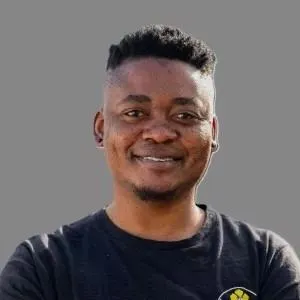
Andile Mlambo is the Commissioner at the Presidential Climate Commission.
Image: Supplied.
Follow Business Report on Facebook, X and on LinkedIn for the latest Business and tech news.